Ranger finds body believed to be missing man
-

- Bruce Waite (Photo provided by New York State Police)
-
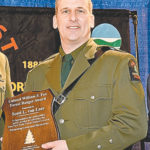
- Forest Ranger Scott van Laer of Ray Brook (Photo provided)
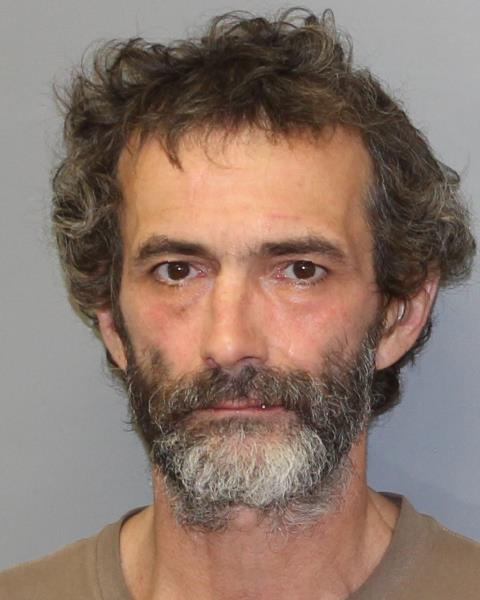
Bruce Waite (Photo provided by New York State Police)
A state forest ranger found a body in a swamp north of Paul Smiths late Thursday morning, and the deceased man was tentatively identified as Bruce Waite of Bangor, who has been missing for five-and-a-half weeks.
“We strongly suspect that this is the individual we are looking for, but it has not been confirmed with DNA and dental,” forest ranger Lt. Julie Harjung of the state Department of Environmental Conservation said Thursday evening.
Nevertheless, she added, “We’re just glad to get closure for the family and the folks that have helped out with the search.”
Ranger Scott van Laer found the body lying on a bog in the swamp around 10:45 a.m. He said it was off trail near the end of Slush Pond Road, 2 miles from where Waite’s car had been found and well beyond where an intensive grid search had wound down three weeks before.
van Laer said he “got lucky” but that the choice of where to look “wasn’t a dart at the board.” He and Harjung had looked at maps together and agreed on where to expand the search.

Forest Ranger Scott van Laer of Ray Brook (Photo provided)
“Both of us had a hunch about that spot, and I told her yesterday that was where I was going to go,” he said.
“It was a really good find,” Harjung said. “He did a phenomenal job. He was doing what rangers do and following his instincts, just looking at the map and looking where we hadn’t searched.
“Various rangers had done solo assignments back there, and he just happened to find him.”
Van Laer was also the one who found the body of Australian Army Capt. Paul McKay on the side of Scarface Mountain in Ray Brook in January 2014, after a nearly two-week search. McKay, who had undergone stress during the war in Afghanistan, died of hypothermia in what was ruled a suicide.
Waite, 48, was reported missing to state police on June 18, having last been seen in St. Regis Falls. His car was found July 5, on Slush Pond Road just west of state Route 30. Harjung said the site where the body was found was on state land, 2.1 miles southwest of the car. She went there right after van Laer called DEC dispatch to report his find. State police and Waite’s family were notified, as was Franklin County Coroner Ron Keough, who authorized removal of the body to the Adirondack Medical Center in Saranac Lake. There an autopsy will be performed at a later date to determine the cause of death.
Asked about the condition of the body, van Laer and Harjung, in separate interviews, summed it up with, “He’d been there a while.”
The man appeared to have no gear with him, both rangers said. A couple of fishing poles had been found weeks earlier in his car, a 2004 Buick Century, and searchers had found some of his personal belongings around 1,700 feet away from the car.
Asked whether forest rangers know why Waite may have wandered off, Harjung said, “We try and be sensitive to the family. He had mental health issues, and the family knew that, and that contributed to him walking off.”
The finding of Waite’s car on July 5 prompted a massive, multi-agency grid search, the kind where searchers stay close enough to see one another’s feet as they walk through the woods. Drones were used to scan places where searchers couldn’t walk.
When Waite had not been found after eight days, the large-scale search was suspended on July 13. From there it reverted to what is called “limited continuous status,” which means the DEC occasionally sends searchers to look when they have time.
When searches get to that point, van Laer said it’s frustrating because it can feel like a major effort was fruitless, “but on the plus side,” when a ranger gets a solo assignment to follow up on such a search, “It does give you a chance to do stuff yourself, pick where you want to go … follow your intuition.”
Van Laer said he first hiked up on the Jenkins Mountain ridge and then zigzagged down, scanning the terrain below.
“I had a feeling that I was close to him, and it was just a matter of time before I precisely knew where he was,” he said. “It might have taken me a half an hour to actually lay eyes on him.”
Rather than using drones, “It was very traditional ranger searching,” he said. “My father was a ranger, and it was the same stuff he would’ve done in 1977.”
Local News
Constructing collaboration
Early-season paddlers
The pit and the potential for new housing

Authors to discuss ‘The First Adirondackers’ at John Brown Farm

Expect hunger to rise as new SNAP rules take effect