Framework would protect news organizations from Artificial Intelligence
A musician spends years learning and honing his craft, investing in equipment and practice space, hiring musicians, living on a friend’s couch and taking odd jobs to pay for travel to venues. It’s not just an investment in time and money. It’s an investment in his life.
Then one day, a stranger stops in a bar one day and catches his act. A year later, the artist hears his song in a TV commercial. Then he opens a Facebook ad and sees his song being used to promote a course on how to write lyrics and music. He checks out a music app and sees his song available for download through a subscription.
The artist didn’t get a dollar for it. He didn’t have any say in how that song would be used. He didn’t get the credit that could have boosted his career prospects and his bank account.
It doesn’t seem right, does it? That’s because it’s not. It’s unethical. It’s illegal. It’s stealing.
Apply that same analogy to any creator of intellectual or creative property. A novelist. A scientist. A scholar. And in this age of information and misinformation, to the producers of news content.
People who complain about newspaper paywalls often forget that it costs money to cover the news. The salaries of the journalists and editors and managers and advertising representatives. The cost of technology and internet space and tech support. The cost of rent and utilities and other overhead.
When it comes to journalism, theft of content not only deprives the staff of their livelihoods, it deprives citizens of access to information they might find important to their lives — the activities of their government, awareness of community events and emergencies, a forum for promoting local businesses and the sharing of opinions.
Studies have shown that people without access to local news are less informed, less involved in their communities, and don’t participate in government functions or vote as much as those with access to local newspapers.
If the producers of news content can’t make money off their work, that work will cease to exist.
And one of the biggest and fastest growing threats to the survival of news publishers, journalists and other content creators is Artificial Intelligence — AI.
–
THE THREAT OF AI
–
AI systems require access to information to learn and improve, and AI producers rely on content produced by others to market the benefits of their own products.
That growth and profit often comes at the expense — literally — of the originators of that content.
News organizations were once slow to respond to the growth of content aggregators and therefore sacrificed much of their content and business to them. At the same time, government failed to step in with regulations to protect these vital businesses.
With the next wave of technology, AI, government officials must not make that same mistake again.
That’s why it’s encouraging to learn of a new initiative by the Trump administration to create a legislative framework that balances the rights of publishers of intellectual properties with the need to support the growth of AI.
–
NATIONAL AI POLICY PLAN
–
The administration late last month issued a National Policy Framework for Artificial Intelligence designed to encourage the growth of AI while mitigating its harmful effects.
The report includes a section on protecting children and empowering parents through controls over the digital environment. Another addresses the need to safeguard communities from the impacts of data infrastructure development, from fraud that especially targets vulnerable populations and which supports small businesses. A third seeks to ensure American workers benefit from AI-driven growth. Another would establish federal policies to pre-empt the patchwork of cumbersome and often-conflicting state laws.
The remaining two elements of the framework focus on respecting intellectual property rights, supporting creators, preventing censorship and encouraging the protection of free speech.
The framework seeks to protect creators, publishers and innovators from AI-generated outputs that infringe on protected content, but without undermining lawful innovation and free expression.
It calls for Congress to enable licensing frameworks and collective rights systems for rights holders to negotiate competition from AI providers while avoiding antitrust liability. It also encourages Congress to establish a federal framework that would protect individuals from unauthorized distribution for commercial use of AI-generated replicas of their voices and likenesses while providing clear exceptions for parody, satire, news reporting, and other expressive works protected by the First Amendment.
Regarding censorship and free speech, the framework encourages Congress to prevent the federal government from coercing AI and other technology providers to ban or alter content based on partisan and ideological agendas, and it urges Congress to provide citizens with government redress against censorship.
–
SUPPORT FOR AGENDA
–
Among those strongly in support of this initiative is America’s Newspapers, a national newspaper trade association that advocates for the vitality of newspapers and their role in promoting democracy, economic development and support for local communities.
America’s Newspapers Chair Matt McMillan said in a press release that his organization “strongly supports the administration’s recognition that high-quality journalism and original content are essential to the continued strength of our democracy and economy.”
He called the framework an “important step toward ensuring that AI development does not come at the expense of those who invest in creating trusted, fact-based news and information.”
As a news organization devoted to serving our local communities through journalism, we add our strong support for the Trump administration’s initiative, particularly its advocacy for the role of Congress in enacting these protections into law.
These types of guardrails are critical to the future of local journalism, and we are gratified that the current administration appears to agree and wants to take action.
We encourage our members of Congress in New York to take the initiative to enact this agenda into law and to support the vital role that local journalism plays in our communities and in our democracy.
Editorials
Framework would protect news organizations from Artificial Intelligence
A musician spends years learning and honing his craft, investing in equipment and practice space, hiring musicians, ...
Election letter deadline is today at 5 p.m.
We pride ourselves here at the Adirondack Daily Enterprise and Lake Placid News in allowing our readers a voice and ...
Enterprise will now publish five days a week
SARANAC LAKE — Beginning this Monday, March 2, the Adirondack Daily Enterprise will begin publishing its print ...
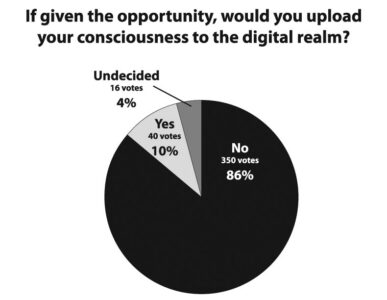
Straw Poll, Feb. 17-23
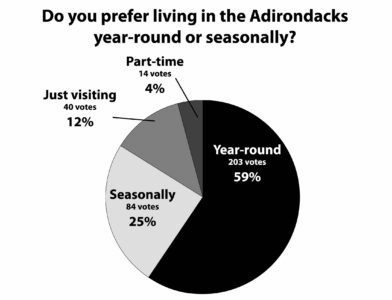
Straw Poll, Feb. 10-16