Baldwin Park courts should stay — for now
Pickleball can be polarizing. But that isn’t the problem in Saranac Lake.
On public courts throughout the U.S. — more often than not, on city courts outfitted for a sport other than pickleball — people are fighting for space to play the sport, much to the dismay of those who want to use the space for other things, like tennis or basketball.
Anytime something new comes along, and its growth in popularity outpaces the growth of infrastructure or supply to accommodate it, there is, of course, going to be conflict and controversy. In a way, we’re seeing this same clash in some Adirondack neighborhoods, with the rise in popularity of short-term vacation rental websites, the lack of local STR regulations until recently, and limited affordable housing stock.
In Saranac Lake, Baldwin Park has become the most recent focus of this dispute over space to play pickleball. But pickleball players, often referred to as “picklers,” don’t seem to be fighting with other park patrons for space — they’re fighting against the village and its plans for the park’s redevelopment, which, as of right now, include the removal of the courts. And it’s not just picklers; folks who play tennis there are also weighing in.
A tiny sliver of land on the side of Lake Flower Avenue, Baldwin Park has a veterans memorial, lake access, picnic tables, two tennis courts and a basketball court. It’s within walking distance of a few hotels and neighborhoods.
Although the courts aren’t specifically outfitted for pickleball, some residents and hotel guests use the courts to play there. When picklers aren’t using the courts, people use the courts for other sports, despite the courts being in pretty bad shape.
The park needs a lot of work.
The initial concept plan for the redesign of Baldwin — funded by a grant from the town of North Elba’s Local Enhancement and Advancement Fund — would’ve removed the courts and used the space for walkways, boardwalks and a pavilion, keeping the veterans memorial and lake access. The plan also called for improvements to the park’s landscaping, and some streetscape upgrades, including sidewalks, street lights and benches. The Parks and Trails Advisory Board and landscape architects recommended many of these changes, in part because of wetlands at the edge of the park, which make it difficult to reposition the courts without paring down the number of courts and eliminating other elements of the plans.
The village released this concept plan and set up a public meeting last spring to gather feedback from residents. Few people weighed in.
Then, last summer, the village altered its plan to keep one of the courts after hearing from people who were upset over the courts possibly being removed. The village board asked its engineering firm to draft a new plan that would include pickleball courts, but it would’ve cost $20,000 to put that new plan together — more money than the village had left over from its $57,700 LEAF grant — so the idea was put on hold.
After the village failed to receive additional grant funding from the state to overhaul the park, the village board voted this year to remove the court from its plans again and resubmit its grant application without it. That’s because the New York Department of State gave the village’s grant application a low score, saying it wanted the application to show “clear benefits for sustainability, natural resource protection/restoration and resiliency,” and the village interpreted that as meaning that it would be difficult to get grant funding if it kept the court in the concept plan.
If there’s no grant funding, it wouldn’t be a stretch to say that the park probably won’t get updated anytime soon. We can understand why the village board may want to push forward without the courts, rather than continue to go back-and-forth. But it seems like a lot of people want the courts there, whether it be for pickleball or another sport. So what should happen now?
We would argue that village planners had the best intentions, with a goal of rehabilitating this park, protecting the landscape, improving waterfront access and adding more parking in hopes that more residents would use the space. The village did host a public meeting and posted an online survey on its plans. The village also altered its plans to try to find a compromise. But there was clearly a breakdown in communication somehow, perhaps in part because this process has gone on so long. The plans were created years ago — before the coronavirus pandemic. Maybe some residents didn’t hear about the plans back then and feel caught off guard now. Maybe pickleball is more popular now than it was when the plans were created.
We would also argue that the courts should stay, at least for now.
There’s limited public park space in the village, and there’s a wide range of people who live and visit here and who want to use the space for a wide range of things. Is it the best long-term solution to keep the courts there, considering the wetlands encroachment? Probably not. Are the courts aesthetically pleasing there? No. But there’s lots of folks who really love having the opportunity to play sports in such a scenic location. Resurfacing the courts — and maybe looking for a different parking solution — will make folks happy and will likely have few negative consequences, other than wasted time and money on a project that lots of people seem to not like.
Long-term, however, residents should be prepared to lose the courts. We shouldn’t be afraid of change; plus, environmental factors may make it difficult to keep the courts there in the future.
If the village needs to remove the courts at Baldwin Park, it’ll be disappointing for those who like to play there, and Saranac Lake will have lost a unique amenity, but there are other places to play, albeit without a waterfront view. (For example: Pickleball players, many of whom are part of the High Peaks Pickleball Club, worked hard to fundraise money for three new pickleball courts at Mount Pisgah, which should be ready to play on this year.)
With so many people passionate about this, who knows, maybe this community will end up with a better plan for Baldwin Park than we had before. Regardless, we hope that local leaders are listening to this public discussion about the park, and are grateful for some feedback — which many governments struggle to get from its residents — rather than dismissing the naysayers outright.
One option to keep in mind: With this momentum behind keeping the courts at Baldwin Park, maybe there’s an opportunity for a grassroots fundraising effort. If the state won’t fund the park overhaul with the courts, maybe the community can come together to shore up the money, whether for Baldwin Park or for some other location where courts will be viable in the long-term.
Ultimately, what happens at Baldwin Park will matter to many, but it won’t impact people’s lives as much as the variety of other issues before the village right now. Sometimes we feel like a broken record, but it bears repeating: The lack of affordable housing is at the core of this village’s problems. It’s possible to focus on more than one issue at once, but it’s important to not lose sight of the bigger picture.
Editorials
Election letter deadline is today at 5 p.m.
We pride ourselves here at the Adirondack Daily Enterprise and Lake Placid News in allowing our readers a voice and ...
Enterprise will now publish five days a week
SARANAC LAKE — Beginning this Monday, March 2, the Adirondack Daily Enterprise will begin publishing its print ...

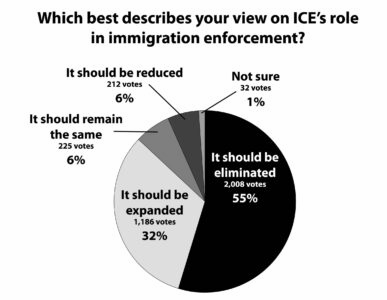
Straw Poll, Feb. 17-23
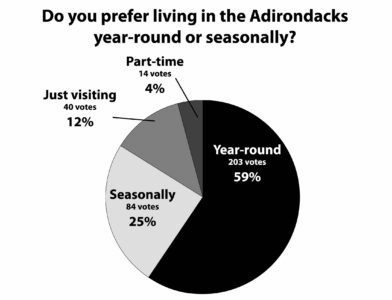
Straw Poll, Feb. 10-16
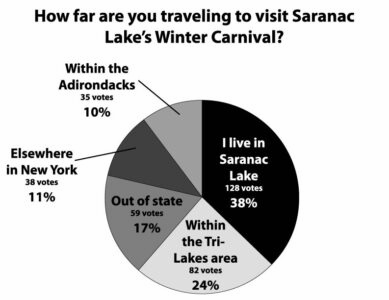
Straw Poll, Feb. 3-10