
Neck injuries now part of improved IIHS testing
The Insurance Institute for Highway Safety (IIHS) is launching a new seat and head restraint evaluation targeting neck injuries stemming from rear-end crashes. Only four out of the first 18 small SUVs tested earned a good rating.
“Neck sprains and strains are the most frequently reported injuries in U.S. auto insurance claims,” IIHS President David Harkey said. “This new test challenges automakers to further improve their seats and head restraints to provide better protection in the rear impacts that typically cause these injuries.”
In the new whiplash prevention test, the good performers include the Audi Q3, Hyundai Ioniq 5, Subaru Forester and Toyota RAV4.
Nine more models — the Buick Encore GX, Chevrolet Equinox, Honda CR-V, Jeep Compass, Kia Sportage, Mercedes-Benz GLB-Class, Mitsubishi Outlander, Volkswagen Taos and Volvo XC40 — earn acceptable ratings. The BMW X1 and Nissan Rogue are rated marginal, and the Ford Bronco Sport, Hyundai Tucson and Mazda CX-50 are rated poor.
Like the Institute’s original head restraint evaluation, the new test involves a simulated rear impact that is less destructive than a crash test. In this type of test, the driver seat is removed from the vehicle and secured to a sled. A midsize male dummy designed for rear impact testing, complete with an articulated spine, is positioned in the driver seat. The sled delivers a sudden pulse of acceleration to simulate the effect of a stationary vehicle being struck from behind.
The original IIHS head restraint test involved a single pulse equivalent to being struck at 20 mph by a vehicle of the same weight. That evaluation was discontinued in 2022 because automakers had improved their designs so that virtually all the vehicles earned good ratings. However, occupants of good-rated vehicles were still suffering from whiplash injuries.
It was clear that a new test was needed. The new test uses separate acceleration pulses, one at 20 mph and one at 30 mph, to simulate both types of crashes. Additional research tests were conducted to zero in on the metrics that appear to influence injury risk most directly. The research also led to the addition of several new metrics.
Pelvis displacement, for example, is a measure of how well the seat absorbs the crash energy. Measures of the tilting or bending force of the head relative to the neck, either forward or backward, were also incorporated.
“Our research makes us confident that reducing these types of movements and stresses should cut down on whiplash injuries in the real world,” said Marcy Edwards, the IIHS senior research engineer who developed the new evaluation.
For the new evaluation, the measures are combined to gauge three aspects of injury prevention: head and spine support, the interaction of the head with the head restraint and how well the seat manages the energy transferred to the occupant’s body.
Generally speaking, the three poor-rated vehicles fell short in all three areas at both impact speeds. In contrast, the four good-rated vehicles provided excellent protection across nearly all the metrics at both impact speeds. In the good-rated vehicles, the seat and head restraint kept the head and spine in alignment.
Columns
Neck injuries now part of improved IIHS testing
The Insurance Institute for Highway Safety (IIHS) is launching a new seat and head restraint evaluation targeting ...
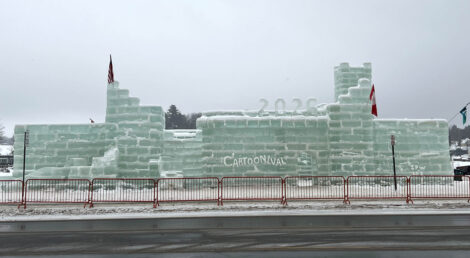
Ice Palace coming down
The next day
When my son was about nine, we walked into a drugstore on Feb. 15, the day after Valentine’s Day. Clearance ...

Time for pancakes, fritters and donuts

Winter Carnival history
Valentine’s Day
With Valentine’s Day upon us, I thought this week I’d share with you some specials gifts you can give your ...