
Foraging for wild food
Workshop series offered by Cornell Cooperative Extension at Paul Smith’s College VIC
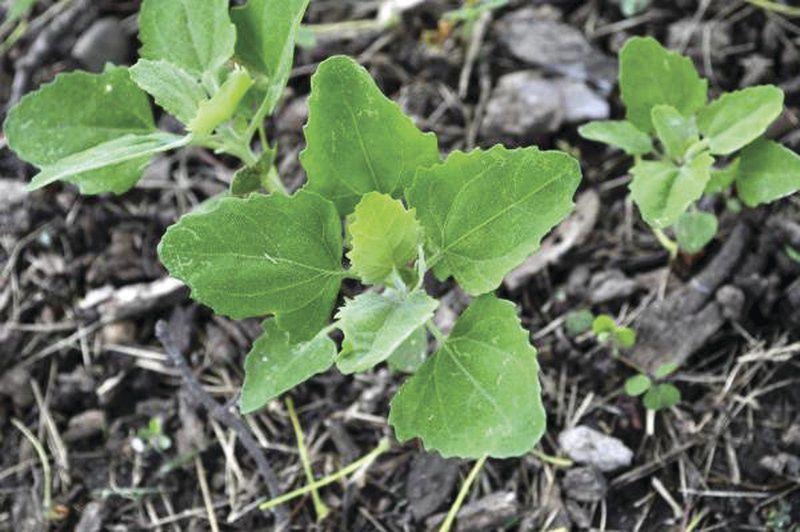
Pigweed, also known as wild amaranth. Plants are considered weeds by farmers and gardeners because they thrive in disturbed soils. Nutritious young plants can be boiled like spinach or eaten raw in salads. (Provided photo — Cornell University)
I’ve always found the idea of foraging for wild edible plants appealing, but daunting. I know a little about wild plants and foraging, but I lack confidence. And with good reason. I didn’t grow up foraging and, although it’s possible to acquire knowledge about foraging from books and websites, it’s a lot easier (and safer) to learn from someone who has firsthand foraging knowledge and experience, someone who has been gathering, preparing and eating wild foods throughout his or her entire life.
Cornell Cooperative Extension (CCE) of Franklin County is offering a series of Wild Edibles Workshops during July and August:
Dates: July 7, 14, 21; Aug, 18, 25
Time: 9 a.m. to 3 p.m.
Location: Paul Smith’s College Visitors Interpretive Center
Preregistration is required: www.paulsmiths.edu/vic/programs.
These are hands-on-learning workshops in which, among other things, participants will discover how to identify several common wild edible plants and examine their traditional usage and historic applications as food. The term “wild” refers to plants that grow without being cultivated and mostly includes native species growing in their natural habitat. However, managed and/or introduced species that have been naturalized are sometimes included as well. Most often these are not exotic plants. In fact, they’re more likely to be the “weeds” you mow down or remove from your lawn or garden.
The instructor for these workshops, Franklin County CCE 4-H Program Educator Pat Banker, was an essential contributor in writing a statewide, review-board-approved, 4-H Wild Edibles Curriculum and in developing a 4-H Wild Edibles Curriculum Training for Educators (nys4-h.org/curriculum). Pat has been a forager and herbalist all of her life.
Unlike me, she grew up eating wild-foraged foods and is a local expert. She shared with me how, as a girl, she would accompany her father to some of their favorite backcountry fishing lakes, ponds, rivers and streams to catch fish for their family’s supper. But their fishing trips didn’t end when they’d caught their limit. Instead, their attention turned to collecting healthy, wild garnishes for the frying pan and side dishes to round out the meal. Her family never went hungry. In fact, they had plenty of wholesome, nutritious food to eat, with much of it coming straight out of nature’s cupboard.
During my nearly two decades at CCE, I watched Pat sharing her time and talent with hundreds of eager, attentive 4-H club members and their equally engaged club leaders, as well as countless enthusiastic elementary and high school students at in-school and after-school Extension-sponsored 4-H programs, as they explored the process of confidently identifying wild edibles and foraging for those wild foods and healing plants. She encourages curiosity, participation and stewardship of the land.
The plants she’ll be examining during these wild edible walks remain a treasured part of her life, and are still essentials in her pantry, kitchen and medicine cabinet. She considers many of these wild plants to be among the most nourishing foods on earth, and she’s exuberant about passing on the botanical skills and harvesting ethics necessary to safely and assuredly forage wild foods and herbs.
She’s made me realize, too, that regardless of who you are or where you grew up, your ancestors harvested wild plants, in season, for food and medicine. And that, in almost all cases, the loss of such traditional knowledge and practices can be associated with reduced interaction with nature, lifestyle changes, urbanization, large-scale farming and a variety of other reasons.
You’ll find the detail and practicality of the information provided during these informal gatherings to be extremely useful, easily understood and a heck of a lot of fun! Her educational programming is based not on pricey directives to go out and buy, but rather on instruction to become more self-sustaining, by going into the wild and harvesting.
What’s more, the use of wild plants is often, although not necessarily, associated with times of food scarcity. Food substitution is the most common individual subsistence strategy in times of want and food shortages. Educating yourself about wild edibles as a potential food source can be the difference between survival and demise in the event of a catastrophe.
While almost all of the common wild edible plants found in our region are not mainstream culinary foodstuffs in the United States, some are relatively common fare in other countries (e.g. pigweed and purslane).
Join Pat at the VIC this summer and learn how to identify, ethically harvest and prepare edible wild plants as food and medicines.
Columns

The astronomer who accidentally cataloged the universe

5W Wednesdays
Do children grow up so fast?
When I was struggling with various growth stages my child was experiencing, I thought they were never going to get ...
Green food is good food
1,000 columns and still counting
This column isn’t about vehicle and traffic law or even traffic safety. It’s about the 1,000 weekly column I ...
The wearin’ of the green … and the grin
“So are you going to the parade?” Kean Riley asked me. I frowned but said nothing, in silent dismissal of the ...