
The astronomer who accidentally cataloged the universe
Known as the comet hunter, 18th-century astronomer Charles Messier dedicated his life to studying comets. His hard work and dedication paid off, and he is now one of the most famous astronomers in history, just not at all for the reasons he expected.
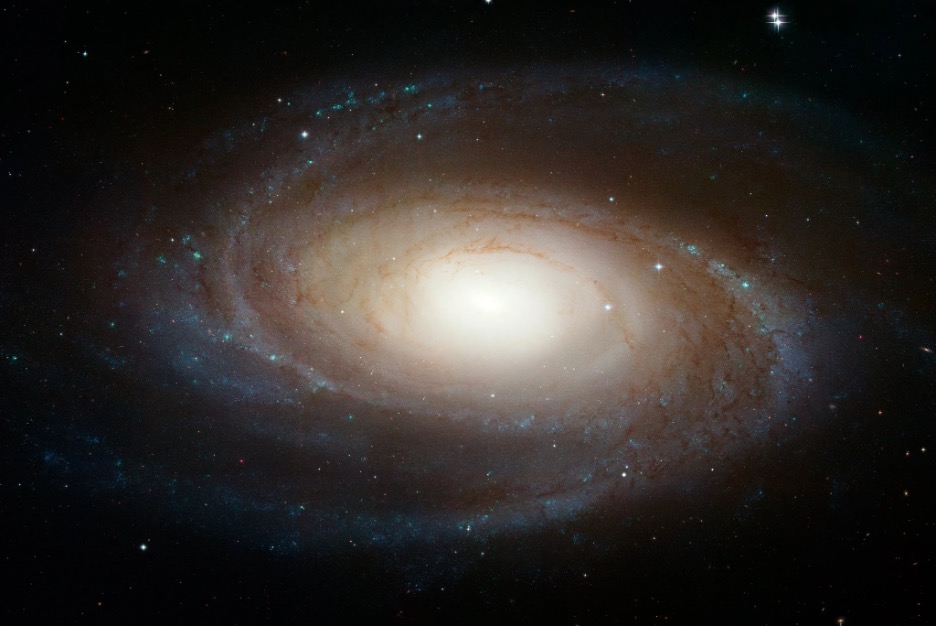
The 88th entry on Messier’s list, Bode’s Galaxy is one of the brightest galaxies in the night sky. It contains roughly 250 billion stars and is 11.6 million light-years away from Earth. You can view this galaxy most easily in April, where it can be found near the Big Dipper. You can see this galaxy using only a pair of binoculars, although it will just appear to be a hazy blob unless you use a more powerful telescope. (Provided photo - NASA, ESA and the Hubble Heritage Team)
People have long been interested in comets. They are very scientifically interesting, and at the time, astrologers would interpret them as omens of the future. In the late 1700s, astronomer Charles Messier started his life’s work studying these objects.
Since comets travel through the solar system, their position in the sky changes quickly, and they are only visible for short periods of time. Messier had to meticulously track the night sky for these elusive objects. As they get closer to the sun, their frozen surface evaporates and is blown away by the solar winds (a stream of energetic particles emanating from the Sun). This creates a diffuse, oblong object we can view in the sky. In short, they look like hazy blobs. Messier made a catalog of all the comets he discovered, which he believed would be his most famous work.
However, during his studies, Messier would frequently find objects that matched this description, but on closer inspection, he discovered they weren’t actually comets. He didn’t have powerful enough telescopes to discover what they truly were, so the only way he could tell was by observing them over many nights. Comets will move across the sky over time, but these objects remained stationary, so Messier knew they must have been something else. They were just random hazy blobs. Messier compiled a separate list of 110 of these objects and shared it with other astronomers. It was basically saying “Don’t waste your time looking at these, they aren’t comets.”
Cut to today. With our advanced telescopes, we can view these non-comets in more detail. We now know that they include distant galaxies millions of light-years away, nebulae where stars are being born, expanding clouds of gas from dying stars, and similarly stunning objects. In short, Messier’s “ignore” list is filled with some of the most fascinating objects in the universe. These include Bode’s galaxy and the Orion Nebula, which are both currently visible in the night sky. Join astronomers at the Adirondack Sky Center for free viewings.
——
Simon Thill is the associate director of astronomy outreach at the Adirondack Sky Center & Observatory in Tupper Lake. The observatory’s organizational vision is to inspire curiosity and provide perspective on our Universe through wonder and enlightenment.
Columns
The astronomer who accidentally cataloged the universe

5W Wednesdays
Do children grow up so fast?
When I was struggling with various growth stages my child was experiencing, I thought they were never going to get ...

Green food is good food
1,000 columns and still counting
This column isn’t about vehicle and traffic law or even traffic safety. It’s about the 1,000 weekly column I ...
The wearin’ of the green … and the grin
“So are you going to the parade?” Kean Riley asked me. I frowned but said nothing, in silent dismissal of the ...