Lasagna: Great way to feed a crowd
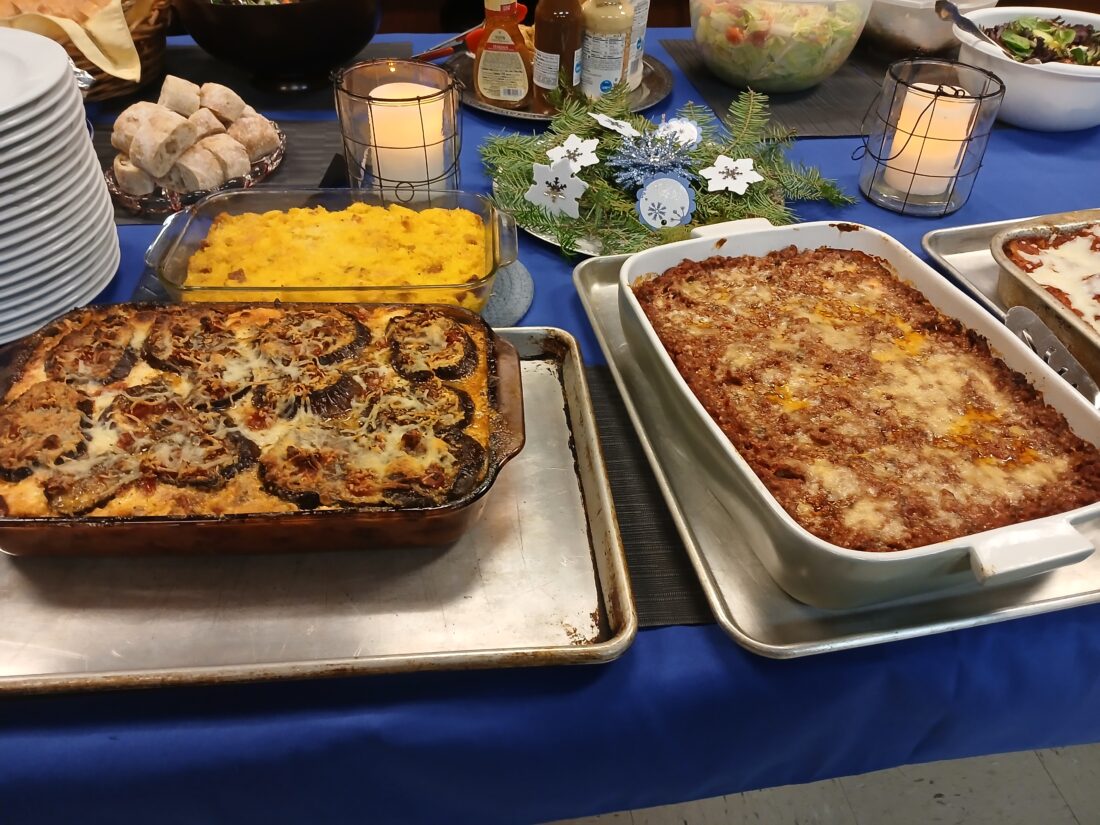
Lasagna. (Provided photo -- Yvona Fast)
“I never met a lasagna I didn’t like” — Garfield
Indeed – what’s there not to love about lasagna? It’s a favorite winter comfort dish. No matter how you make it, t’s a popular crowd-pleaser.
Made with alternating layers of pasta, cheese, and sauce, with meat and/or vegetables sometimes incorporated, lasagna is a delicious way to feed a crowd. Sharp cheeses and savory ingredients make this soft, juicy dish an all-time favorite.
The origins of the dish are as slippery as the noodles themselves. The Italian word may have its roots in the Greek word “lasanon” or chamber pot, which became “lasanum” or cooking pot in Latin. Others suggest origins from the Arabic word lawzinaj for a thin pastry cake cut into ribbons and other shapes. In either case, the first lasagna was not a noodle but more like a pancake.
Ancient Greeks and Romans used flattened sheets of dough (called laganon in Greek and lagani in Latin). But these were not boiled, like pasta, but baked or roasted on hot stones, more like pizza than lasagna. In his book De re Coquinaria, Apicius, a 1st century Roman writer, describes a dish made by layering lagani with meat or fish, but the recipe for the dough is not given. Cicero and Horace were both fond of lagani.
Boiled noodles do not appear until the 5th century AD. The first record is in the Jerusalem Talmud. Dry noodles were probably introduced to Italy when the Arabs conquered Sicily, and are described by the Arab historian Al Idrisi. Perfect for long ship voyages, dried pasta became popular in the fourteenth and fifteenth centuries.
The earliest mention of the layered pasta dish we call lasagna is in the thirteenth century. This early version was without tomato sauce, as tomatoes had not yet been introduced to Europe. In the earliest written Italian recipe (from 14th century Liber de Coquina), sheets of pasta were boiled and layered with spices and cheeses. A similar meal, known as “loseyns” (pronounced ‘lasan’), was served in King Richard II’s court in the 14th century; the first British cookbook features this recipe.
Today, this crowd-pleaser has many variations. An assortment of vegetables, cheeses, fillings and toppings creates numerous meat and vegetarian dishes.
It can be vegetarian or include meat — usually ground beef, sausage or a combination. Pasta can be omitted and replaced with layers of vegetables, like eggplant or zucchini, or slices of tofu, for a low-carb version. It can be made with homemade sauce and fresh spices, or canned sauce and pre-sliced or frozen vegetables. There is tofu, apple, or seafood lasagna. Traditional Italian seasonings of garlic and basil can be substituted with Oriental or Mexican spices. Mexican lasagna can be made with meat, chile peppers and beans layered with the noodles and tomato sauce.
Pasta layered with meat, cheeses (mozzarella, Parmesan and ricotta), and tomato sauce can be a calorie-laden dish, but adding vegetables like spinach, arugula, zucchini or mushrooms, along with tomato products, you can create a wholesome, low-fat dish. A pan can be prepared ahead, and feeds eight to ten people.
–
Vegetable Lasagna
–
This low-carb version omits the noodles. I used spaghetti squash for the bottom layer, zucchini for the middle layer and eggplant for the top layer.
–
Ingredients
–
About 2 cups spaghetti squash ‘noodles’
2 small zucchini – I used one yellow and one green
1 medium eggplant
A little oil for the pan
1 onion
1 or 2 cloves garlic
1 pound Italian sausage
1 pound ground beef
3 cups marinara or other pasta sauce
24 ounce ricotta cheese (3 cups)
2 eggs
1 cup shredded Parmesan
1 1/2 cups mozzarella
1 cup diced tomatoes, drained
Salt & pepper
Fresh Italian herbs (parsley, basil, oregano) OR Italian seasoning
Salt & pepper
–
Directions:
–
Prepare spaghetti squash or have ready leftover spaghetti squash.
To cook squash, first put the whole squash in the microwave for 10 minutes.
Next, slice the squash in half and remove the seeds. Season with salt, pepper, and a drizzle of olive oil. Bake 20 – 30 minutes or until fibers come out with a fork.
Slice zucchini. I sliced thin rounds, but some recipes call for slicing it lengthwise, so it better resembles noodles. Set aside.
Slice and roast the eggplant. Slice the eggplant and arrange on an oiled cookie sheet. Sprinkle with salt and pepper. Bake at 400 degrees F. for 10 minutes.
Make tomato-meat sauce. Peel and dice the onion. In a large skillet, heat a little oil over medium heat; add onions, sprinkle lightly with salt, cover and cook on low heat for 5 minutes. Peel and mince garlic; add, and cook a couple minutes more. Then add the sausage and ground beef. Cook over medium heat, breaking down the meat with a spatula, until browned and no longer pink. Stir in the marinara sauce, but reserve half a cup; then remove from heat.
Make ricotta mix. In a medium bowl, make the ricotta mix by stirring together the ricotta cheese, parmesan, eggs, salt and pepper.
Layer the ingredients. Oil a 9 x 13-inch baking dish lightly. Spread the reserved 1/2 cup of pasta sauce on the bottom.
Arrange the cooked spaghetti squash strands over the pasta sauce. Top with half of the meat-tomato sauce, then evenly spread half of the ricotta mix over the meat. Sprinkle a half-cup of shredded mozzarella over this, and some Italian seasoning or fresh herbs like basil and parsley.
Next, arrange your zucchini slices on top of the mozzarella. Again, spread with the remaining meat sauce, the rest of the ricotta mix, and another half-cup of mozzarella and seasonings.
Last, arrange the roasted eggplant (I flip them so the underside will roast) over the mozzarella. Add diced tomatoes in between the slices, and sprinkle with herbs. Then sprinkle the last half-cup of mozzarella over.
Place the dish in a preheated 400 degree F. oven and bake 20 – 25 minutes. Turn off the oven but leave the dish in it for another 20 to 25 minutes, then remove from oven and serve.
–
Spinach, Mushroom and Tofu Lasagna
–
Ingredients:
–
8 Lasagna noodles
1 quart (4 cups) pasta sauce
1 Tablespoon olive oil
2 large onions
10 ounces sliced mushrooms
20 ounces chopped frozen spinach, thawed
2 cloves garlic
1/2 teaspoon salt
1 egg
1 package (14 ounces) soft tofu
8 ounces (1 cup) Ricotta cheese
1/4 — 1/2 cup grated Parmesan, divided
1 pound (3 — 4 cups) grated mozzarella, divided
–
Directions:
–
Preheat oven to 350 degrees F.
Cook noodles in a large pot of boiling salted water. They don’t need to cook completely; they should be a little under-done, about 6 to 7 minutes should suffice.
While noodles are cooking, heat the olive oil in a skillet over medium heat. Add diced onions and sliced mushrooms, and cook about ten minutes, stirring occasionally. Add half of the spinach to this.
Crush garlic with salt. Whirl the egg in a food processor or blender, Add the tofu, ricotta, crushed garlic, Parmesan cheese, 1/4 cup of the mozzarella cheese, and ten ounces of the spinach, and continue blending until thoroughly mixed. Set aside.
Spray a lasagna pan with cooking spray, and begin layering. Put a thick layer of sauce in the bottom of a 13x9x2-inch lasagna pan. Make sure the sauce completely covers the bottom, or your noodles and cheese may stick. Arrange 4 lasagna noodles in a single layer over the sauce. Sprinkle with a little mozzarella cheese, then place half the mushroom mixture. Spread the tofu-ricotta on top of this, followed by more sauce, another single layer of noodles and the rest of the mushroom mixture. Cover with remaining sauce, and sprinkle mozzarella and Parmesan on top.
Cover the pan with foil and bake approximately 40 — 50 minutes, or until bubbly and piping hot. You may want to uncover it for the last ten minutes and raise the temperature a bit in order to brown the cheese.
Let the dish rest for 5 to 10 minutes before serving, to avoid burning your mouth with the hot cheese.
— — —
Author of the award-winning cookbook Garden Gourmet: Fresh & Fabulous Meals from your Garden, CSA or Farmers’ Market, Yvona Fast lives in Lake Clear and has two passions: writing and cooking. She can be found at www.yvonafast.com and reached at writeyvona@gmail.com.
Columns
Lasagna: Great way to feed a crowd
Whining and screaming
Parents are often screaming for solutions that will help them handle their toddler going through the stage we call ...

Breaking news in brief
An occasion of note
Last week at Nori’s, after a hard day of hanging out, swilling coffee and swapping lies, I went out to my car and ...
The cat’s meow
Cats are the best. If you don’t have a cat, you should get one. If you can’t get one, you could visit the cat ...