
Fresh, local eggs are a sign of spring
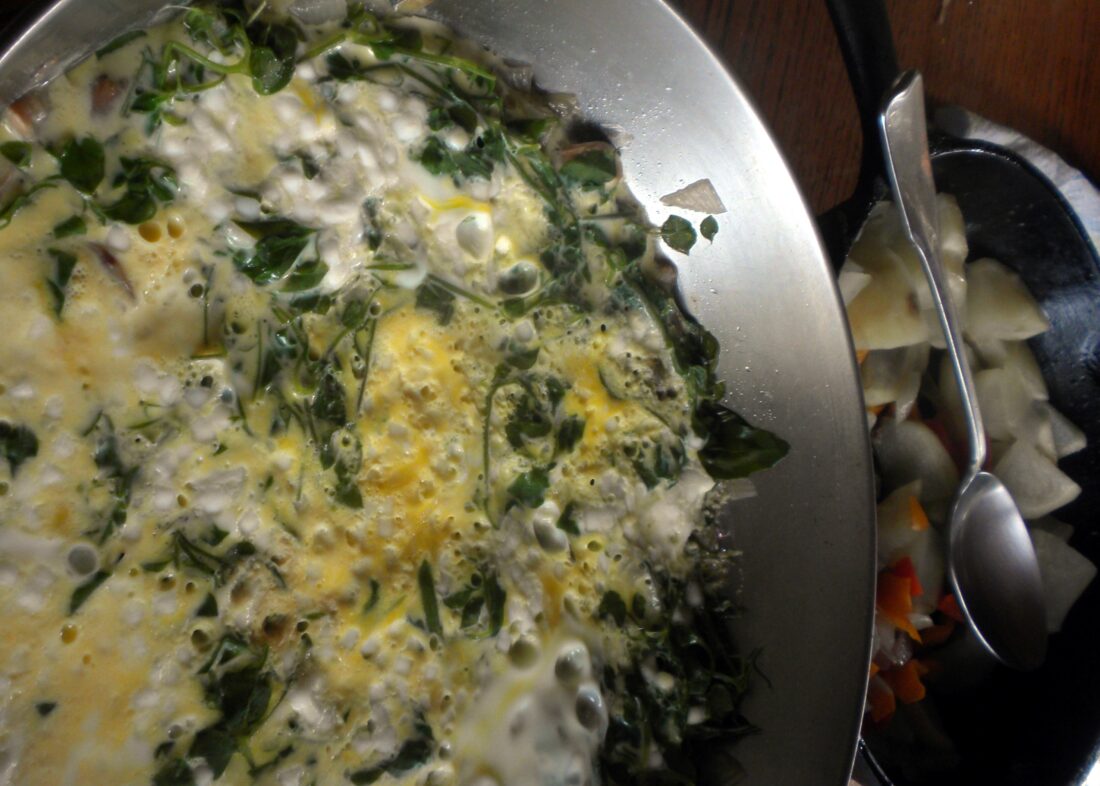
Spinach frittata (Provided photo — Yvona Fast)
“Omne vivum ex ovo – All life comes from an egg.” ~ Latin Proverb
It’s officially spring. Even though it’s been quite cold, we’ve passed the Spring Equinox and St. Pat’s Day. Crocuses are blooming at the Saranac Lake Free Library. We’re looking ahead to Passover and Easter. And Easter eggs …
Yes, chickens have begun laying more eggs, and I’m able to get fresh local eggs again.
Chickens and ducks that are not raised indoors in cages under lights respond to the longer days and are laying eggs like crazy. Eggs are part of many dishes — from desserts to salads to main courses, and are eaten for breakfast, lunch or dinner.
That’s because eggs are one of the most nutritious foods available. They’re an excellent source of protein. They’re rich in essential vitamins A, D, E and B group as well as the minerals iron, phosphorus, iodine and zinc. Recent research has debunked the belief that eating eggs increases the risk of heart disease.
People have been eating eggs since the dawn of time. There is archaeological evidence for egg consumption as far back as the Neolithic age, and we know that jungle fowl were domesticated in India by 3200 B.C.E. The domestication of fowl in China and India greatly increased the availability of eggs. By Roman times, eggs were widely used in sauces, breads and pastries.
Because they are symbols of fertility and birth, eggs became the center of many religious beliefs. The Hindus see the beginning of the world as a cosmic egg. Persians, Egyptians, Greeks and Romans all used colored eggs to celebrate spring festivals. A Latin proverb says, “All life comes from an egg.” In many parts of Asia, chicken and duck eggs are used to divine the future.
Eggs are served at the Passover feast to symbolize sacrifice and rebirth. They’re the unsung heroes of the holiday; the egg on the Seder Plate symbolizes the Temple sacrifice and reminds us that God has no beginning and no end.
Because of the relationship between Easter and the renewal of life, eggs have become a traditional part of the Easter holiday. Bringing forth new life from within their delicate shells, they are an obvious symbol of Resurrection.
Eggs bind together ingredients in traditional Passover dishes like kugel, matzah brie and matzah farfel casseroles. In Passover baking, whipped egg whites lend structure and lift to baked goods devoid of flour and yeast.
Decorated eggs, chocolate eggs, games with eggs, hidden eggs, rolling eggs and egg dishes are all part of Easter celebrations. Eggs are featured in dishes both savory and sweet, proclaiming the rebirth of life and a renewed world after the bleak winter months.
Eggs are versatile. They can be eaten whole or used in a variety of dishes: sweet and savory custards, puddings, omelets, frittatas, quiches or soufflés. They are a main ingredient in sauces such as mayonnaise or Hollandaise sauce, in baked goods such as popovers, muffins, quick breads and cakes; meringues; French toast and pancakes; crepes, egg noodles and egg rolls. Several traditional or ethnic soups, such as Chinese egg drop soup, Thai Hot and Sour Soup or Avgolemono (Greek Lemon-Egg Soup), rely on eggs to complete the dish.
What’s your favorite way to eat eggs? Here are a couple of ideas.
Springtime Egg & Veggie Salad
Ingredients:
3 eggs
1 cup cottage cheese
2 tablespoons Greek yogurt
3 green onions
6 radishes
1/4 cup minced fresh parsley
1/2 teaspoon salt (or salt and pepper to taste)
Directions:
Place eggs in a single layer in a pan and cover with water one inch above eggs. Bring to a boil, then turn off the heat. Let it sit for 20 minutes, then drain. Dunk into ice water, peel and dice.
While eggs are cooking, cut off the root ends and brown parts of the green onions and slice thin. Wash radishes, cut off roots and dice finely. Wash & mince parsley. Combine all ingredients in a large bowl. Serve with bread or crackers.
Easy Spring Green Frittata
Ingredients:
1 tablespoon avocado or olive oil
1 small onion (about 1/2 cup)
1/2 red bell pepper (about 1/2 cup)
1 small clove of garlic (or 1/2 teaspoon garlic powder or garlic salt)
1/2 teaspoon salt
4 cups chopped broccoli, spinach or kale
6 large eggs
1/3 cup milk of your choice
1 tablespoon water or broth
1/4 teaspoon black pepper, 1/4teaspoon turmeric
1 cup ham, chopped, optional
1/2 cup cheese of your choice (cheddar, parmesan or mozzarella, etc.), optional
Directions:
Oil an 8-inch baking dish and set aside.
Preheat oven to 375 degrees F.
Prepare the vegetables: peel and dice the onion, wash and seed pepper, peel and mince garlic. Remove kale from stems; chop the vegetables or separate the broccoli florets.
Heat the olive oil in a skillet. Add the onion and pepper and cook on medium-low heat for about 5 minutes. Add garlic and chopped green vegetables, and cook another 5 minutes until greens are wilted or broccoli is tender.
Meanwhile, beat the eggs with milk and seasonings. Set aside.
Stir the ham into the vegetables in the skillet, if using. Remove from heat.
Spread the vegetable-ham mixture in the bottom of the prepared baking dish. Sprinkle with half the cheese, if using.
Pour the beaten eggs over the top of the veggies. Top with the remaining 1/4 cup of cheese.
Bake for 30 to 35 minutes, until the center is set and the top is golden and lightly puffed.
Let cool for 5 minutes before slicing and serving.
Serves four.
Columns
Falling through the cracks
We are fortunate to have excellent health care in Saranac Lake, but that doesn’t mean our medical services are ...
Fresh, local eggs are a sign of spring
A staycation vacation
One year my daughter was so jealous that her friends were going on a spring break holiday while she “had” to ...
Tougher seat belt laws could save lives
Seat belt laws vary widely throughout the 50 states and the District of Columbia. While New Hampshire is alone in ...

101-year-old Lake Placid News
Safe handling of breast milk and formula
Parents have been sending me lots of questions about how to properly store and prepare breast milk and infant ...