Beyond chili
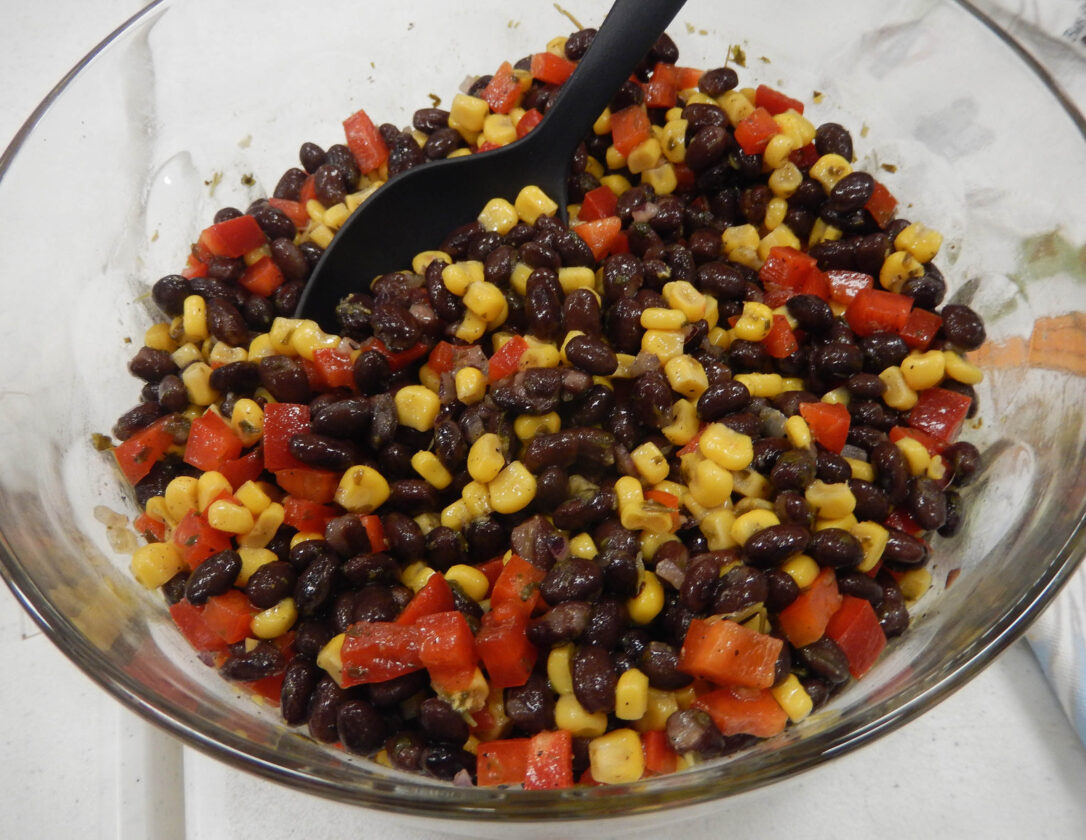
Black Bean, Corn and Pepper Salad (Provided photo — Yvona Fast)
Beans. Lentils. Split peas. Garbanzo beans/chickpeas. Black-eyed peas. These are pulses or legumes. A pulse is a seed; it grows in a pod of one to 12 seeds. After harvest, it is dried and becomes a legume. These include beans, lentils, peas and other little seeds.
Lentils are small, lens-shaped legumes. Beans are larger. Pulses include beans that are whole and seeds that are split (like split peas). The split kind can have skin, but often the skins are shelled off.
In India, pulses are the mainstay of the diet. They’re a primary protein source for vegetarians and India has a lot of vegetarians. Indian dishes made with legumes include dal, kichidee, kathoor, salads, stews and soups. They are often ground into flour for flatbreads, noodles and desserts. The whole bean is often stir-fried with spices or cooked into a curry. It is also often cooked into a soup or stew (dal).
During the Middle Ages, in late winter and early spring — the 6 weeks of Lent leading up to Easter — pulses were the mainstay of the local diet. Meat, eggs and dairy were both scarce and forbidden. Provisions stored from the fall harvest, like root crops and canned goods, were used up. Crops could not be planted until the ice melted and the weather warmed in spring. So the diet consisted of peas, lentils and fava beans; grain like barley, oats, millet and wheat; nuts like pistachios, walnuts and almonds.
Most Americans are unfamiliar with legumes or pulses. They only know baked beans, chili and split peas from split pea soup. But there are many varieties of these little gems, and so many dishes that can be prepared from them. Restaurant chefs are finding many ways to use them in high-end menus. Home cooks are using them in soups, stews, salads, casseroles and even baked goods like brownies. The push for gluten-free baked goods has caused the food industry to make good use of pulses. In supermarkets, they are showing up in pastas, crackers, chips, hummus and many other products.
There are so many varieties of beans besides kidney — in fact, I prefer black beans and great northern. Lentils, too, come in many varieties besides green and brown, I know tiny black lentils and red lentils. Split peas come in both yellow and green.
Pulses or legumes are full of protein, fiber, iron and many other nutrients, so adding them to your diet is a great way to eat healthier.
There are so many recipes to make with these little gems, and countless ways to prepare them. Today, you can buy canned beans, but dry beans are usually less expensive. Before cooking them, sift to remove any pebbles and debris, and rinse them. If your dried beans are old, they will take longer to cook.
Soaking dry beans reduces the cooking time. To soak, leave in water overnight or for several hours. You can also bring them to a boil, remove from heat and leave for a couple hours in the hot water to reduce the soaking time. Drain after soaking, add fresh water and cook. Lentils cook faster, so they do not need soaking.
Legumes taste best when cooked slowly. You can cook pulses on the stovetop, in a pressure cooker or in a slow cooker. A general rule is to use 3 parts of water to 1 part bean or lentil, though a pressure cooker needs less liquid. Bring to a boil, then lower heat to a simmer and cook until tender. Check occasionally to make sure the water has not boiled off. Don’t add salt or acids (like vinegar or lemon) until after they’re cooked and softened.
Slow cookers are convenient; just throw everything in in the morning and it is ready by suppertime. Use 3 parts water to 1 part bean or lentil.
–
Lentil Apple Salad
–
Ingredients:
1/2 cup dry brown lentils
1 teaspoon salt, divided
1 bay leaf
1/4 teaspoon dried thyme
2 apples
2 tablespoons apple cider vinegar
1 small clove garlic, minced
2 tablespoons olive oil
1 tablespoon maple syrup
1 rib celery, sliced thin (about 1 cup)
1 bunch scallions, sliced
1 or 2 cups fresh greens (lettuce, spinach, arugula — your choice)
1/2 cup crumbled feta cheese or chopped nuts, optional
Directions:
Place lentils in a saucepan with 1 cup of water (you can use part apple juice or broth). Add bay leaf, a half-teaspoon of salt and thyme. Bring to a boil, reduce heat to simmer and cook about 15 to 20 minutes.
While lentils are cooking, wash, core and dice the apples. Mix with apple cider vinegar. Crush the garlic with remaining salt and add to the apples. Stir in olive oil and maple syrup.
When the lentils are tender but still firm and the liquid is absorbed, remove the bay leaf and drain any excess liquid. Cool. Stir into the salad. Slice the celery thin and tear the greens. Add to the salad, along with the cooled lentils. Toss to mix. Garnish with feta for an extra Greek touch.
–
Bean, Grain and Greens Pot
–
Ingredients:
3/4 cup small white beans, such as Great Northern or pea beans
2 teaspoons cooking oil
1 large onion, diced
4 ounces sliced mushrooms
1 cup sliced celery
3 garlic cloves, minced
1-2 teaspoons salt
6 cups broth or water
1/2 cup barley
2 bay leaves
4-5 grains allspice
1/4 teaspoon red pepper flakes
Soup vegetables: 2 carrots, piece of celery root, wedge of cabbage, piece of leek, parsnip,
1 potato
1/4 cup dry red wine
1/2 teaspoon marjoram
1/2 teaspoon thyme
3 cups leafy greens (such as kale, spinach, cabbage, etc.)
1 tablespoon wine vinegar
Directions:
The night before, place beans in pot with enough water to cover. Soak overnight. (Or, use the rapid soak method on the same day that you’re making soup).
Heat cooking oil in the bottom of a large soup pot. Add onions and mushrooms; cook about 5 minutes. Add garlic and celery; cook a couple more minutes. Add broth or water, salt, drained beans, barley, bay leaves allspice and pepper. Bring to a boil; lower heat to simmer about 40 minutes. Add vegetables, potato, wine and herbs and cook 20 minutes more. Add greens and cook until tender (about 15 minutes for kale, just a couple for spinach). Add wine vinegar, taste to adjust seasonings.
Serve hot garnished with your choice of sliced black olives, diced ham or smoked sausage (such as kielbasa or chorizo), chopped fresh tomato, or a sharp grated cheese such as Romano.
–
Middle Eastern Lentil Soup
–
Vegan, gluten free and yummy — you won’t miss the meat.
Ingredients:
2 teaspoons olive oil
2 medium onions
1 teaspoon salt
1/4 teaspoon black pepper
2 or 3 garlic cloves
1 stalk celery
1 carrot
1 parsnip
1 turnip
1/2 teaspoon thyme
2 quarts water (or more)
2 cups brown or green lentils
1/2 cup millet or long-grain brown rice
8 oz. kale, spinach, or other greens (fresh or frozen; chopped)
Juice of 1/2 lemon or 1 tablespoon apple cider vinegar
2 to 4 tablespoons chopped fresh parsley or dill
Directions:
Heat oil in the bottom of your soup kettle (or in a skillet, if you plan to make this in a crockpot).
Peel and dice the onions. Add to pot, sprinkle with salt and pepper. Cover and cook on low 5 minutes, until translucent.
While onions cook prepare remaining vegetables: wash & slice the celery, carrot, parsnip; wash and dice the turnip; peel and dice garlic clove. Add all to pot with the onions and cook in the oil another 2 – 3 minutes.
Add water, thyme, lentils and millet to the pot. (If you’re doing this in a crockpot, add water, lentils and thyme to the crockpot along with the veggies you sauted in a skillet; cook millet separately and add at the end).
Bring to a boil. Cover, lower heat to a simmer and cook gently 35 to 45 minutes, until lentils and millet are soft. Add more water if needed.
Option: Cook the grain separately and add to Middle Eastern lentil soup when cooked. Experiment with other grains: barley (contains gluten), buckwheat or quinoa.
Just before serving, add chopped greens and cook just until wilted (10 – 15 minutes for kale, about a minute for spinach.)
Remove from heat. Add lemon juice or vinegar and chopped fresh parsley or dill. Stir, and serve with salad and nice crusty bread, or topped with croutons if you wish. Serves 8.
— — —
Author of the award-winning cookbook Garden Gourmet: Fresh & Fabulous Meals from your Garden, CSA or Farmers’ Market, Yvona Fast lives in Lake Clear and has two passions: writing and cooking. She can be found at www.yvonafast.com and reached at writeyvona@gmail.com.
Columns
Safety versus luxury
When buying a new vehicle, choices abound. Not just what make and model to buy, but also what features you want. ...
Beyond chili

Heart murmurs

As Yogi Berra famously said, ‘It’s deja vu all over again’

Carnival 2026 wrap-up rap