
Cauliflower: Purple, yellow, green, white, sprouting
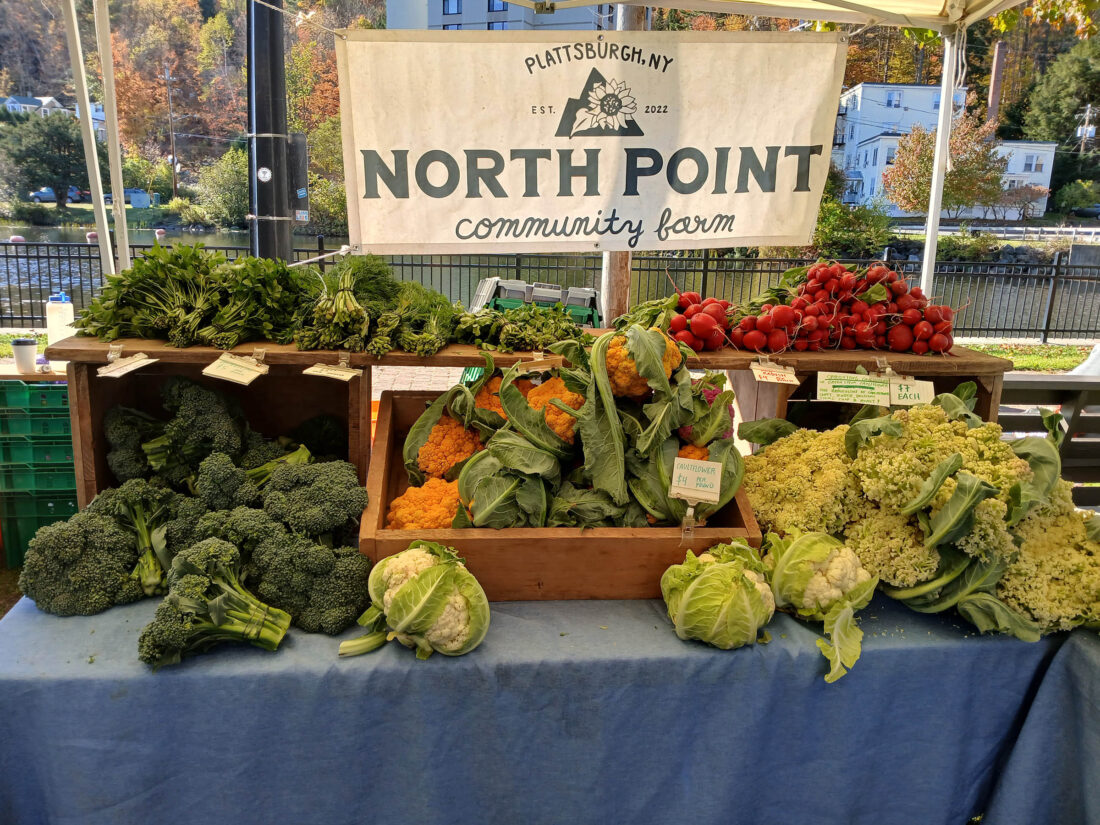
Cauliflower at the farmers market (Provided photo — Yvona Fast)
It’s fall. Last Saturday was the last farmers’ market at Riverside Park. There were no cucumbers, and few summer squash. I still managed to get some tomatoes.
But there were plenty of fall veggies, including some you may be unable to find at your supermarket in winter, like Napa and bok choy cabbage varieties. And lots of cauliflower, in all colors of the rainbow from yellow to purple to light green to white.
I bought a sprouting cauliflower — also called a green-stem cauliflower. It was unfamiliar to me; it didn’t even look like cauliflower. I tasted it. It was so tender, I didn’t bother cooking it. I used the florets raw in salad instead.
Cauliflower is healthy. It’s low in calories and high in fiber. It contains vitamins A, C and K plus folate and many of the B-complex ones, as well as 18 amino acids, Omega-3 fatty acids and the minerals potassium, calcium, copper, iron, manganese, magnesium, phosphorus, selenium and zinc. Like other crucifers, it contains compounds that prompt the liver to produce enzymes that detoxify cancer-causing chemicals and interfere with the replication of cancer cells.
Yellow and purple variants come with additional health benefits. The orange variety is a good source of beta carotene, while purple cauliflowers are rich in anthocyanins, phytochemicals with anti-inflammatory, antioxidant, heart-healthy, anti-aging and anti-carcinogenic properties.
Cauliflower originated in the Middle East from a wild cabbage. Popular in the Mediterranean basin from Turkey to Italy, it has been used since Roman times and spread from Italy to the rest of Europe in the 16th century. Italians still use it in a variety of salads and hot dishes. It’s used in thick soups in northern and eastern Europe. In India, it’s a common ingredient in curries.
The fact that it is botanically a flower is reflected in the name: our English name comes from the Italian “cavol fiore” (cabbage flower). It is known as cabbage blossom (chou fleur) in French, and blumenkohl (blooming cabbage) in German. The flowerhead consists of underdeveloped flower buds on a central stalk.
To prepare, cut off the stem and leaves, and trim away any brown areas. Rinse under cool water. To separate the florets, cut them away from the inner core. Cut up the large florets to a desired size, and cut the inner core into pieces.
Mom cooked cauliflower by trimming the leaves, then dropping it whole gently into a large pot of boiling water. Lower the heat and cook, uncovered, until tender when pierced by a fork, about 5 to 10 minutes. Drain, and cool under cold running water. When cooked this way, it is much easier to separate the florets and cut them to a desired size than to cut a raw cauliflower. Rapid cooking will reduce the odors, preserve the color and reduce the loss of nutrients. Adding a little vinegar or lemon juice to the cooking water will preserve the bright color.
You can steam or microwave cauliflower. It is great stir-fried, but be careful not to overcook; it is faster than steaming. Cooked cauliflower has a milder flavor than raw, though cooking destroys some of the vitamin C.
Cauliflower is versatile. It can be eaten raw with dip or added to salads, added to soup, sauteed, roasted, broiled, grilled, steamed or cut into steaks and barbecued. It can be mashed and served in place of potatoes (or combined with mashed potatoes) or made into a gluten-free pizza crust. Cauliflower can be served on its own as a side, tossed with herbs, vinegars and oils. It can be made to do culinary tricks, like making soup feel creamy without fat-laden cream or standing in for starchy, high-calorie potatoes when mashed.
To serve as a side, dust steamed or cooked florets lightly with a sharp cheese like Cheddar or Parmesan and mix. Or season with buttered bread crumbs: melt a tablespoon of butter in a skillet; add two tablespoons of bread crumbs and brown. Drizzle this over the cooked cauliflower, and mix gently, without crushing the cooked florets. This was my Mom’s favorite way to serve it.
–
Cauliflower Broccolini Tomato Salad
–
Ingredients:
–
2 cups sprouting cauliflower florets
1 cup broccolini florets
1 avocado, peeled, seed removed, cubed
1/2 cup thinly sliced yellow zucchini or cucumber
1 cup green part of scallions, sliced
2 tomatoes (I used 1 yellow and 1 red)
1/2 cup crumbled feta
–
Dressing:
–
1/2 teaspoon fresh garlic (I used a microplane) or garlic powder
1/2 teaspoon seasoning salt (or plain salt)
Dash black pepper
2 teaspoons apple cider vinegar
1/2 teaspoon honey
1 teaspoon olive oil
Dressing option — use a bottled vinaigrette dressing
–
Cauliflower Skillet
–
Ingredients:
–
1 Tablespoon cooking oil
1 yellow onion
1 skinless, boneless chicken breast (about a pound)
1 teaspoon salt
1 small head of cauliflower (about 3 to 4 cups cut up)
1 small head of broccoli (about 2 cups)
1/3 cup broth or water
2 small or one large carrot (1 cup or a bit more)
1 garlic clove
1 teaspoon basil
–
Directions:
–
Heat oil in a large skillet. Peel and dice the onion. Add onion and chicken to the skillet; sprinkle with a little of the salt. Cook, turning chicken, 8 to 10 minutes or until chicken is opaque and cooked through. Remove the chicken.
While the chicken is cooking, prepare the cauliflower and broccoli by breaking them up into florets. Add to the pan, sprinkle with the remaining salt and cover. Slice the carrots, and add. Crush the garlic clove, and stir it in along with the basil. Cook, covered, until the vegetables are tender, about 10 minutes.
While the vegetables are cooking, cut up the chicken. Stir the pieces into the vegetables, heat through and serve.
Cauliflower Burgers
Ingredients:
1 head of cauliflower (about 3 to 4 cups cooked)
Salt (1/2 teaspoon, or to taste)
1/2 cup bread crumbs
2 eggs
oil for pan-frying
Sprigs of parsley
Chopped fresh tomato (for garnish, optional)
–
Directions:
–
Steam or simmer cauliflower until tender, about 10 minutes. Cool.
Combine cauliflower, eggs and breadcrumbs in a food processor; process to blend. Season with salt and pepper to taste. Shape into small patties, dip on both sides in additional bread crumbs and cook in medium-hot oil or butter on both sides until golden brown. Place on a serving platter, decorate with tomatoes and parsley. Serve plain or with cheese sauce, mushroom gravy, sour cream or tomato sauce and a salad.
–
Mom’s Cauliflower Soup
–
Ingredients:
–
5 cups water
1 teaspoon salt
3 to 4 grains of allspice
1 to 2 bay leaves
1 chicken thigh
1 potato
2 carrots, sliced
1 stalk celery, sliced
1 large cauliflower
2 cups milk
1/4 cup fresh chopped parsley
–
Directions:
–
In a large saucepan, bring the first five ingredients to a boil, then lower to a simmer. While the broth is cooking, peel and cut up the potato; slice carrots and celery. Remove leaves and core from the cauliflower.
When the broth has cooked for about 20 to 30 minutes, remove the chicken. Add the potato, carrots, celery and cauliflower and return to a simmer. Cook for about 20 minutes, until the vegetables are soft. When the chicken is cool enough to handle, remove the bones and cut up the meat. When vegetables are cooked, remove the cauliflower and cut it up. Return to the pot along with the cut-up chicken. Add milk and parsley and heat through. Taste to adjust seasonings. Serve right away.
— — —
Author of the award-winning cookbook Garden Gourmet: Fresh & Fabulous Meals from your Garden, CSA or Farmers’ Market, Yvona Fast lives in Lake Clear and has two passions: writing and cooking. She can be found at www.yvonafast.com and reached at yvonawrite@yahoo.com or on Twitter: @yvonawrites.
Columns

5W Wednesdays
What I’m really trying to say
Marilyn McCabe presents a creative approach to writing poetry in her latest work, “Always With the Questions! One ...
Falling through the cracks
We are fortunate to have excellent health care in Saranac Lake, but that doesn’t mean our medical services are ...
Fresh, local eggs are a sign of spring
A staycation vacation
One year my daughter was so jealous that her friends were going on a spring break holiday while she “had” to ...
Tougher seat belt laws could save lives
Seat belt laws vary widely throughout the 50 states and the District of Columbia. While New Hampshire is alone in ...