Cuba: So close, but so far away
-
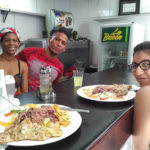
- Willa Evans-Kummer, right, enjoys a meal at a “hole-in-the-wall” restaurant in Habana Viejo (Old Havana), Cuba. (Photos provided)
-
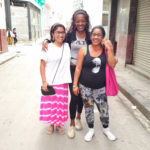
- Willa Evans-Kummer, left, poses with new friends in Havana, Cuba. (Photo provided)
-
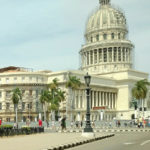
- The capitol building in Havana, Cuba, resembles the U.S. Capitol in Washington, D.C. (Photo provided by Celia Evans)
-
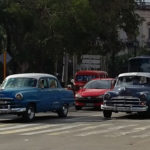
- Old Chevrolet cars serve as taxis in Havana, Cuba. (Photo provided by Celia Evans)
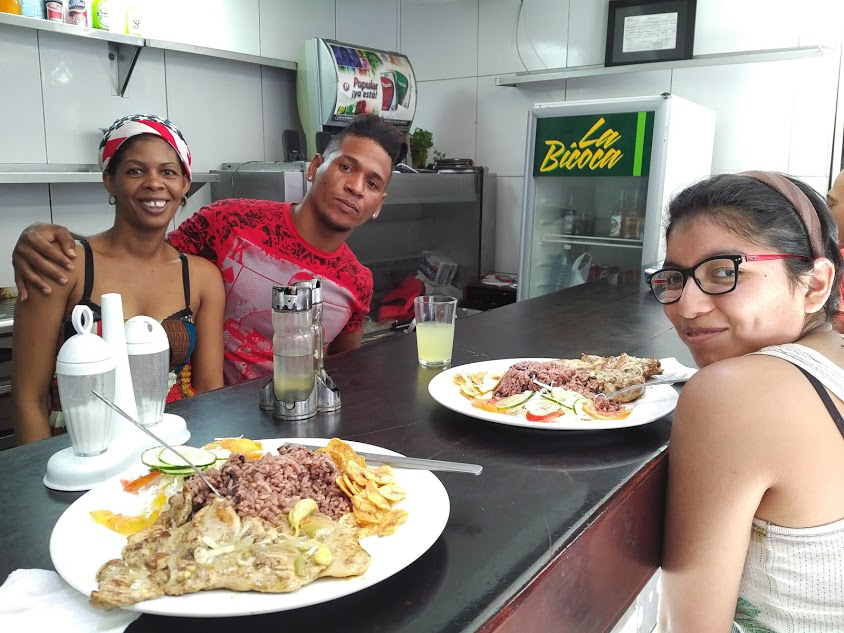
Willa Evans-Kummer, right, enjoys a meal at a “hole-in-the-wall” restaurant in Habana Viejo (Old Havana), Cuba. (Photos provided)
Share your travel tale
—
Do you have a travel story you want to share?
Your fellow Enterprise readers might enjoy your anecdotes and appreciate your recommendations, and therefore we’re willing to consider it for publication.
Write it up in 500 to 1,000 words, and submit it with photos, either to Managing Editor Peter Crowley (pcrowley@adirondackdailyenterprise.com) or News Editor Brittany Proulx (adenews@adirondackdailyenterprise.com).
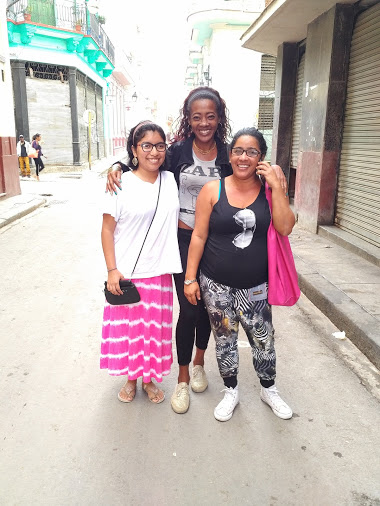
Willa Evans-Kummer, left, poses with new friends in Havana, Cuba. (Photo provided)
—
Have you ever wanted to go to Cuba? It is only 90 miles from Key West, Florida. It’s really close but SO far away.
There are 12 reasons that you can go and visit Cuba. My mom and I went for educational and journalistic purposes. The easiest way is by saying you want to “support the Cuban people.”
Speaking of people, the most important person I met was our Airbnb host. His name is Alexei, and he is really nice and cared about what we felt and what we were interested in. He helped us learn more about their culture and history. Alexei rents out one room in his house for travelers. We stayed in downtown Old Havana (Habana Viejo). The streets were narrow, and the buildings were tall, with pretty, intricately wrought iron fences and gates with open courtyards. Many of the houses had second-floor balconies.
Other people I met were my salsa instructors. My mom and I took salsa dance lessons with really talented salsa dancers. The dance was actually called Casino. It seemed to be very important in their culture. Everyone we met seemed to know how to dance! We also met these two really sweet women, who were normal Cuban people.
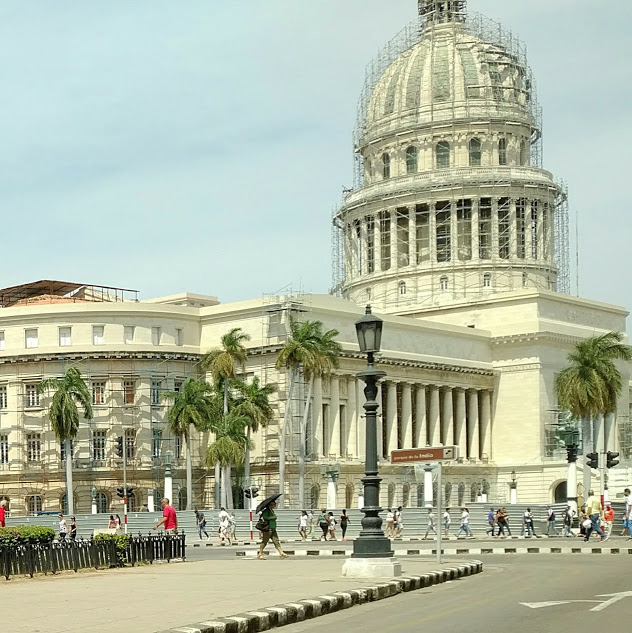
The capitol building in Havana, Cuba, resembles the U.S. Capitol in Washington, D.C. (Photo provided by Celia Evans)
The Cuban people are very diverse, with Spanish, Latino, African and Central American descent. The women took us to go listen to some really good Cuban music at a nice outdoor club close to Alexei’s place. Old Havana, founded in 1519, is a UNESCO (United Nations Educational, Scientific and Cultural Organization) world heritage site. It is important because of its maintenance of the historical and architectural environment that makes it the most historic city in the Caribbean and the American continent.
The food there is delicious. It consists of rice, beans, chicken and seafood. It is not spicy, but some of it does have peppers. I personally do not usually like peppers. I could not taste them, so to me it was fine. My first meal was in a hole-in-the-wall on the street. It was very good. It consisted of pollo (chicken), haba (beans), arroz (rice) and llanten (dried plantains). Beans and rice are called Moros y Cristianos (the Moors and the Christians). There were many other restaurants. The more fancy ones were located in plazas on the streets, near the big parks. One of them we visited had live music by the entrance. The others played U.S. music with Cuban music in between. You would sometimes see boys on bikes selling pastries. They don’t cost that much. You have to pay around 40 cents to get two. They have guava jam in them. One was like a quesadilla with jam inside instead of queso (cheese). The other one was a cookie with the jam covering it. They also had small fruit markets in spaces between buildings. They grow their own fruit and vegetables; also they butcher their own meat. They also had “bicitaxis,” bicycles with covered buggies on the back that could transport two people. They looked very fun; I wish my mother would have let us ride in one!
They still have old ’50s cars. They have them because when the U.S. cut the ties with Cuba around 1960, the Cubans had to keep the cars running for transportation. There were also a lot of Russian cars made by Lada because the Cuban government had ties to Russia for some time after that (1959 to 1991) until the collapse of the Soviet Union in 1991. What followed was the hardest economic time for Cubans in their memory, until around 1999. Because of that hard time, Cubans had to learn how to do things on their own and without the things they were used to having. Now they use both types of cars for taxis because they have more modern-day cars.
They also have a Museum of Revolution. This museum is very important to them.
The capitol in Havana is mostly a replica of the capitol building in the U.S. It is smaller and taller, and it has a bigger dome than the capitol here.
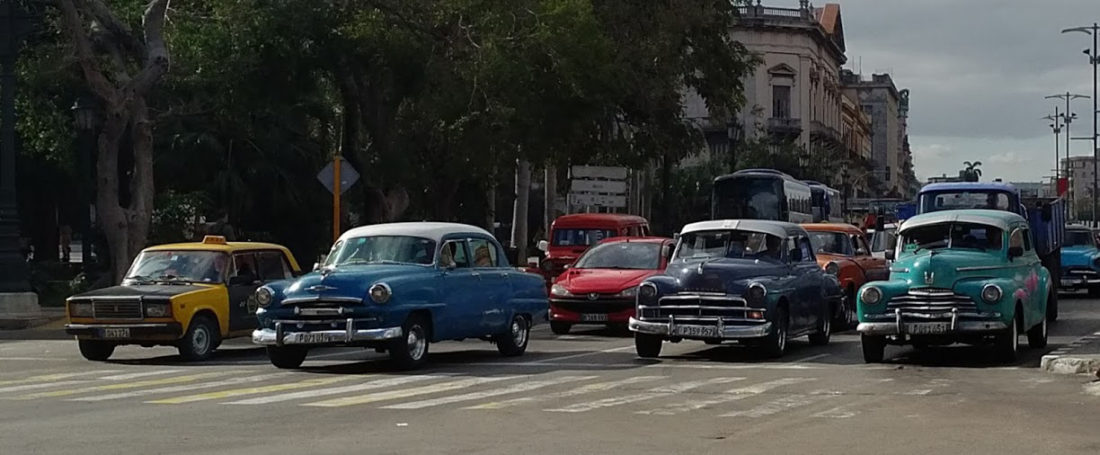
Old Chevrolet cars serve as taxis in Havana, Cuba. (Photo provided by Celia Evans)
There is another island close to the main one. It is called Casa Blanca, and it was where one of the main figures of the Cuban revolution lived while he was helping Cuba. His name was Ernesto “Che” Guevara; he was a very important person to the Cubans because he helped overthrow the dictator Batista.
The people of Cuba whom we met were very nice and helpful. Their culture is part of their soul, and full of music and dance and passion. Food was very delicious, and I hope someday I can go back and have more. I would like to try more of the hole-in-the-wall Cuban food and ride in the back of a ’57 Chevy convertible — my dream cars! We found out a lot about their history, and my mother and I want to learn more because there are so many unanswered questions that we have now after seeing just a little bit. I want to go back and visit more villages outside of the main city where they grow fruits and vegetables. I recommend travel to “support the Cuban people” and experience the culture and history.
Willa Evans-Kummer lives in Onchiota and is a ninth-grader at Saranac Lake High School.
Columns
Big meeting of the VIS
The Village Improvement Society has kept Saranac Lake beautiful over the years with the many parks throughout the ...
My first brush with history
Even though I was always a logophile and I taught English for a year or two, my first love in academe was ...
Image of the Week, from Historic Saranac Lake
5W Wednesdays, from Historic Saranac Lake
Making sure all bellies are full
I am obsessed with food. I’m not talking about just eating it, though that is a very important element. I make a ...