
A new approach to ‘tough kids’
SLCSD board member writes book calling for overhaul of how teachers treat behavioral struggles
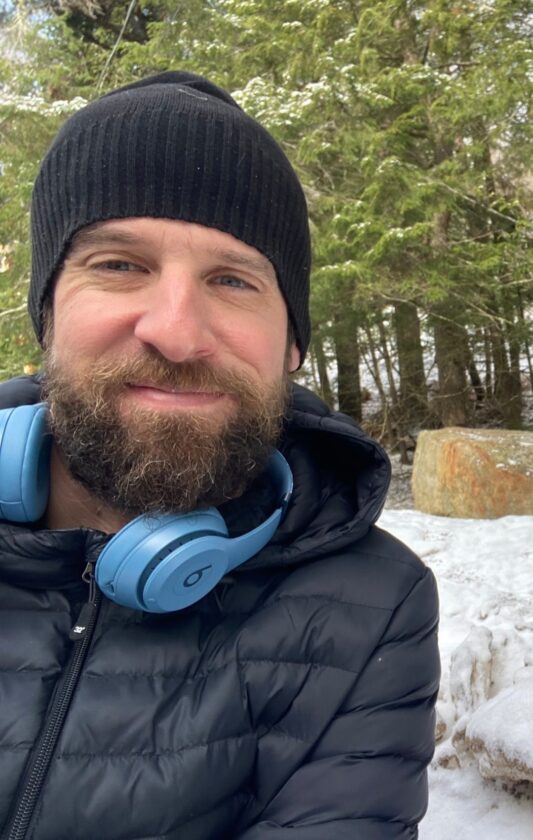
Justin Garwood (Provided photo)
SARANAC LAKE – Justin Garwood, a Saranac Lake School Board of Education member and a professor of special education at the University of Vermont, has written a new book calling for an overhaul of the way educators work with students with emotional and behavioral disorders.
Written with his friend and colleague Christopher Van Loan, the book “Tough But Worth It” states that the way things are done currently are not good enough. These students still have high rates of dropping out. The majority of the time, Garwood said students drop out because they don’t feel included.
He said things need to shift from the clinical “evidence-based practices” of academia to “practice-based evidence” grounded in building human relationships in the real school settings.
The book begins in dramatic fashion with a simple question.
“How would you react if a student told you to f*** off?”
Usually, when someone does that, they say the instinct is to fight back or walk away.
“However, you don’t get to walk away from your students,” the book states. “They will be there tomorrow, and so will you.”
Garwood suggests getting to know the students, having relationship-based interventions, handling outbursts in a restorative and trauma-informed manner and setting a culture of high expectations to be able to handle such a situation.
It’s not easy. The book says they use the term “tough kids” purposefully, and lovingly.
They are tough to manage, but also tough in the sense of resilience.
“If you knew what these kids dealt with, it’s amazing they show up to school at all,” Garwood said.
Against the grain
“What we’ve been doing with these kids for 50-plus years just doesn’t work,” Garwood said.
Despite federal laws like the Individuals with Disabilities Education Act of 2004, he said these “tough kids” still have bad statistics when it comes to graduation, employment, college, prison and substance abuse.
“Outcomes for students labeled with emotional disturbance are bad, worse now, in the 2020s, than for any other group of students,” the book states.
To help these kids change their behavior, educators need to change their behavior, they argue.
Most books tell educators to do something specific with the kid to make them change, Garwood said.
When the publisher, Solution Tree Press, approached him to write a book about inclusion of students with behavioral issues, at first, he didn’t want to. There are dozens of books on the topic and they’re mostly pretty similar, he said. Most of the academic literature comes at it from a behaviorist viewpoint – a carrot and a stick.
The publisher told him that he could say what he wanted, and Garwood saw an opportunity to offer a different perspective, to put ideas that are talked about at conferences he attends, but not put into the literature, into the discussion.
Garwood and Van Loan are not the only people to talk about this, but he said they want to be strong advocates for it.
“At the heart of teaching is the belief that all students – no matter how disruptive or resistant – can grow, learn and succeed when given the chance,” they say in the introduction.
Both Garwood and Van Loan taught a class on teaching kids with these struggles at Appalachian State University. Their students read nonfiction novels from former teachers, not textbooks. Garwood said their students responded passionately and emotionally to these books. They weren’t clinical books. They were about the messy reality of teaching complex young humans.
“We remember what it was like to be told we had to do something a certain way, because the evidence suggested it would work, when we already knew our students would not respond,” they say in the book.
On the ground, in the classroom, they saw what motivates students. They said they noticed this didn’t always jive with what they read in their academic books.
In the introduction, they lay out several unconventional core ideas – “High-quality relationships are the best intervention,” “Showing students you care is more important than showing what you know” and “A teacher’s personality is more important than their degrees.”
Garwood said they’re in unknown territory right now as they sit in limbo waiting for readers’ responses. They’ve received a few positive emails so far.
They worried they might make enemies with what they have to say, but he said they’re not trying to be antagonistic.
People and pigeons
Two decades ago, Garwood worked at Petrova Elementary as a one-on-one aide with a student who had behavioral and emotional struggles. They were together almost all day, every day. These interactions became a core memory for him.
After he became a classroom teacher, he realized he was drawn to care about the kids on the margins – the ones most likely to drop out.
He said that the student’s outcome did not come out well.
Working in a public school motivated him to get his PhD. He wanted to learn how to best serve kids with emotional and behavioral issues, feeling that the “off-the-shelf interventions” are not effective enough and that connection with students is the missing ingredient.
When Garwood was in school in the 1980s and ’90s, there was a “zero tolerance” policy.
“One strike and you’re out,” he said.
Then, around the turn of the millennium, standard practices pivoted to “positive behavior interventive supports,” or PIBS. This system incentivises students to be good by offering rewards and building a culture of positive support.
This is all well and good, Garwood said, but the problem is that it is steeped in behaviorism. Behaviorism was largely pioneered by psychologist B.F. Skinner. It is the idea that behavior is a reaction to the external environment.
An example of how this is used is “If you want ice cream, eat your vegetables.”
This relies on extrinsic motivation, which he compared to bribing them into compliance. It works sometimes. If you bribe a kid with candy, they’ll usually do what you ask them, he said; “but what about when there’s no sweet incentive?”
True change needs to come from within, he said.
Garwood said while Skinner’s findings have lots of value, Skinner worked with pigeons, not people.
Children at school are there to learn academics, but also to learn how to behave in society. Being punitive is not teaching, he said. In the book, they compare it to preparation for prison.
Garwood said no one starts teaching to hand out worksheets and referrals for detention, but along the way, working in the system that’s been set up, that’s often what ends up happening.
They believe every child just wants to be happy. Some go about it in a strange way. Their goal is to be empathetic.
Local focus
From the SLCSD school board, Garwood said he gets to ask questions and talk with administrators about discipline practices, especially regarding students with disabilities. He said he’s pleased with the district’s practices.
Petrova Elementary Principal Brian Munn told him they stopped using PIBS when they felt it didn’t work.
“Tough but Worth it” is mostly aimed at teachers and administrators. In its last chapter, it turns to university faculty like them – the people who teach the teachers.
Garwood hopes professors will adopt their book and ideas into their curriculum to spread their message as they train the next generation of teachers.
Garwood and Van Loan have done research into the methods they recommend in the book. He’s hoping that the book inspires more people to do more research on these concepts.
He said they plan to share the book at conferences in their field.
Local News
Youth art contest accepting submissions through Sunday
SARANAC LAKE — The Saranac Lake Local Development Corporation is running a youth art contest for ages 4-18 ...

A new approach to ‘tough kids’
Dryer fire at Gold Medal
LAKE PLACID – A clothing dryer at the Gold Medal Laundromat in Lake Placid caught fire Friday morning, leading to ...

Winter Carnival themes rolling in
Annual Adirondack Day in Albany slated April 27
LAKE PLACID — The Regional Office of Sustainable Tourism will be attending Adirondack Day on Monday, April 27. ...
Grace Pantry awarded $1,000 grant
SARANAC LAKE – The Saranac Lake Ecumenical Council recently announced that its Grace Pantry ministry has been ...