Stopping the presses
A look at the Enterprise press’ final run, and the experts behind the machine
-
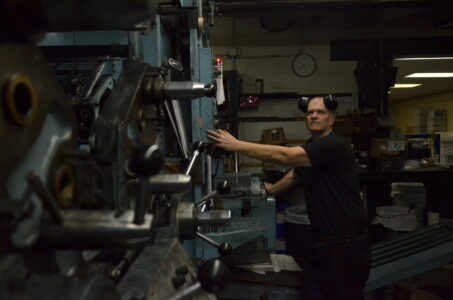
- Pressman Rick Burman runs the 1973 Goss Community press in the back for the newspaper offices for the last time on Feb. 20. (Enterprise photo — Aaron Marbone)
-
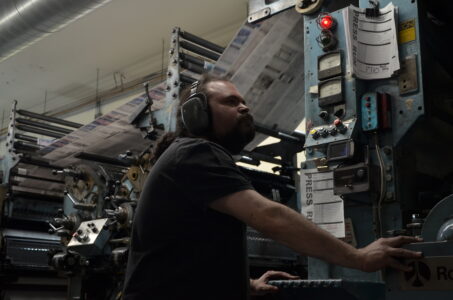
- Enterprise Press Foreman Jesse Phelan runs the 1973 Goss Community press in the back for the newspaper offices for the last time on Feb. 27. (Enterprise photo — Aaron Marbone)
-
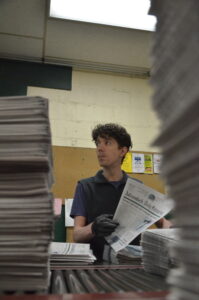
- Kev Marleau stuffs newspapers after the last run of the Enterprise’s 1973 Goss Community press on Feb. 27. (Enterprise photo — Aaron Marbone)
-
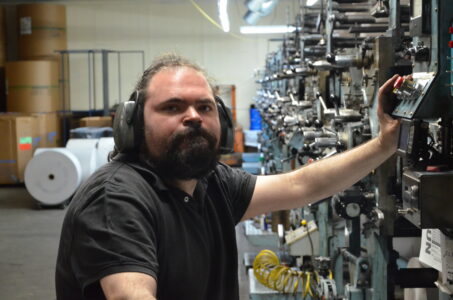
- Enterprise Press Foreman Jesse Phelan runs the 1973 Goss Community press in the back for the newspaper offices for the last time on Feb. 27. (Enterprise photo — Aaron Marbone)
-
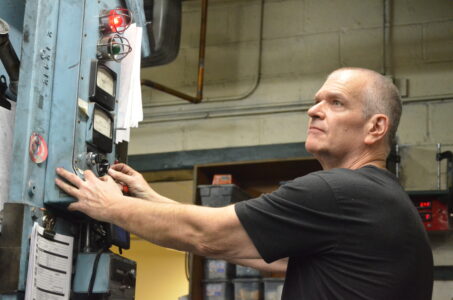
- Pressman Rick Burman runs the 1973 Goss Community press in the back for the newspaper offices for the last time on Feb. 20. (Enterprise photo — Aaron Marbone)
-
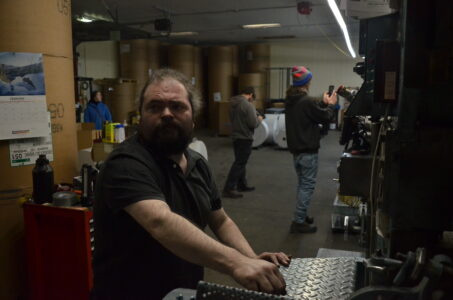
- Enterprise Press Foreman Jesse Phelan prepares the 1973 Goss Community press for its last run on Feb. 27. (Enterprise photo — Aaron Marbone)
-
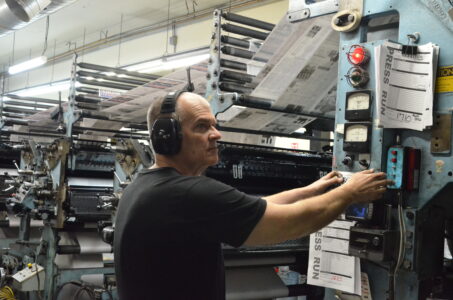
- Pressman Rick Burman runs the 1973 Goss Community press in the back for the newspaper offices for the last time on Feb. 20. (Enterprise photo — Aaron Marbone)
-
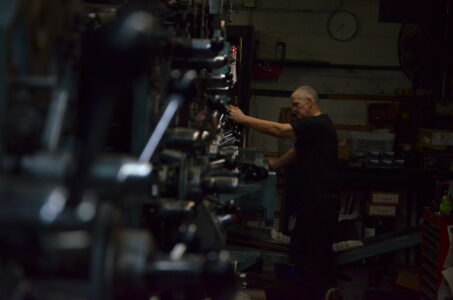
- Pressman Rick Burman runs the 1973 Goss Community press in the back for the newspaper offices for the last time on Feb. 20. (Enterprise photo — Aaron Marbone)
-
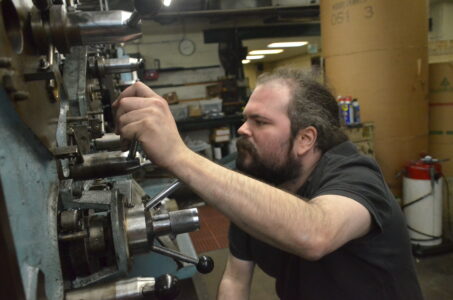
- Enterprise Press Foreman Jesse Phelan prepares the 1973 Goss Community press for its last run on Feb. 27. (Enterprise photo — Aaron Marbone)
-
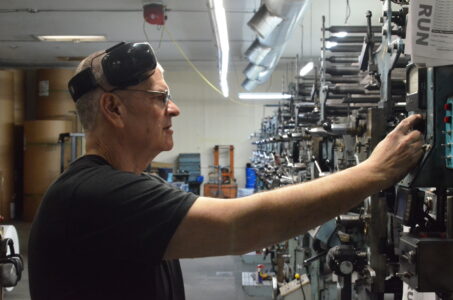
- Pressman Rick Burman runs the 1973 Goss Community press in the back for the newspaper offices for the last time on Feb. 20. (Enterprise photo — Aaron Marbone)
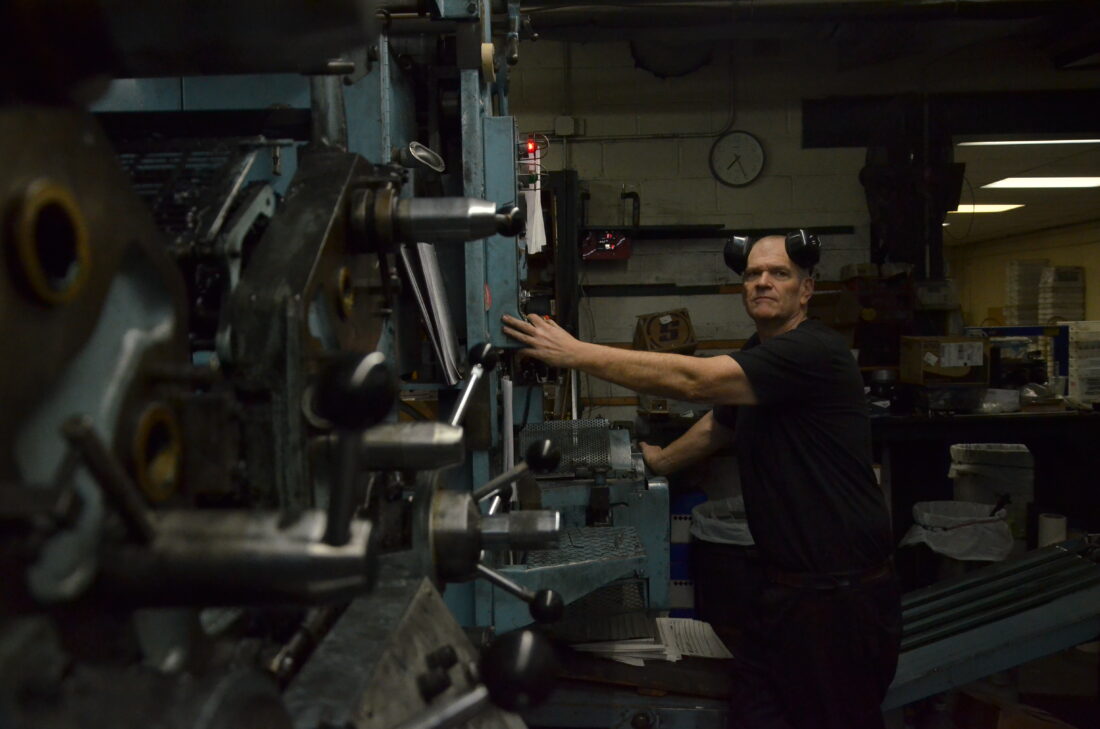
Pressman Rick Burman runs the 1973 Goss Community press in the back for the newspaper offices for the last time on Feb. 20. (Enterprise photo — Aaron Marbone)
SARANAC LAKE – For decades, the sign of the latest edition that the Adirondack Daily Enterprise has been “put to bed” was the ring of a bell, a motor chugging to life and the rhythmic thumping of the 1973 Goss Community printing press.
Last Friday, those sounds were heard in the back of the Enterprise offices on Broadway for the last time.
Press Foreman Jesse Phelan was dressed in his pressman’s uniform – all black. Like a funeral.
The mood in the pressroom was somber, with everyone watching the machine chug along knowing this was the end of the line.
Phelan had worked on the press for 16 years. He learned under previous Foreman Rick Burman, who had spent nearly 46 years running the presses.
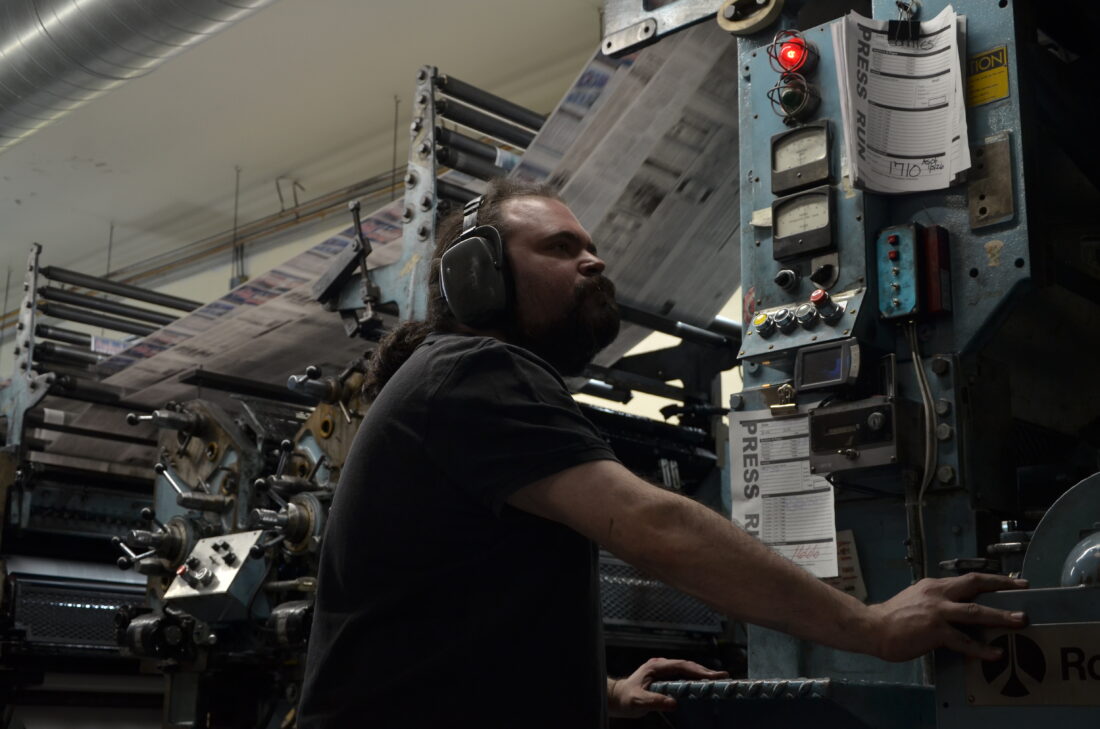
Enterprise Press Foreman Jesse Phelan runs the 1973 Goss Community press in the back for the newspaper offices for the last time on Feb. 27. (Enterprise photo — Aaron Marbone)
They both knew this day was coming, but that didn’t make it any less painful.
When Gazette News Group bought the Enterprise from Ogden Newspapers, the press machine was not included in the sale. Gazette contracts its newspapers out to a printing company in Massachusetts which can do full color on every page of the paper.
A local newspaper printing in-house is becoming increasingly rare. So rare, that in 2024, North Country Public Radio intern Zach Jaworski did a story on the press which got picked up by National Public Radio. That story can be found at tinyurl.com/3c6vpm65.
Phelan and Burman said they watched local presses, which were once ubiquitous – even in a region as rural as the Adirondacks – slowly go away one by one.
The Enterprise press gathered up those publications. Eventually, some went digital or shipped to larger printing facilities with greater color capabilities.
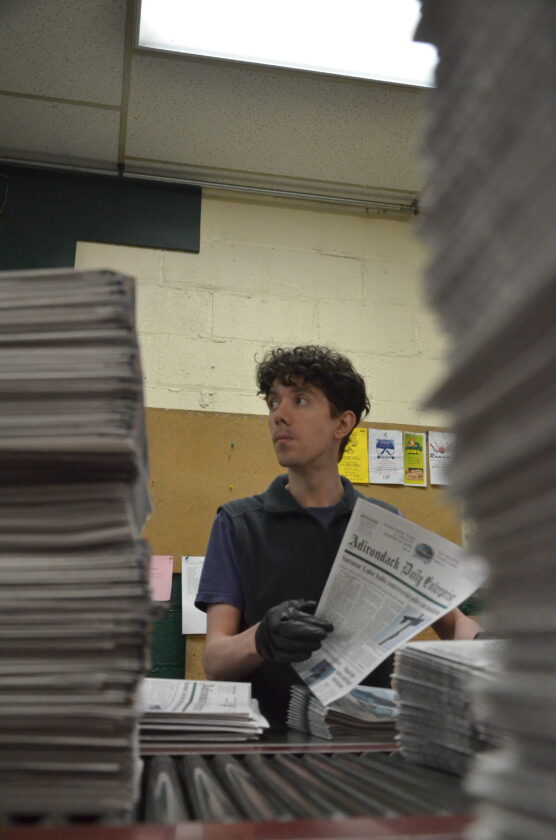
Kev Marleau stuffs newspapers after the last run of the Enterprise's 1973 Goss Community press on Feb. 27. (Enterprise photo — Aaron Marbone)
The press here had most recently been printing the Tupper Lake Free Press, Lake George Mirror, Gouverneur Tribune-Press, St. Lawrence University’s Hill News, SUNY Plattsburgh’s Cardinal Points and Castleton University’s Spartan. These publications will now be printed elsewhere.
–
Pride and presses
–
In a place like the Adirondacks, there’s often photos of the night skies. These photos take a lot of effort and finessing to print correctly.
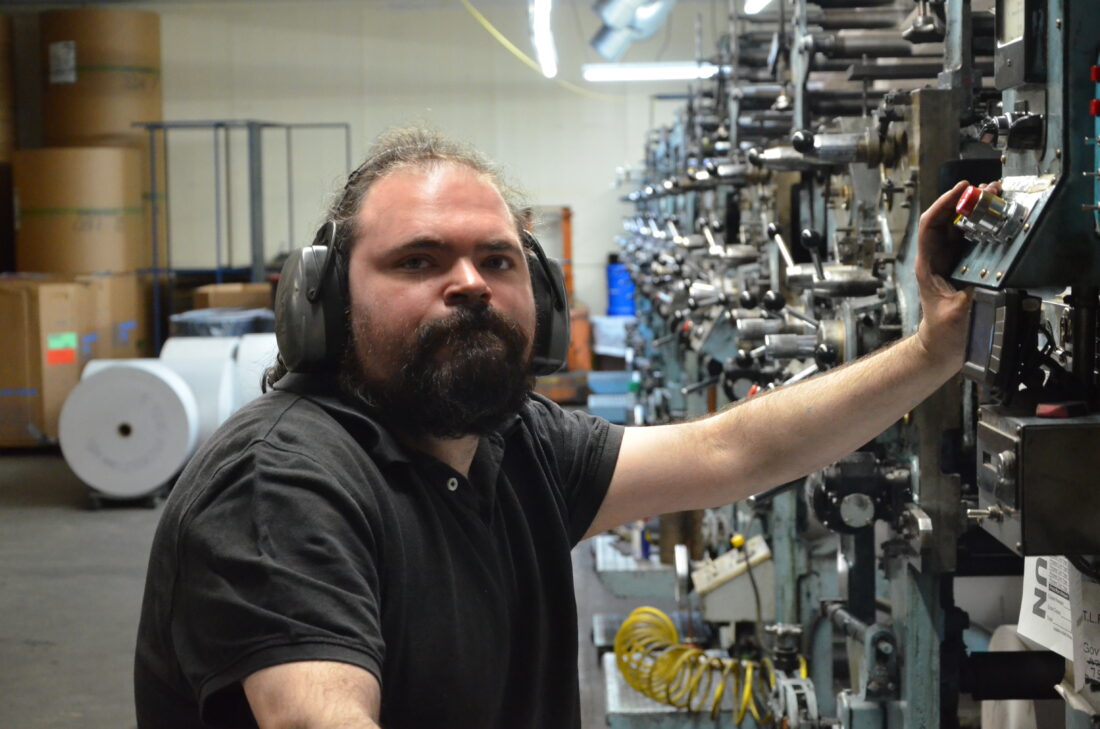
Enterprise Press Foreman Jesse Phelan runs the 1973 Goss Community press in the back for the newspaper offices for the last time on Feb. 27. (Enterprise photo — Aaron Marbone)
When the total solar eclipse crossed the Adirondacks in 2024, Phelan said those photos were some of the hardest to print he’s ever encountered. They came out with a jet black sky, a ring of pure light and a thin royal purple outline of the moon, with Baily’s beads noticeable on the edges.
Even in a large nationwide news company like Ogden, Burman and Phelan were recognized for their printing skills.
Every copy of the Enterprise ever held in the past few decades was likely produced by these two.
They’ve dialed them in with ingenuity and creativity, trial and error.
“I understand the effort that everyone did out there, out in editorial, to make this photo look right, so I always figured it was my responsibility to make it look the best I can,” Phelan said.
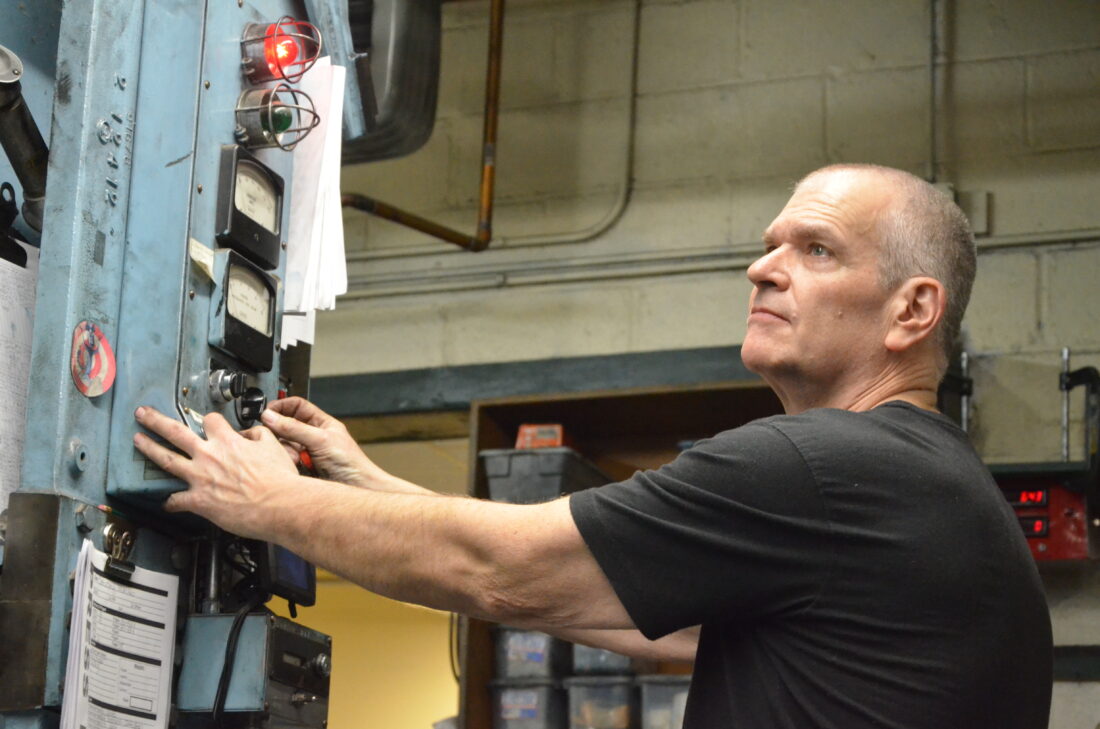
Pressman Rick Burman runs the 1973 Goss Community press in the back for the newspaper offices for the last time on Feb. 20. (Enterprise photo — Aaron Marbone)
For the reporters and editors, printing in-house has been an immense source of pride.
Phelan remembers the day Sports Writer Lou Reuter frantically burst through the saloon-style swinging doors into the pressroom, and shouted the words usually reserved for movie scripts: “STOP THE PRESSES!”
The wrong sports page had been uploaded.
Phelan said they were around a quarter of the way through the run and had to restart. That was the only time he had that happen.
–
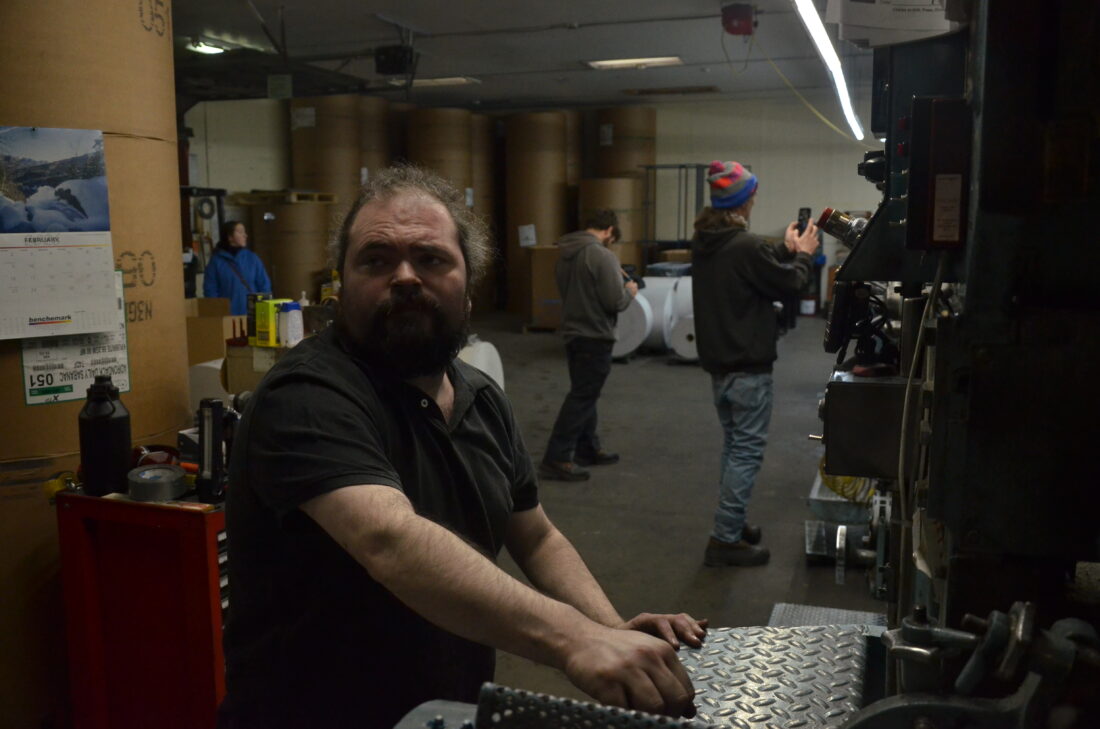
Enterprise Press Foreman Jesse Phelan prepares the 1973 Goss Community press for its last run on Feb. 27. (Enterprise photo — Aaron Marbone)
‘Farewell, Etaoin Shrdlu’
–
The Goss caught Phelan’s eye before he even started working at the Enterprise. His mom worked at the paper and brought him in one day. He was immediately taken with its impressive scale.
From a young age, Phelan was disassembling things and putting them back together. He has a mind for the mechanical.
This is the job he wanted until he retired. Though he’s ironically allergic to oil-based ink, the pressroom was his home away from home.
In his last week, Phelan said several times that he felt like the world was collapsing around him.
There’s a documentary titled “Farewell, Etaoin Shrdlu” that Phelan has shown reporters and friends over the years. It documents the last day the New York Times used hot metal typesetting, as it transitioned to digital typesetting.
He’s been thinking about that film in the weeks since the sale was announced.
There’s a moment when a linotype operator writes on a chalkboard: “The end of an era. It was good while it lasted. Crying won’t help.”
“I won’t deny that I’ve cried a few times,” Phelan said.
The pressmen are sentimental about the machine. It’s more than a tool. It’s an extension of their bodies, Phelan said.
Their fingers fly over the knobs, levers and keys as skillfully as a musician’s.
The thing is a beast – but as powerful as it is, it is just as delicate.
“It’s brute, but it is very sensitive,” Phelan said.
Every adjustment on it is measured in thousandths of an inch.
Phelan said a good pressman has to be alert.
If a paper sheet breaks and starts wrapping around one of the cylinders, it could cause tens of thousands of dollars in damage within seconds.
He can touch the side of a unit when it’s running and tell if a bearing is going to break by the vibration. He said he can feel it in his chest.
He is able to pay attention to every little sound it makes. To the unversed, it is a cacophony. To Phelan, it is an orchestra.
Out of everything he’s going to miss in the pressroom at the Enterprise, he said he’s going to miss the sound of when the machine starts up the most.
–
A Community Press
–
Both Phelan and Burman said the press is part of their identity. Phelan is 33. He’s worked at the Enterprise since he was 15. He says with pride that he’s been around the press machine for more than half of his life.
“If that doesn’t mean something to your identity, then what does?” Phelan said.
At 15, he had started working in the mail room next to the press.
One day, he was sick of how hard the wheeled tables were to move around. He took them apart with a wrench and cleared the wheels of string.
Burman noticed his diligence in fixing a problem, told him he had a knack for mechanical things and brought him over to the press.
That was Dec. 15, 2009. Phelan remembers the date well.
He was 17 at the time and, at first, his mom was terrified of him working on the giant machine.
But Burman was an excellent mentor, Phelan said. He added that they spent many days “up to our armpits in ink.”
“Honestly. It was an honor to work with him,” Phelan said.
He said they became close friends as well as coworkers.
“We got to the point where we started completing each other’s sentences,” Phelan said.
Burman started as a paperboy in 1973. He was hired by Armand Amell. He joined the press in 1981 and became foreman in 1985. He also started young, back at a time when child labor rules and regulations were a bit looser.
Burman retired in 2024, but he couldn’t stay away. He still ran the presses here part-time.
His last run was on Feb. 20, before a previously scheduled vacation.
Burman is not usually one for public displays, but was visibly emotional on his final run.
The Enterprise will now be printed in Springfield, Massachusetts at the Springfield Republican’s press. It is owned by Newhouse Newspapers, a division of Advance Publications. Gazette says this will not change the time subscribers receive the Enterprise.
Ogden has not yet decided what it will do with the Goss at the Enterprise.
On Friday, after the press wound down, Phelan and the rest of the pressroom crew – Joe Karp, Devon Stratton, Kev Marleau and Randy Brickey – were greeted at the front of the building by a crowd of former Enterprise reporters and editors who gathered with signs reading “We had a good run,” “Thank You” and “Very imPRESSive!”
A few minutes earlier, as the machine ran full-bore, Phelan had watched the Saturday papers roll by one-by-one and said – with enough oil, grease and diligence – he imagined they could keep rolling forever.
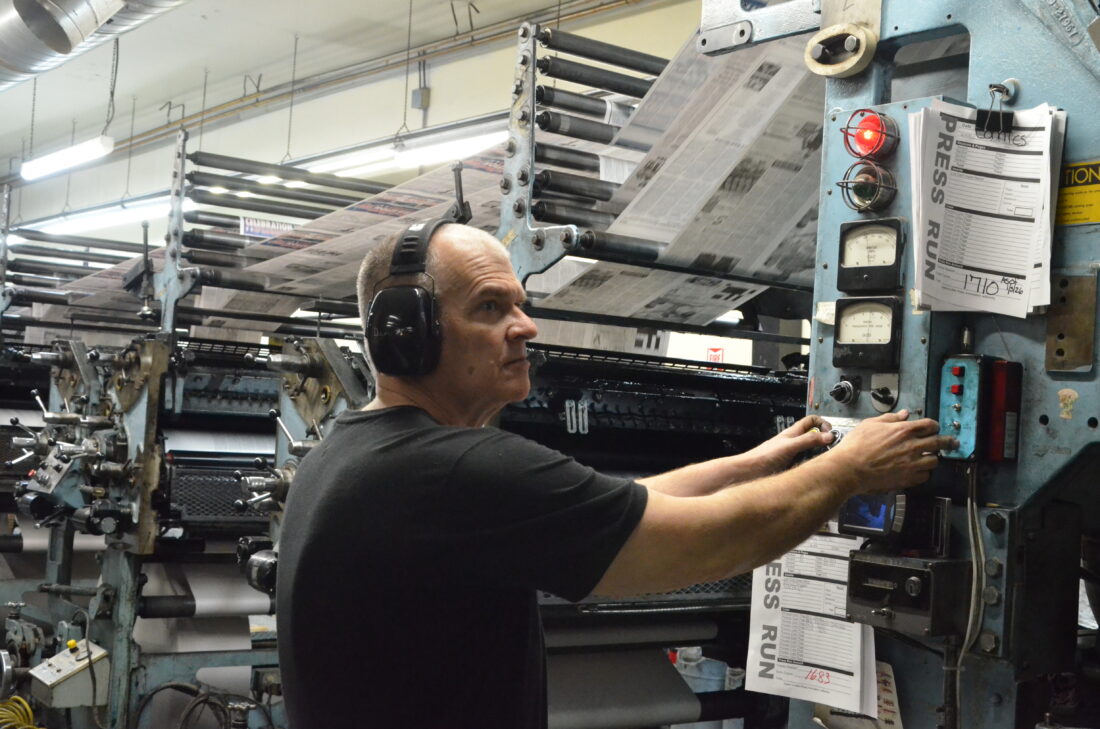
Pressman Rick Burman runs the 1973 Goss Community press in the back for the newspaper offices for the last time on Feb. 20. (Enterprise photo — Aaron Marbone)
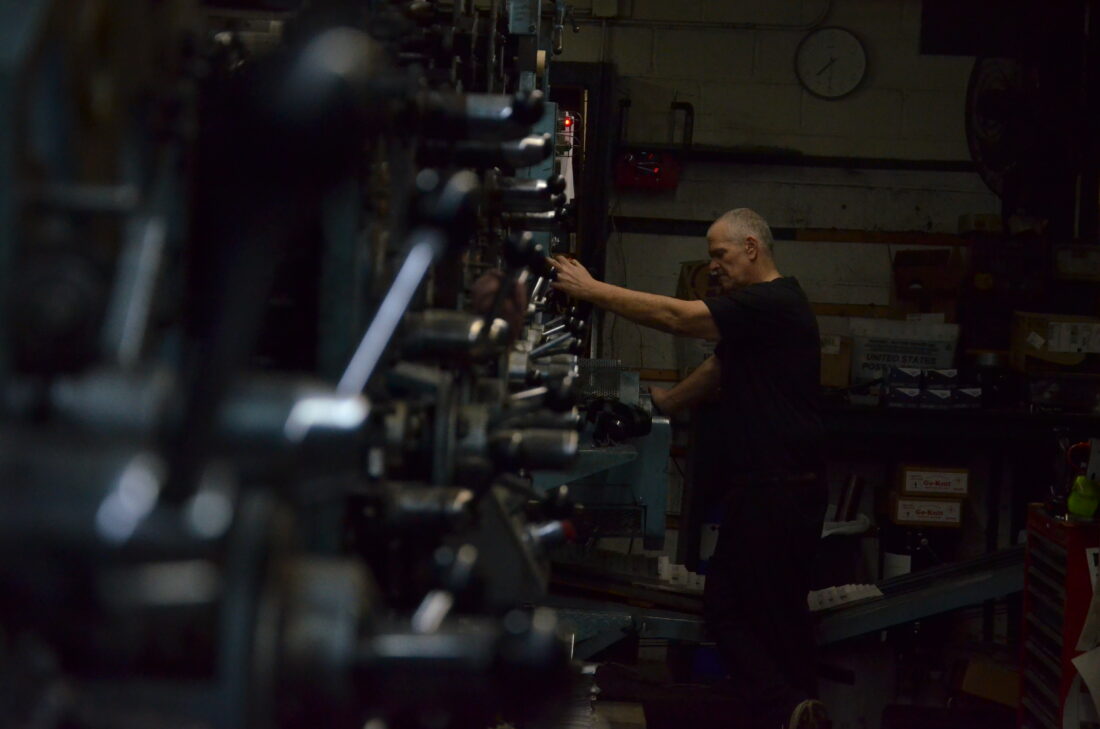
Pressman Rick Burman runs the 1973 Goss Community press in the back for the newspaper offices for the last time on Feb. 20. (Enterprise photo — Aaron Marbone)
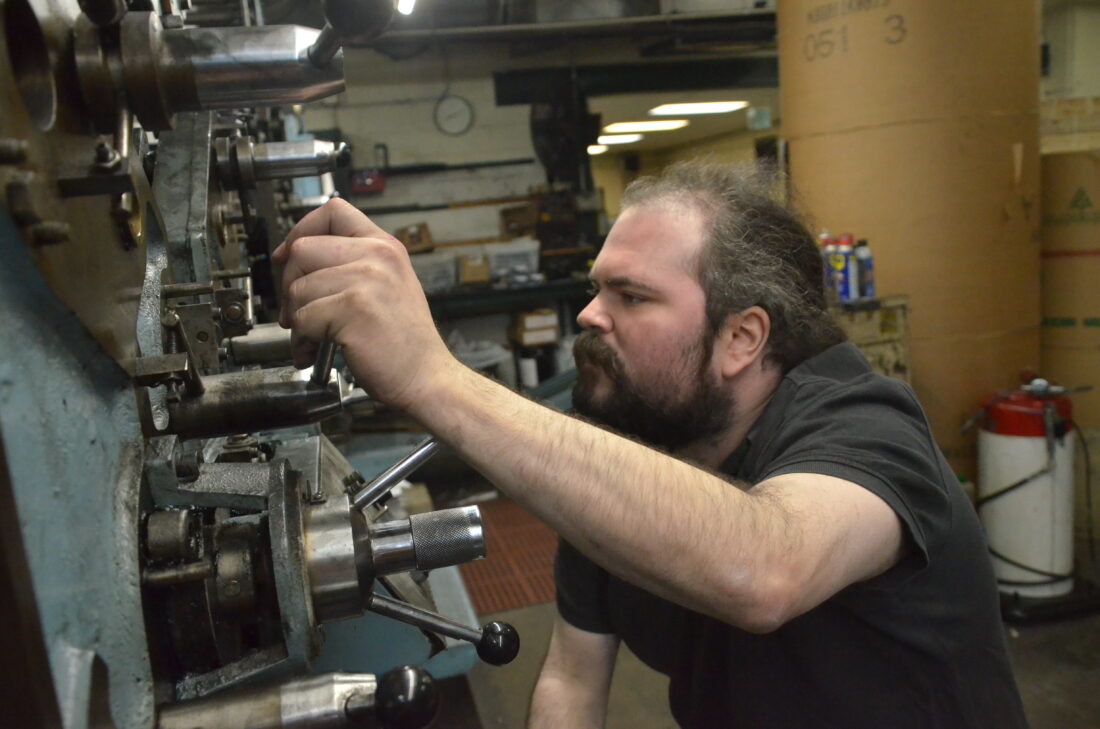
Enterprise Press Foreman Jesse Phelan prepares the 1973 Goss Community press for its last run on Feb. 27. (Enterprise photo — Aaron Marbone)
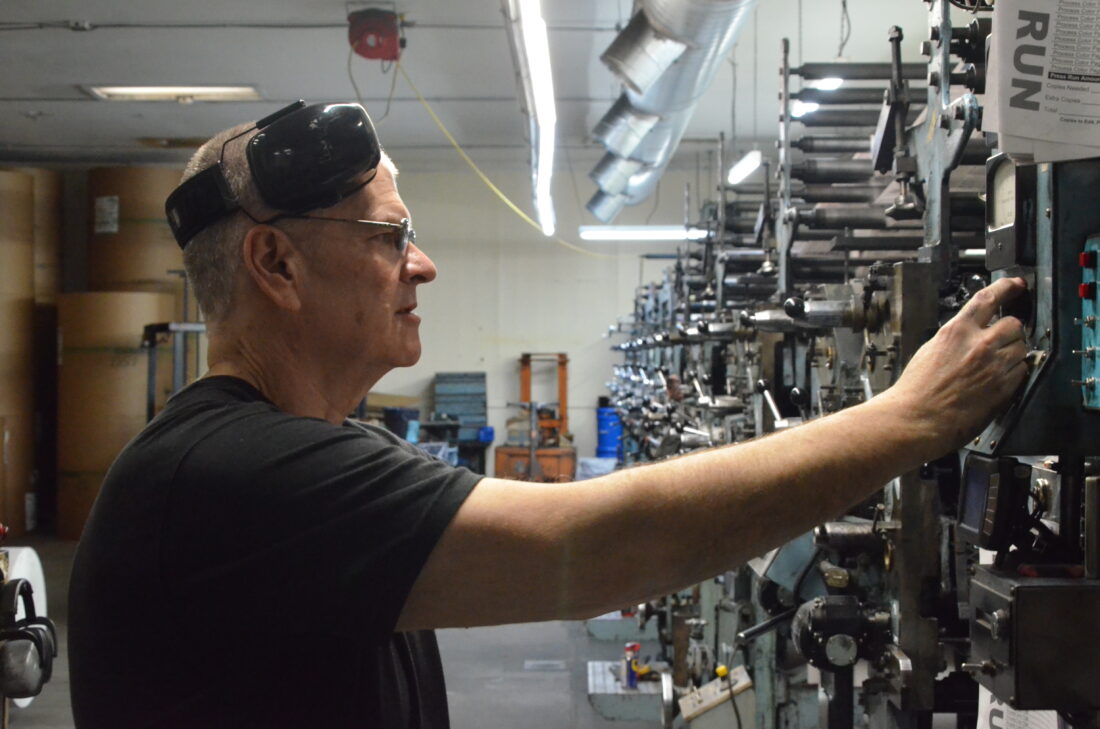
Pressman Rick Burman runs the 1973 Goss Community press in the back for the newspaper offices for the last time on Feb. 20. (Enterprise photo — Aaron Marbone)