Lake Placid braces for high energy bills
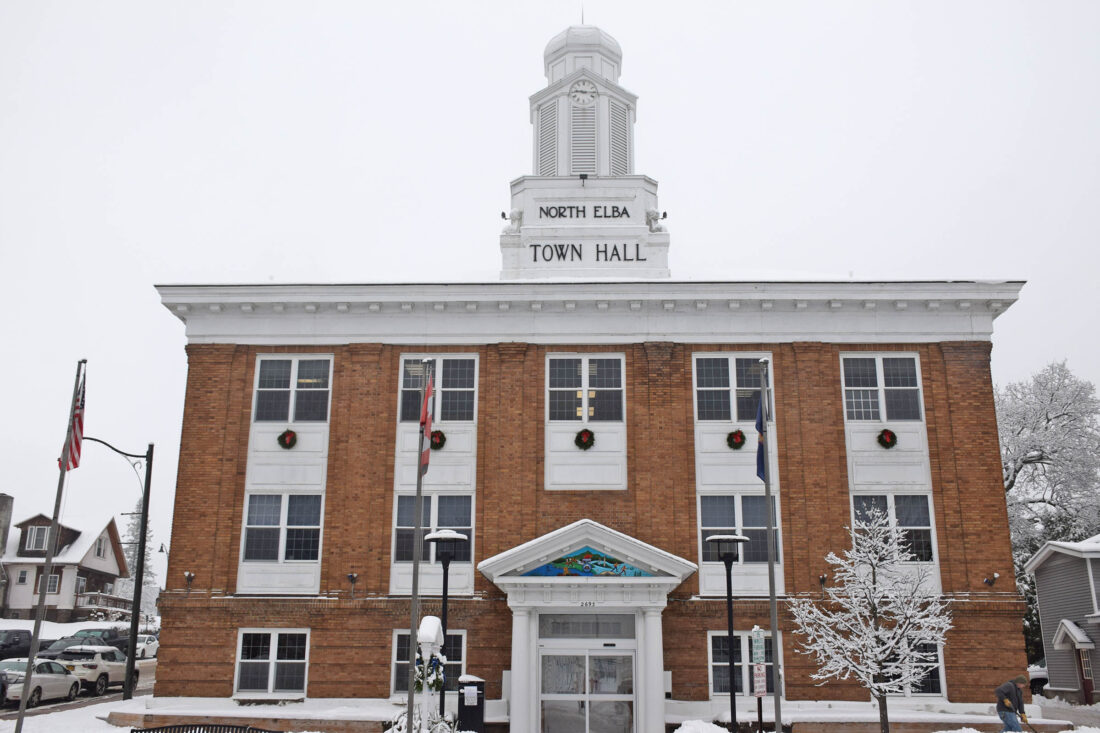
The North Elba Town Hall is seen in the village of Lake Placid on Jan. 7. (Enterprise photo — Chris Gaige)
LAKE PLACID — The village of Lake Placid is warning residents that next month’s energy bills will be even higher than usual, due to a variety of factors including cold weather, increased demand and market prices of energy.
“The cost is astronomical,” said village treasurer Mindy Goddeau. “It’s that way statewide, everybody’s in the same boat.”
Lake Placid Municipal Electric gets its electricity primarily from the New York Power Authority, which provides hydropower from Buffalo and is transported to the village on National Grid power lines. The hydropower is relatively inexpensive, and the village gets a set allotment of this power that is determined every few years based on usage in the village.
The hydropower is the same cost that it’s been for years, Goddeau said, but the real fluctuation in price comes whenever the village goes over its hydropower allotment. When this happens, the power authority has to purchase power from other sources on the market. These sources are subject to the rise and fall of prices on the market, and when a lot of people are using more power across the state, the price can skyrocket.
The cost of the more expensive electricity — sometimes called incremental power — and the cost of delivering it are passed on to consumers in the form of the Purchase Power Adjustment (PPA) that shows up on energy bills. According to a memo from the Municipal Electric Utilities Association, the factors driving up the PPA costs are higher energy prices and costs of delivering that energy, which is outside the control of distribution systems and is instead regulated by the New York Independent System Operator (ISO) and determined by supply and demand.
An October blog post on the New York ISO website gives additional reasons for the higher costs related to power supply and demand. There has been an increase in demand for electricity, including because of electric vehicles and heat pumps. On the other hand, the supply of inexpensive power has not been able to keep up. Older plants have been retired and newer projects have not come online fast enough, so there has been a net loss of capacity in the system since 2019, according to the NYISO 2025 Power Trends report.
To read more information from NYISO, visit tinyurl.com/5adnje9j or view the 2025 report at tinyurl.com/vhjuzu4d.
In February 2024, the village paid almost 3 cents per kilowatt hour for the more expensive incremental power. Last year, that rate increased to a little over 6 cents per kilowatt hour in February and this February, the rate was around 18 cents per kilowatt hour.
The village also gets charged based on how much it costs to transport the power. In the winter of 2023-2024, these costs ranged between 5 to 9 dollars per megawatt. Last year and so far this year, those rates were up around 12 or 13 dollars per megawatt during the winter months.
In addition to the rates, power usage was also up a bit this year. Last year, the village purchased around 11.6 million kilowatt hours in December, 14.6 million kilowatt hours in January and 22.6 million kilowatt hours in February. This year, they purchased 17.6 million kilowatt hours in December, 24.9 million kilowatt hours in January and 26.5 million kilowatt hours in February.
Goddeau said the village hears concerns about last month’s energy bills, and warns that the next bill will be even higher. She said anyone with concerns about affording their energy bill can contact the village to set up a payment plan to spread the costs over a few months without penalty.
“We’re here to help. We’re more than happy to work with people, and we don’t want to see people worry if their electricity is going to get cut off,” she said. “I’ll work with people as much as I absolutely can.”
Local News
Snowshoer found dead in lean-to in Pharaoh Lakes Wilderness
SCHROON — A Florida man was found dead in a lean-to in the 44,400-acre Pharaoh Lakes Wilderness in southern ...
A ‘profound and painful’ decision
Paul Smith’s College announces Operation Hardwater event
PAUL SMITHS — Paul Smith’s College has announced its upcoming event, Operation Hardwater, spotlighting the ...
Lake Placid braces for high energy bills
Hiker found alive after extensive two-day search in Dix Range