DEC announces final Adirondack brook trout pond management plan
First revised plan in nearly half a century will guide management to ensure future of this unique fisheries resources
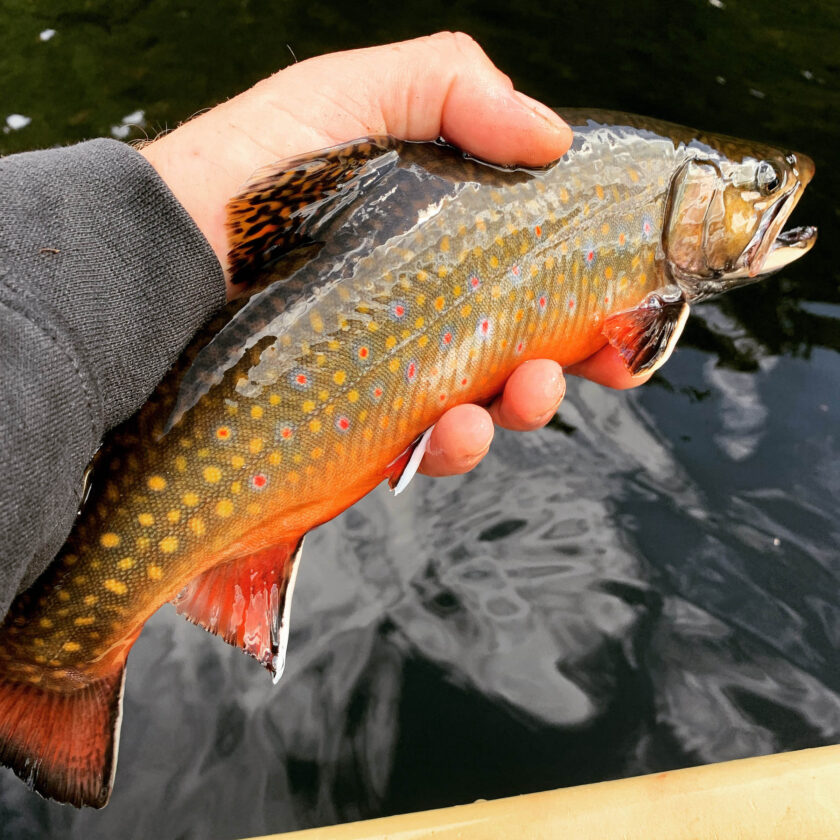
A Morley strain brook trout. (Provided photo — New York state Department of Environmental Conservation)
ALBANY — The state Department of Environmental Conservation announced the release of the final Adirondack Brook Trout Pond Management Plan on Monday.
The brook trout is New York’s state fish and an iconic symbol of the Adirondacks. DEC’s new plan identifies the current risks, challenges, and opportunities that will guide the state’s management actions at Adirondack brook trout ponds for the next 15 years.
A final copy of the plan and more information about Adirondack brook trout pond management can be found on the DEC website at tinyurl.com/vfjcfcxc.
“Other than Maine, New York’s Adirondack Park is the only other location in the lower 48 states that supports a significant number of ponded brook trout fisheries, which shape the region’s ecological legacy and future,” DEC Commissioner Amanda Lefton said. “A collaborative process guided by the latest science helped create a roadmap to improve the status of these unique fisheries and address emerging challenges to pond-dwelling Adirondack brook trout. DEC appreciates all who helped contribute to the plan’s development and looks forward to implementing the measures that will strengthen brook trout conservation.”
Pond-dwelling populations of brook trout are extremely rare outside of Maine and New York. Brook trout ponds are an important component of the natural heritage of the Adirondacks, providing a unique angling opportunity in an often-secluded location.
Once ubiquitous on our northern landscape, up to 90% of brook trout pond habitat has been lost due to anthropogenic factors, including poor silvicultural practices, acid-precipitation, and incompatible and detrimental fish species introductions. The DEC said that retaining this resource is imperative to preserving our Adirondack natural heritage and a key element of the ecosystem.
It has been 46 years since the original DEC plan for managing pond-dwelling brook trout was created. Many factors contributing to the health of the fishery have changed during that time. The final plan was developed based upon an intense review of what fisheries managers have learned over the past four decades, public feedback from three information sessions, input from a focus group of sportspersons and conservation organizations and feedback received from a 45-day public comment period. Expected benefits associated with the plan include:
¯ Protection of existing and establishment of new self-sustaining brook trout populations.
¯ Safeguarded hatchery brook trout production for fishing and restoration purposes.
¯ Maintenance and expansion of heritage broodstock waters.
¯ Consistent and standardized data collection and management, and development of a decision support tool for management actions.
¯ Creation of a citizen science brook trout pond angler partnership program and deployment of a citizen science survey to provide information on angler use, catch, and harvest.
¯ Uniform fishing regulations.
¯ Improved management of “put, grow, and take” recreational fishing.
¯ Increased awareness about the value of ponded brook trout populations and human and ecological threats to the security of those populations.
¯ Actions to reduce the spread of incompatible and detrimental fish, including baitfish.
¯ Consideration of climate change in management actions.
The DEC said the plan is just one of its investments in habitat enhancement, angler enjoyment and research will help continue to protect brook trout and other Adirondack fisheries. Earlier this year, the DEC announced a $100 million disbursement from the Clean Water, Clean Air and Green Jobs Environmental Bond Act and other capital funds for state hatchery improvements. This includes enhancements at the Adirondack Fish Hatchery that will help construct a new brook trout broodstock building. More information on that spending is available at tinyurl.com/52r3cxmz.
DEC also held the “Trek for Trout” citizen science initiative aimed at collecting information from anglers about their fishing trip. DEC and partner organizations — Trout Unlimited, NY Backcountry Hunters and Anglers, Trout Power, Native Fish Coalition, Paul Smith’s College, and SUNY ESF — posted signs at 148 Adirondack brook trout ponds.
In addition to a pond-specific QR code, signs posted by the volunteers for use by anglers include important messaging about the prohibition of baitfish use in brook trout ponds. A video about the Trek for Trout is available on the DEC’s YouTube page at tinyurl.com/2wwf69sx.
Local News
Reassessing the town
SARANAC LAKE — The town of Harrietstown is preparing to reassess the value of all of its properties. On ...
Ice Palace construction slated to begin Jan. 21
Cascade Acres makes history
Comprehensive plan vote, land use code change hearing set

Hochul wants universal child care for New Yorkers