$16.5M NCCC budget approved
Counties agree to one-time $100k increase
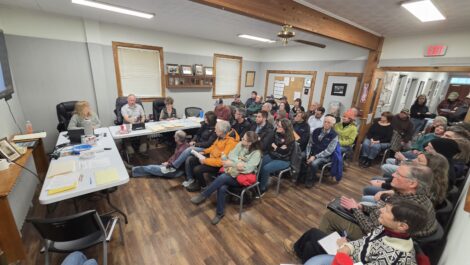
SARANAC LAKE — Franklin and Essex counties have approved North Country Community College’s $16.5 million budget for the next year, including a one-time $100,000 increase to county funding.
The college’s operating budget plans to spend $16,538,783, $671,130, or 3.56%, more than last year, which is a typical increase for the college.
The college’s revenues are projected at $16,408,783, $773,481, or 5%, more than last year.
NCCC has campuses in both counties — in Saranac Lake, Ticonderoga and Malone.
Each county is contributing $1,428,700 to NCCC’s budget — 6.6% higher than last year. Each county is putting $1,378,700 toward the operating fund and $50,000 toward the capital fund account. The total capital budget is at $320,000.
The county contribution includes a one-time increase of $50,000 from each county to account for rising costs.
To keep the budget neutral — not having a deficit or surplus — the college plans to pull $130,000 from its reserves, less than half of what was pulled last year. These reserves are projected to end Aug. 31, 2026 at $4.9 million, or 30% of the total unrestricted net operating costs. SUNY recommends 15%, but all NCCC stakeholders feel that is too low, according to the budget overview.
NCCC’s revenue increases primarily come from maturing bonds and the NCCC Foundation paying off its mortgage for the Ticonderoga and Malone campuses.
The budget includes a 4% increase in salaries and 5% increase in benefits.
The community college model is meant to be funding in equal parts by the state, counties and students — 33% each.
Students currently make up the majority of NCCC’s funding — 41%. The state puts in 25%. The two counties put in a collective 23%. The NCCC Foundations and other income accounts for 11%.
State aid is flat from last year.
“The college is not at significant risk of losing federal grants as the bulk of North Country’s current federal funding is in the form of student aid provided directly to students,” NCCC interim Chief Financial Officer Erik Harvey wrote in a budget overview. “There is a small risk of those monies being cut or reduced, but the largest risk is associated with reductions in the workforce in the federal government. This change could disrupt the timing of disbursements to students to pay down their accounts and indirectly impact the college.”
Newcomb Supervisor Robin DeLoria said he was happy to support the one-time $100,000 increase to maintain the NCCC fund balance, but he was also glad it was only a one-time increase.
Keegan said this is a one-time increase due to the counties having uncertainty about how federal cuts might impact their finances next year. North Elba Supervisor Derek Doty, who sits on the Essex County Board of Supervisors called the budget “more than fiscally responsible.”
“Where possible, staff departures due to attrition are not being back-filled,” Harvey wrote.
Minerva Supervisor Stephen McNally said when he joined the county board 12 years ago he would not have bet on NCCC surviving, and said its current position is due to its leadership.
–
Enrollment
–
Enrollment for the coming year is projected to be at 1,015 — 880 core students, an expected 2% increase, and 135 in the Second Chance Pell prison education program, stable from last year.
“Applicants who have confirmed their intent to enroll for Fall 25 are up by 30% vs. Fall 24,” Harvey wrote.
At risk of angering the Greek gods, who viewed hubris as humanity’s greatest sin, Keegan said he is “cautiously optimistic.” NCCC has had five consecutive semesters of increased enrollment, rebounding from a long slow decline. Keegan said this is good news for the college, good news for the local workforce and good news for people who get degrees supporting higher-paying jobs.
He attributed a portion of the enrollment increase to NCCC’s new hybrid nursing, cybersecurity, teacher education and addiction counseling programs, as well as microcredentials for jobs in fields like direct support professionals.
For the second year in a row, the NCCC board approved a 2% tuition rate increase. Keegan called this a “modest” increase and said it will take affect for the fall semester. After a four-year tuition freeze starting in the coronavirus pandemic, the board increased student tuition by 2% last year, citing rising costs.
This will set the tuition rate for a full-time, in-state student at $2,760 per semester, and the rate for a full-time out-of-state student at $4,128 per semester.
This semester, the SUNY Reconnect program, which offers free tuition to community colleges to New Yorkers 25 to 55 who do not have degrees but are seeking ones in “high-need” fields such as nursing, cybersecurity, renewable energy or addiction counseling.
The state is putting several million dollars into this. If students have gaps in covering tuition after their TAP and Pell grants, the state will fund the rest.
The NCCC fall semester begins on Aug. 25.
Local News
Independent candidate for NY-21 wants to expand House to 6,600 members
Brian R. Rouleau, an independent candidate who is seeking to represent northern New York in Congress, would like to ...
Two finalists in search for new SLCSD superintendent
SARANAC LAKE – There are two finalists in the running to become the Saranac Lake Central School District’s ...
Organizers scramble to fix shuttle delays on opening day of World Cup skiing
LAKE PLACID — The Olympic Regional Development Authority added to its fleet of shuttle buses Saturday to deal ...

‘Brink of collapse’
Police: Tupper Laker flees authorities four times in a day before eventual capture
TUPPER LAKE — A wanted Tupper Lake man evaded authorities not once, not twice but three times in one day. It ...