
New detox center opens in Saranac Lake
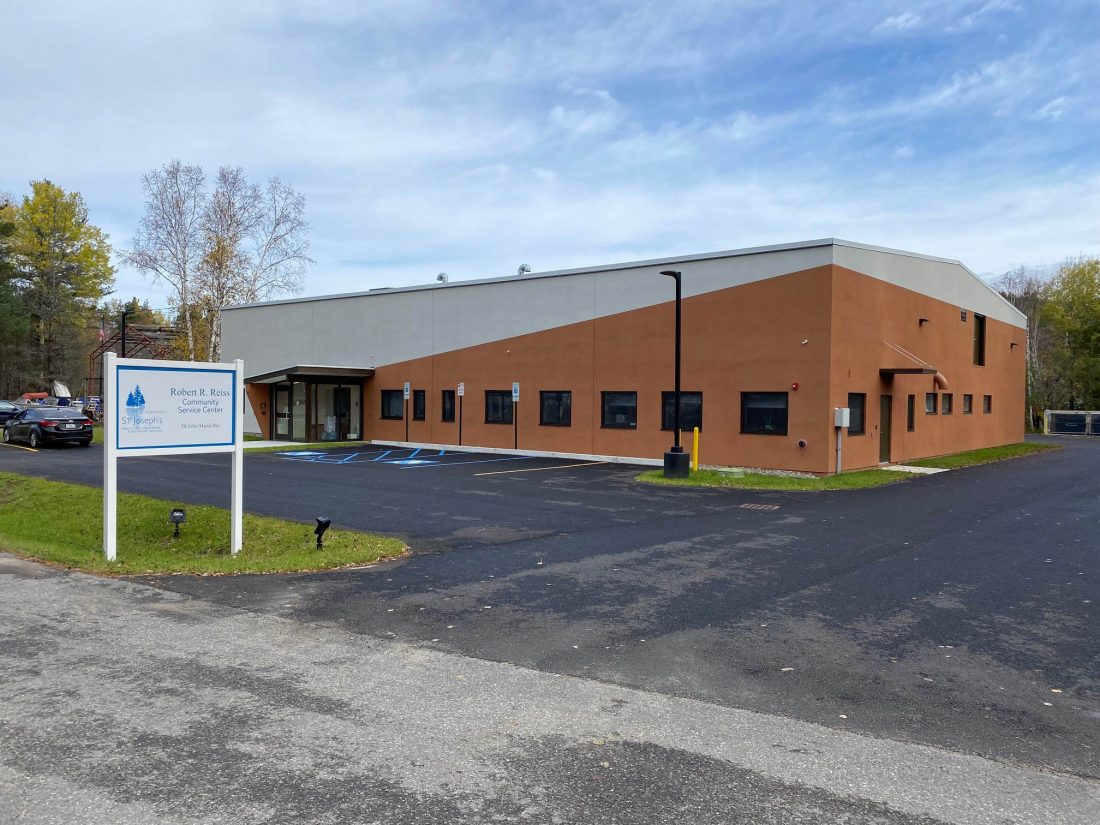
Robert R. Reiss Community Service Center at St. Joseph’s Addiction Treatment & Recovery Center (Provided photo)
SARANAC LAKE — Getting clean from substance abuse in the North Country just got a little easier. St. Joseph’s Addiction Treatment & Recovery Centers’ new detoxification center in Saranac Lake officially opened two weeks ago.
Addiction and substance abuse experts around the area are excited about the center’s opening, which provides the ability to detox from drugs and alcohol close to home, without traveling hours away to other centers or detoxing at hospitals, which have lower rates of long-term success.
St. Joseph’s Detoxification Services Director Sam Hall said since the new Robert R. Reiss Community Service Center opened on March 14, there’s been a trickle of clients through the center. He said with the eight people who have sought detox services there so far, they’ve had 100% success of getting them through the detox portion to the next level of treatment.
Hall said the center has at most seen three residents at one time, but it has 10 beds available. The goal there is to get people clean from substances like opiates, alcohol, cocaine or methamphetamine and connect them with treatment to stop relapses, or repeated episodes, he said.
Years ago, the state found that only around 17% of people detoxing at a hospital and moving on to the next level of treatment were successful, Hall said.
“This is not a knock on the hospitals, they just don’t have the resources or the timespan to get them connected to the next level of care,” he said.
The state licenses medically supervised detox centers, a step down from a hospital-level detox meant for people in a more stable condition who need less medical services and more support services, Hall added.
Hall said this new center is one of only a few detox centers not linked to hospitals in the state — there are others in Syracuse and Rochester.
St. Joe’s new center offers 24/7 detoxification treatment and transitions to connect people with the next level of treatment. That next level can mean different things for different people. If they need structure, they could go to a residential facility. If they need intensive care, they could go to an in-patient facility. If their episode was a relapse, they believe they can get out of, they can get into an out-patient program.
When in detox, people are given their own room to get through withdrawals. It’s a physically taxing process, Hall said.
“They’re not feeling very well,” he said, adding that they’re often very lethargic.
“There’s a lot of what you’d call ‘tender, loving care’ that goes into this as far as emotional support,” Hall said. “Everyone there knows that they’re a resource for that individual.”
While detox is more focused on the medical side of alleviating withdrawal, he said the 16 staff members are also trained in comfort.
Hall said encouraging people going through detox and withdrawals is an important, but often overlooked, part of the process. If someone is going in for detox, substance abuse has probably been a problem for them for a long time, he said.
“It takes a lot of your self-confidence away. It takes a lot of your ability to relate,” Hall said. “People don’t go into this saying ‘I’m going to ruin my life.'”
–
State of addiction in Tri-Lakes
–
The need for these beds is big here, Hall said.
“Addiction has really been an issue,” he said. “We never ended the opiate epidemic we were in prior to the (coronavirus) pandemic and the pandemic’s just made it worse.”
Diana Aguglia, the deputy executive director for Alliance for Positive Health, a community health organization with offices in Plattsburgh, said there have been “alarming increases” in overdose reversals reported to her organization. In 2018, the alliance recorded 20 overdose reversals, and 22 in 2019. In 2020, as the coronavirus pandemic hit, the numbers spiked, quadrupling the previous year’s numbers. Aguglia said they learned of 94 overdose reversals in 2020 and 140 in 2021.
They’ve reported eight overdose reversals so far in 2022, which Aguglia was hopeful is a sign that substance abuse is decreasing.
She said these numbers only represent the cases her organization hears about through clients requesting the life-saving medication Narcan. There are likely many more cases that are not represented in there numbers, Aguglia said.
She added that Narcan is an important medication and is effective at reversing an overdose. It’s not just for people who are using opiates, either. Aguglia said other drugs, including cocaine, may unknowingly be laced with fentanyl, a powerful opiate.
Aguglia said the North Country also struggles with meth and crack cocaine usage.
She said St. Joe’s new detox center is “very much needed” in an area without many basic resources for getting clean.
“Prior to St. Joseph’s new facility, individuals in need of detoxification care were primarily limited to facilities in Albany or Syracuse, some two-and-one-half hours away from the North Country, where upon arrival, beds are often unavailable,” St. Joseph’s Communications Director Jim Grant wrote in a statement. “St. Joseph’s detox, therefore, represents a vital addition to our rural region’s continuum of care.”
Hall said the distance is hard, exacerbated by the fact that people who struggle with substances often struggle in other areas of their lives, sometimes because of their substance struggle. Often, people seeking treatment can’t drive or can’t afford travel. He said the center can help clear those “unforseen” barriers created by the disease.
“We’re just really proud to be able to offer this resource,” Hall said. “This is something that St. Joseph’s has been trying to accomplish for probably around a decade.”
–
Where to get services
–
The Robert R. Reiss Community Service Center is located at 50 John Munn Road.
Grant said the center is licensed through the state Office of Addiction Services and Supports for a Medically Supervised Withdrawal and Stabilization Program.
“This service provides the bridge between crisis and treatment, which is crucial in building a road to recovery,” Grant wrote.
Grant said St. Joseph’s accepts most insurance, as well as New York State Medicaid. Self-pay for services is determined on a sliding scale depending on income. Transportation may be available for both admission and departure.
The Center is also the site of St. Joseph’s expanded Saranac Lake Outpatient Clinic and provides connection with the agency’s Open Access Center which connects people in need with support for alcohol, drug, and mental health challenges.
People seeking more information on detox treatment can call 518-891-4135.
Local News
SUNY chancellor talks Reconnect program at NCCC
North Country students attend women in law event
WCSC awards scholarships to locals
SARANAC LAKE — The Women’s College Scholarship Club is accepting applications for $3,000 scholarships which ...
ANCA’s 2026 Climate & Energy Conference gathers innovators and communities in Lake Placid

SL Civic Center receives Stewart’s Holiday Match grant support
Tupper Lake VFD, neighboring departments put mattress fire to bed
TUPPER LAKE — Quick action in the dead of night by Tupper Lake volunteer firefighters and several neighboring ...