Pigs and veggies go together at Kate Mountain Farm
-
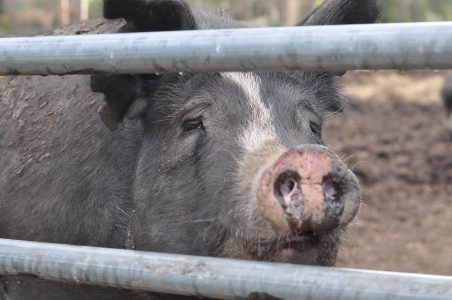
- One of the pigs at Kate Mountain Farm in Vermontville. (Enterprise photo — Amy Scattergood)
-
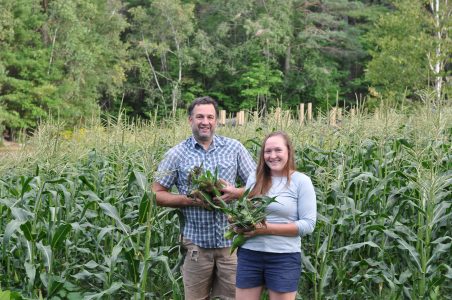
- Kate Mountain Farm owner Aaron Caiazza and his partner Emily Helmer stand in one of their cornfields. (Enterprise photo — Amy Scattergood)
-
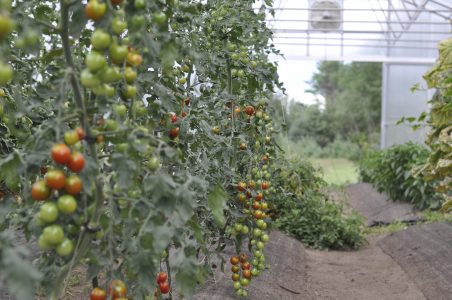
- Cherry tomatoes on the vine at Kate Mountain Farm’s greenhouse. (Enterprise photo — Amy Scattergood)
-
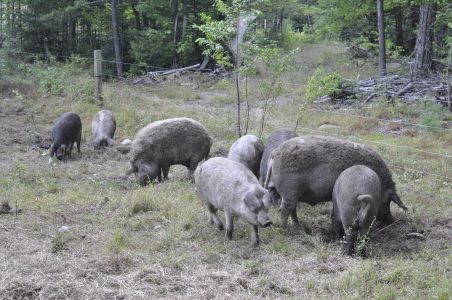
- Mangalitsa and Berkshire pigs at Kate Mountain Farm. (Enterprise photo — Amy Scattergood)
-
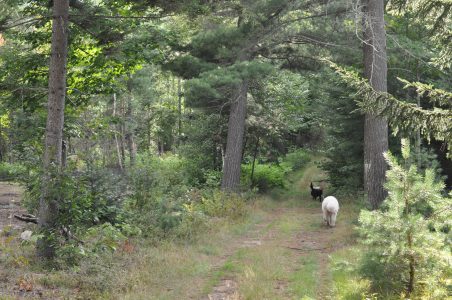
- Farm dogs at Kate Mountain Farm in Vermontville. (Enterprise photo — Amy Scattergood)
-
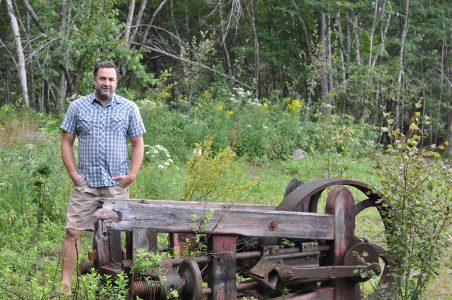
- Kate Mountain Farm owner Aaron Caiazza stands by an old wood splitter originally from Paul Smith’s Hotel. (Enterprise photo — Amy Scattergood)
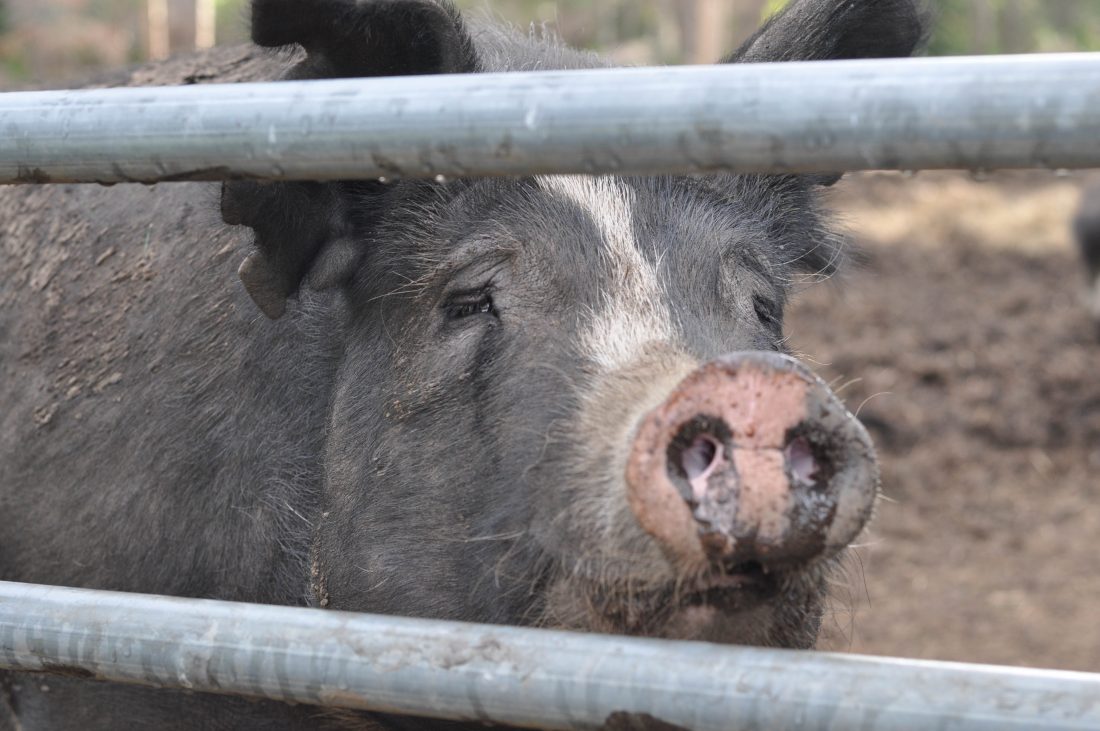
One of the pigs at Kate Mountain Farm in Vermontville. (Enterprise photo — Amy Scattergood)
VERMONTVILLE — The Mangalitsa and Berkshire pigs at Kate Mountain Farm, 276 acres of gardens, fields, forests and a converted old hunting lodge in Vermontville, do more than eventually provide outstanding pork products for area chefs and home cooks. They rehabilitate what was once stubbled undergrowth for farmer Aaron Caiazza’s vegetables.
“I put in the pigs first,” said Caiazza on a recent evening, as a sudden thunderstorm moved past the farm. “We’re using them to regenerate the land. The pigs move through the forest and open the space up.”
Twenty-eight pigs now meander across five acres surrounded by groves of white pines, spruce and Scotch pines. On 1/8 of an acre, there are verdant rows of tomatillos, borage, lacinato kale, carrots, beans, potatoes, Swiss chard, lettuces, spinach and Brussels sprouts, all grown organically. Inside a greenhouse built with USDA grant money, cherry tomatoes, cucumbers, basil, corn and shishito peppers flourish. Broccoli rabe volunteers next to a tray of tiny arugula. Five buildings comprise what was once Caiazza’s aunt and uncle’s farm, itself part of a 1920s-era lodge that included a tennis court and a driving range. You can see an overgrown shuffleboard next to rows of cauliflower and cabbage.
Caiazza grew up on the farm, playing in the fields and buildings when he was a kid, then took off for Northern California to attend college and then to work on farms and in restaurants. After a detour to New York City, where he worked as a documentary film producer, Caiazza came home in 2013 and bought the family farm.
If you spend much time at Saranac Lake’s weekly Saturday farmers market, you might recognize Caiazza under his mask. He and his partner Emily Helmer have a banh mi stand at the market, offering the addictive Vietnamese-style sandwiches and spring rolls, which they load with vegetables, herbs and pork from Kate Mountain Farm.

Kate Mountain Farm owner Aaron Caiazza and his partner Emily Helmer stand in one of their cornfields. (Enterprise photo — Amy Scattergood)
In the wake of the pandemic, which has changed the business model of, well, nearly everyone, Caiazza has been selling his produce and pork through a CSA program as well as to private buyers and restaurants. (Before March, Kate Mountain Farm sold half of its products to restaurants; now it’s more like 20%.) He also helped start a farmers co-op, Tri-Lakes Regional Farmers Cooperative, with other local farmers and producers.
“The co-op’s mission is to support Tri-Lakes area farms — in particular emerging farms — with labor and resource sharing,” said Caiazza. The co-op is a not-for-profit that was started by a few farms in the area, including Moonstone Farm in Saranac Lake, and Sanctuary Farm and Berube Botanicals, both in Vermontville.
Kate Mountain Farm continues the neighborhood cycle by incorporating brewer’s mash from Big Slide Brewery in Lake Placid and whey from Sugarhouse Creamery in Upper Jay into the pigs’ diet.
“There’s an emerging market for non-traditional buyers,” said Caiazza, whose 28 pigs will eventually increase in number to around 60. The pigs are Berkshires, an English breed prized for flavor and marbled meat; Mangalitsas, a wooly Hungarian breed that has such a high fat content that it’s known as the Kobe beef of pork; and a cross of the two breeds.
Caiazza doesn’t sell the animals themselves, but when the pigs are processed, “I’ll usually do a Facebook or Instagram posting and within 20 minutes, I’ll be sold out.”
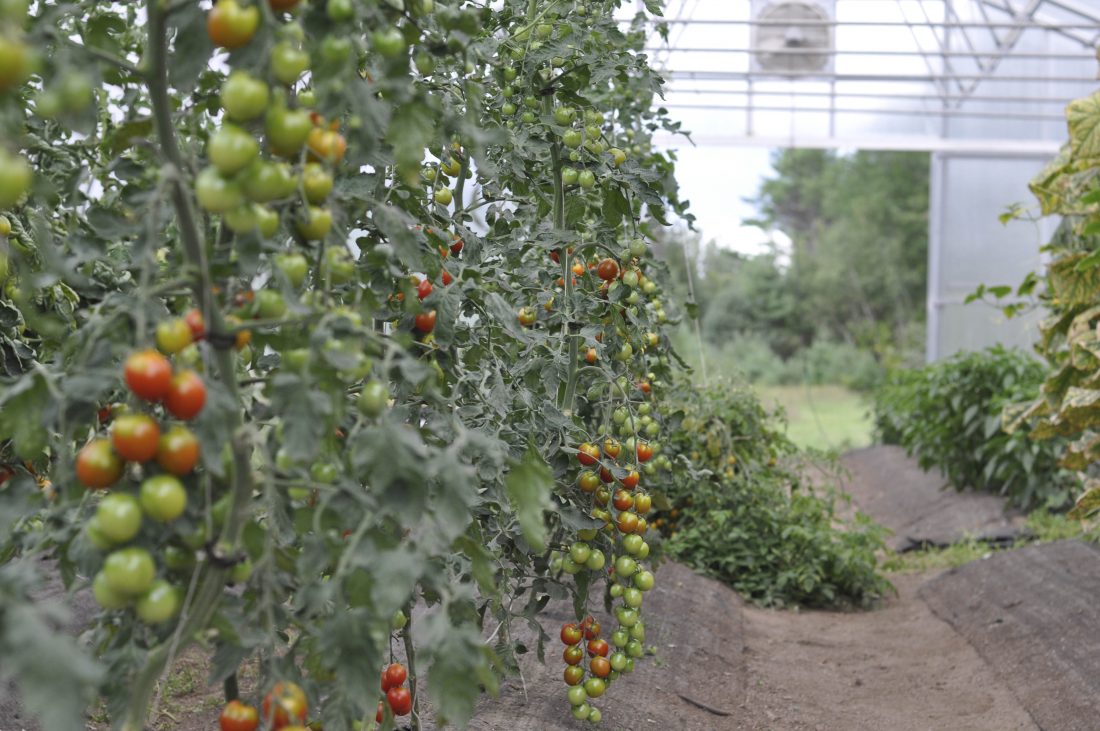
Cherry tomatoes on the vine at Kate Mountain Farm’s greenhouse. (Enterprise photo — Amy Scattergood)
The farm is a hodgepodge of vegetables, wild blackberry bushes, wooly pigs, bounding farm dogs, old wooden buildings, chickens and turkeys, and museum equipment, including an old wood splitter once housed in Paul Smith’s Hotel and an ancient skeet shooter. Where a cornfield and pumpkin patch now flourishes, pigs were lounging four months before.
“When I first started, I was using a chain saw and a wheelbarrow,” said Caiazza. His farming method, of integrating forest and grazing animals, is called regenerative agriculture and, more prettily, silvopasture. He has plans to further diversify, adding goats and a farm store, and converting one of the old houses into a Bed and Breakfast. Meanwhile, he’s turned one of the buildings into an Airbnb.
“It’s like an indie film, right?” Caiazza asks rhetorically, lobbing a canteloupe to a recumbent pig. Indeed.
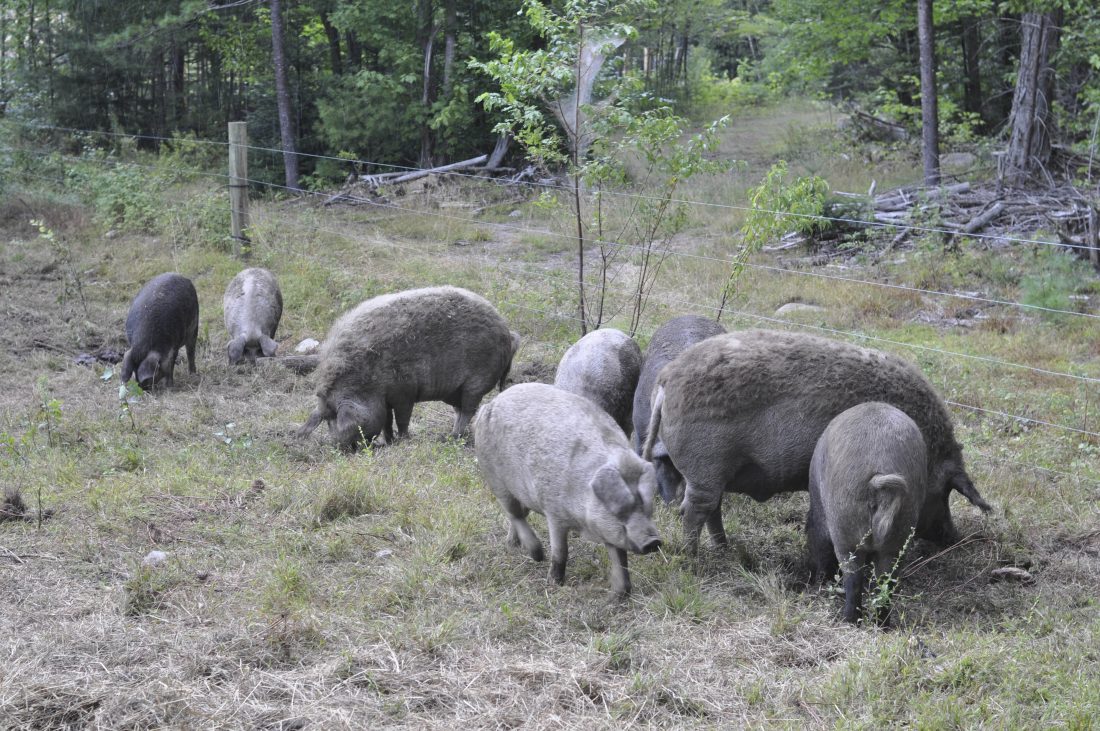
Mangalitsa and Berkshire pigs at Kate Mountain Farm. (Enterprise photo — Amy Scattergood)
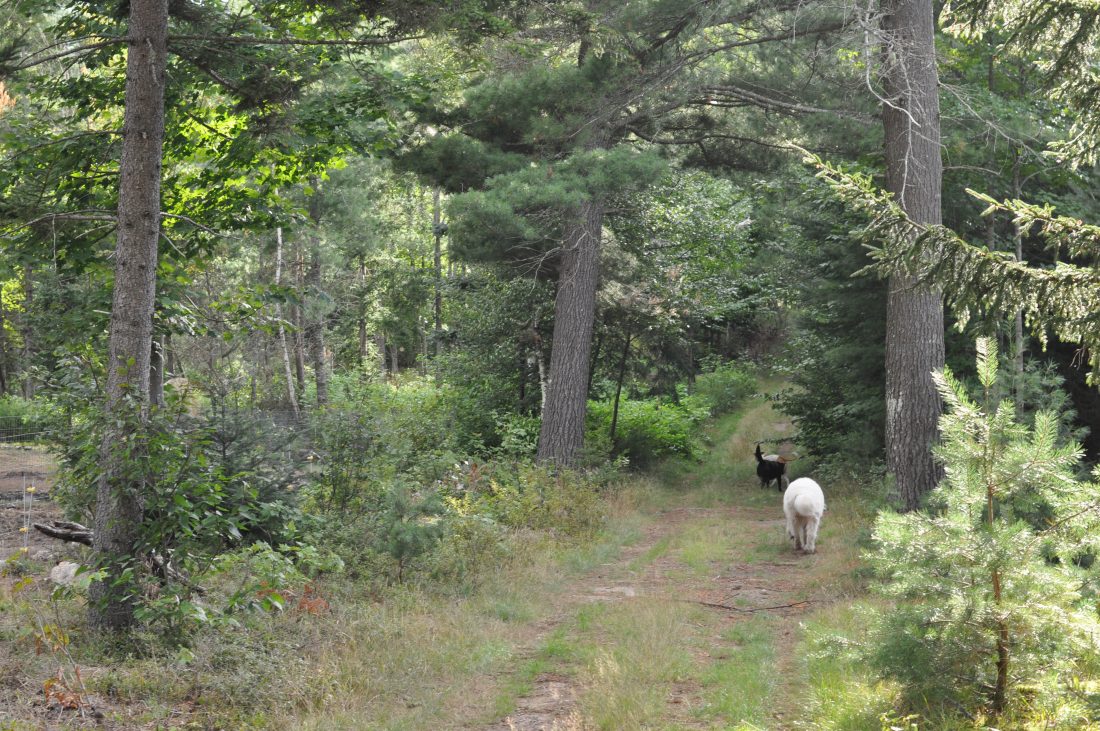
Farm dogs at Kate Mountain Farm in Vermontville. (Enterprise photo — Amy Scattergood)
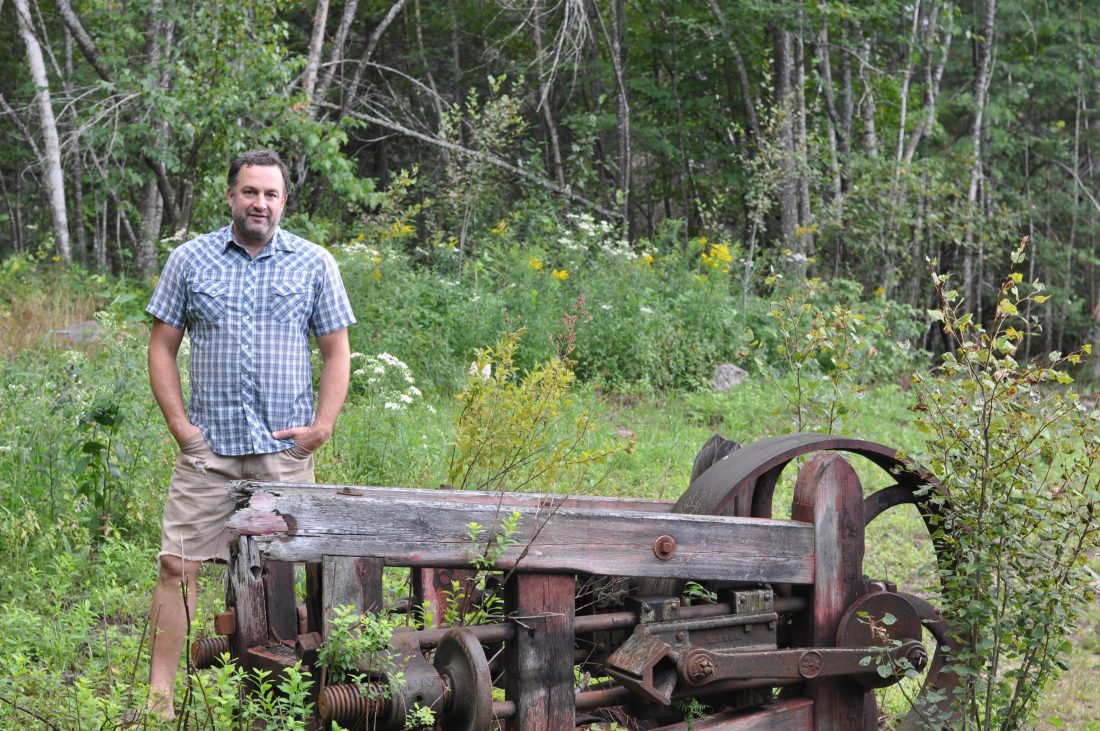
Kate Mountain Farm owner Aaron Caiazza stands by an old wood splitter originally from Paul Smith’s Hotel. (Enterprise photo — Amy Scattergood)
Local News
Paul Smith’s College Adirondack Watershed Institute urges boaters to help stop aquatic invasive species this summer
Lake Placid sugarbush sees best week yet
SUNY chancellor talks Reconnect program at NCCC

North Country students attend women in law event
WCSC awards scholarships to locals
SARANAC LAKE — The Women’s College Scholarship Club is accepting applications for $3,000 scholarships which ...