A mother dies of COVID
Family can’t have funeral in New Jersey
-
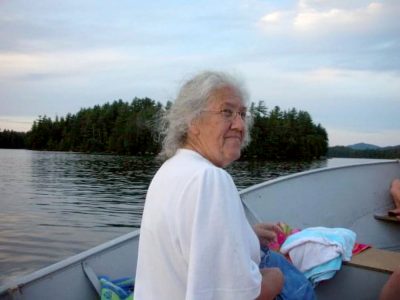
- Ruth Gorgas rides in a boat on Lower Saranac Lake about 10 years ago. She used to come from New Jersey to camp on this lake every summer with her husband and children.(Photo provided by Keith Gorgas)
-
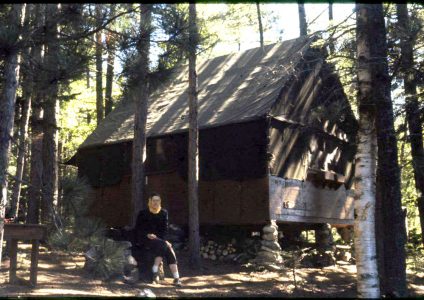
- Ruth Gorgas of New Jersey sits outside a platform tent on Lower Saranac Lake around 1961. She and her family used to camp at this platform tent every summer, but in the 1970s the state of New York stopped leasing state Forest Preserve land for private camp construction and demolished the structures. (Photo provided by Keith Gorgas)
-
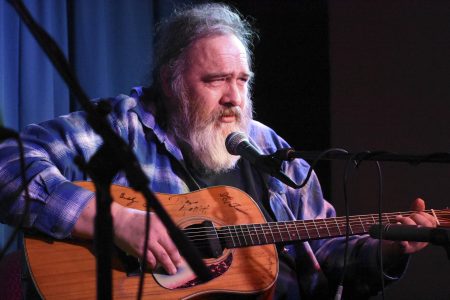
- Keith Gorgas performs at an open mic at BluSeed Studios in Saranac Lake on March 30, 2019. (Enterprise photo — Griffin Kelly)
-
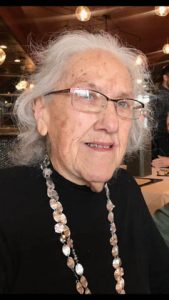
- Ruth Gorgas (Photo provided by the Gorgas family)
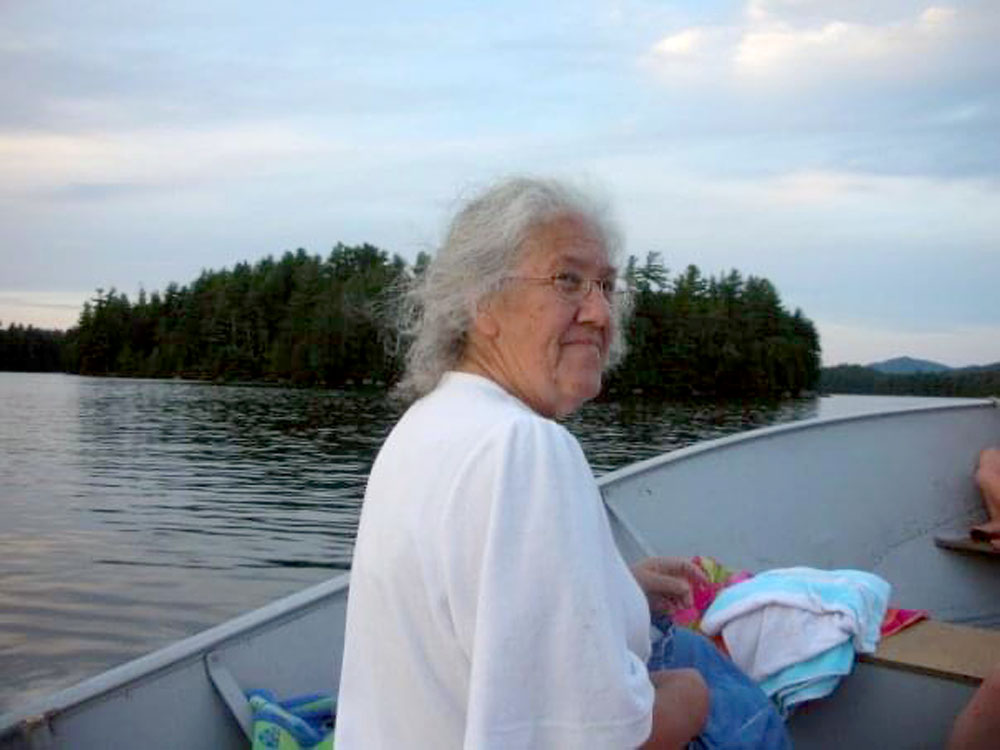
Ruth Gorgas rides in a boat on Lower Saranac Lake about 10 years ago. She used to come from New Jersey to camp on this lake every summer with her husband and children.(Photo provided by Keith Gorgas)
SARANAC LAKE — Here in the Adirondacks, far from the hot spots where COVID-19 runs rampant, few people have experienced losing a loved one to the disease. But Keith Gorgas has. He lost his mother to it last week.
Ruth Gorgas, 88, died on April 27 in a nursing home in New Jersey, the state where she lived almost her whole life and raised her six children. Keith, her second, lives in Saranac Lake, where his family spent every summer camping when he was a child. He and his wife Doreen raised six children of their own here in the Adirondacks.
Doreen said that as Saranac Lakers learned her mother-in-law had died, many told her it was the only COVID death they knew of personally. Back in New Jersey, Keith said, it would be hard to find anyone now who doesn’t know someone who died of the disease.
“Everyone down there, it’s a very real thing,” he said Thursday. “You don’t hear people down there saying that this is a hoax or anything like that.”
New Jersey has recorded more than 8,800 COVID-19 deaths, according to the Johns Hopkins Coronavirus Resource Center. That’s one in every 1,000 residents in this state of 8.8 million.
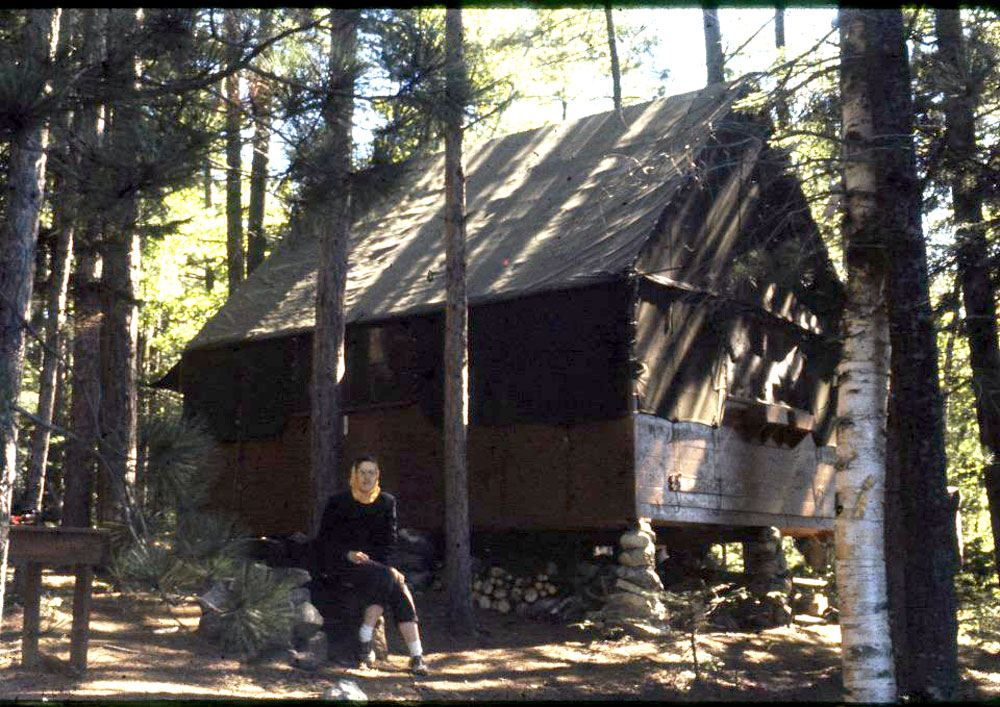
Ruth Gorgas of New Jersey sits outside a platform tent on Lower Saranac Lake around 1961. She and her family used to camp at this platform tent every summer, but in the 1970s the state of New York stopped leasing state Forest Preserve land for private camp construction and demolished the structures. (Photo provided by Keith Gorgas)
–
No visits, no funeral
Keith Gorgas said his mother lived a good, long life, but the pandemic makes her death especially painful for the family. And it’s a big family: Ruth had 41 grandchildren, and Keith and Doreen are soon expecting their 15th grandchild.
Many of the Gorgas clan still live in New Jersey, but none of them had been allowed to visit Ruth since March.
“My mom hadn’t seen a family member for two months, which was very hard,” Keith said.
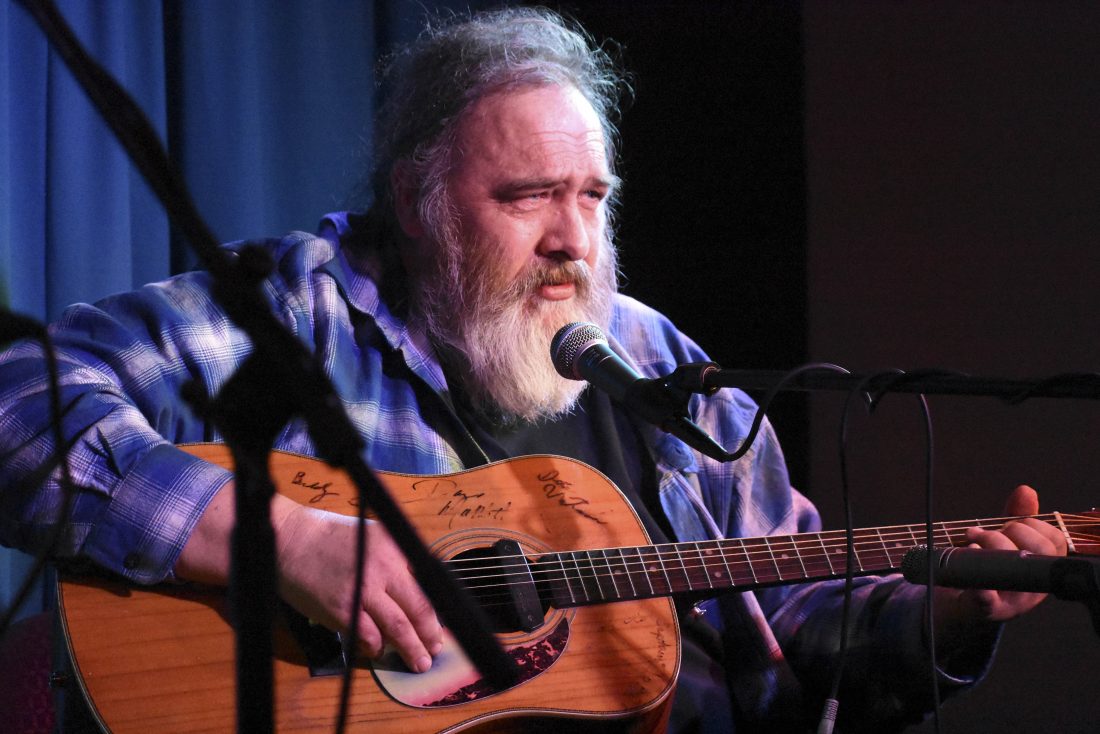
Keith Gorgas performs at an open mic at BluSeed Studios in Saranac Lake on March 30, 2019. (Enterprise photo — Griffin Kelly)
They also can’t gather to remember her the way they want to.
A very limited number of family members were allowed to enter the funeral parlor Friday, two at a time, to view Ruth’s body in the casket, Keith said. Afterward, no more than eight people could be present at the burial, in no more than five cars, and only three people could get out of the cars and walk to the grave — and then only after the casket is covered with earth. No flowers are allowed, no clergy and no service. Those are the cemetery’s rules, based on state rules.
“We’ll try to do something virtually via the internet, but there’s not going to be much to even see,” Keith said Thursday.
That “something” involves music. The Gorgases are a musical family. Keith is well known locally as a guitar player and deep bass singer with a vast repertoire of songs. He said his parents sang every night at home, in harmony.
“That was a big part of our growing up,” he said. “We would all be out on the front porch (singing), and the neighbors would come by.”
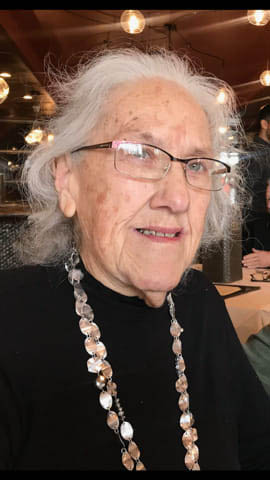
Ruth Gorgas (Photo provided by the Gorgas family)
His mother wanted the hymn “I’m Waiting for Thee, Lord” sung at her funeral, but there is no funeral. To compensate, Keith’s brother recorded himself singing it, accompanying himself on guitar, and invited other family members to record themselves singing along. One of Keith’s nephews stitched together the videos into a virtual chorus.
As the song says, they’re still waiting, but not just to go to heaven. They’re waiting to greet each other in person again, to cry and laugh and share memories about their mother, together.
–
“Living like a hermit”
Neither Franklin nor Essex County has reported a single COVID death, and some residents here chafe at being under the same public restrictions as in Brooklyn, where some 4,000 people have died of the disease. But for Keith Gorgas, the disease is not “out of sight, out of mind.”
He considers himself high risk for COVID-19. He’s in his early 60s, is overweight and smokes. Also Doreen’s mother lives with them, although they have hardly touched her since the lockdown began.
“I’m living like a hermit,” Keith said.
“But you see people going through town as if nothing’s wrong,” he added. “We could see something we don’t know how to handle here, and it makes me very afraid.”
The economic toll of the lockdown has hit him, too. A bus driver by trade, he was furloughed from his job with Citizen Advocates, transporting people with special needs. Now he worries about the future of the transit sector. In New York City, nearly 100 Metropolitan Transportation Authority workers had died of COVID as of Tuesday, according to the New York Times.
“They’re going to have to rethink how to keep buses and other mass transportation safe,” he said.
“There’s a lot we don’t know about this disease, and God bless everybody who is studying it.”
–
Last days
Keith said the COVID symptoms showed up in his mother exactly two weeks before she died. The nursing home moved her and other COVID patients to its top floor to keep them contained. Keith said his siblings joked about renting a lift so they could visit her through her window.
The nursing home staff couldn’t get enough personal protective equipment, so the Gorgas family managed to buy some scarce rubber gloves for them, and Randy Cross of Saranac Lake donated a gallon of hand sanitizer. Cross’ bug repellent company, Carpe Insectae, has been making the antiseptic to meet shortages.
Keith wants people up here to know “how much the health care workers are struggling and how much they’re taking it personally.” As they push through the hardship, they “are just doing extraordinarily kind things.”
Ruth seemed to be recovering, but then she took a quick turn for the worse. Keith was glad, at least, that she didn’t have the extra suffering of pneumonia, as many COVID patients do.
Family members took turns calling her. Keith hadn’t seen his mother in person since Mother’s Day two years ago, but he got to talk to her by phone the day before she died.
“I could tell she was going downhill,” he said. “I told her, ‘I want the last words you hear from me to be, I love you,’ and she said, ‘I love you, too.'”
Local News
Tupper Lake VFD, neighboring departments put mattress fire to bed
TUPPER LAKE — Quick action in the dead of night by Tupper Lake volunteer firefighters and several neighboring ...
Work underway for fifth ‘Bigrow Show’ at Tupper Arts
At Whiteface, the show goes on
Maple magic

Epstein, Iran and ICE top concerns at Saturday’s ‘No Kings’ rally in Saranac Lake