Tupper Lake’s water will get dirty before it gets clean
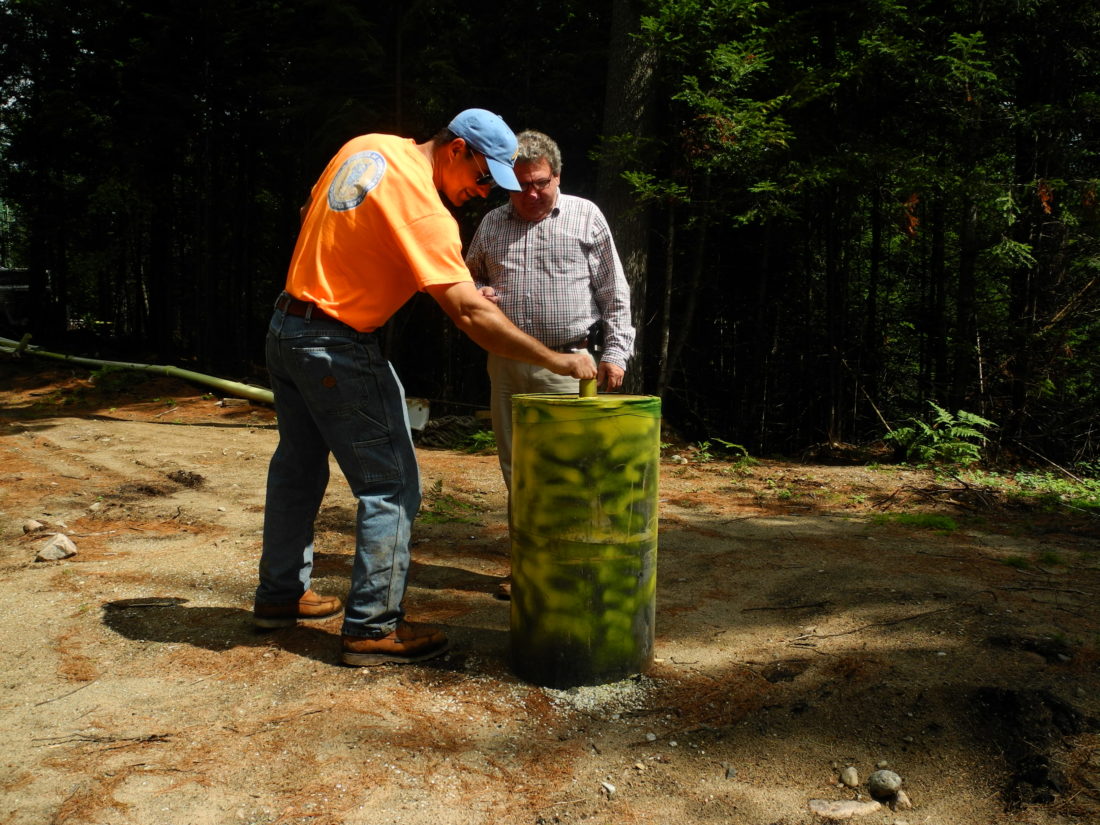
Village water department Supervisor Mark Robillard, left, and village mayor Paul Maroun take a look at one of Tupper Lake’s new wells in August, 2017. When the wells come online later this week, residents can expect cloudy water and sediment for the first couple days. (Enterprise photo — Aaron Cerbone)
TUPPER LAKE — This town will be drinking cleaner, less-chemically influenced water before the weekend, but before it gets better it’s going to get a whole lot worse.
While up to now water has been sourced from Big Tupper Lake and Little Simond Pond on the south side of town, it will now come from wells siting atop a high ridge separating Pitchfork Pond and a wetland area owned by Lyme Timber Company on the west side of town.
The project to install a new $6 million well water system in Tupper Lake was started in 2014 when the state Department of Heath determined the village water was over the safe zone for by-products caused by the water disinfection process.
When the direction of the water flow changes on Thursday or Friday sediment deposited by decades of water flow will be shaken loose and enter residential pipes, village water department Supervisor Mark Robillard said, adding that due to the direction of the flow, the Junction will be effected more.
Village board members warned in a meeting last Thursday that water will be cloudy and carry sand, dirt, barnacle-like corrosions and whatever else has gathered in the pipes. They said the inconvenience should last around a week and urged residents to run water from their biggest spigots, such as outdoor hoses and bath tubs.
Water left running through a smaller spigot, like a sink, could cause clogs.
The village will be performing routine hydrant flushes to speed up the process and water crews will be on stand-by for next week or so as pipe bursts are likely to occur with the pressure change.
After the water source transition period is over residents should notice an increase in the quality of their water, as it is being taken from an underground stream instead of a lake or pond.
The wells will pull 800 gallons a minute of water from a stream running through a gravel bed deep underground. Thousands of years ago, glaciers receding from the North Country wore a notch in the rock and dumped large amounts of gravel inside. This encased stream of water flows through a gravel cavern, along the length of the ridge and acts as a natural filtration system.
The treatment plant will use a third of the chemicals as the current water system, only chlorinating the water before it enters municipal water lines. Organic materials from lakes and ponds, such as leaves or algae can form trihalomethanes and haloacetic acids, as water is treated with chlorine disinfection. Both these by-products have been linked to harmful side effects after prolonged exposure, including an increased risk for cancer.
The new treatment system will be healthier and cheaper to run on a daily basis.
A second water mainline on McLaughlin Avenue will connect the uptown and downtown water tanks, allowing the tanks to be controlled telemetrically. Currently, the uptown tank, which sits at a higher elevation, does most of the work, with water in the downtown tank sitting still unless there is an especially large draw. The new system will allow water levels in both tanks to be controlled simultaneously and remotely.
The water was initially supposed to come online June 18, but a malfunctioning chlorine pump delayed the start. The Lake Placid water department assisted in repairing the hose, which was not holding pressure.
The village still has work to do, as it has been building more and more loops on the tracts in recent year, and will start on the town’s side. These loops keep water from sitting stagnant and allow a wider reach for the municipal service.
Tupper Lake village Trustee Ron LaScala said the board will be discussing possibly introducing tap fees for the town when residents or businesses join a district.
Local News
Paul Smith’s College Adirondack Watershed Institute urges boaters to help stop aquatic invasive species this summer

Lake Placid sugarbush sees best week yet
SUNY chancellor talks Reconnect program at NCCC

North Country students attend women in law event
WCSC awards scholarships to locals
SARANAC LAKE — The Women’s College Scholarship Club is accepting applications for $3,000 scholarships which ...