Bad season for infections, one of worst in 15 years
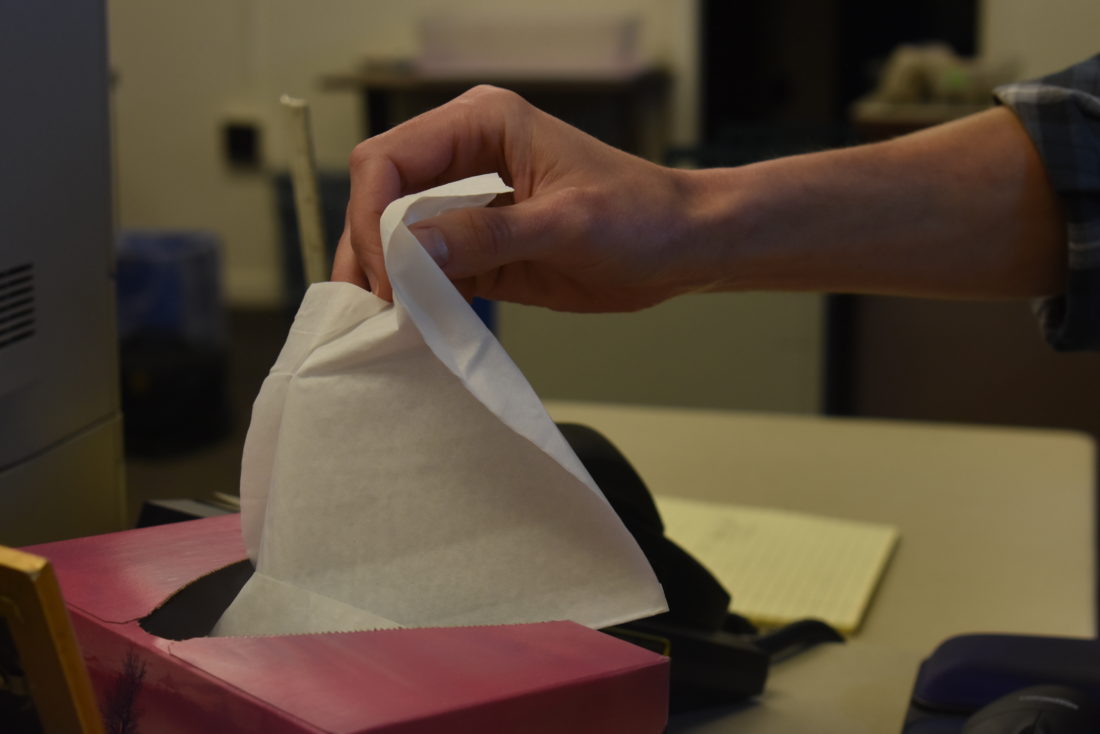
If you have an illness with a runny nose, coughing or sneezing, washing your hands and avoiding airspace with contagious people can lessen the spread of viral and bacterial infections. (Enterprise photo — Griffin Kelly)
SARANAC LAKE — Doctors at the Adirondack Medical Center in Saranac Lake say this has been one of the worst seasons for viral and bacterial infections and respiratory illnesses in 15 years for the area.
“It’s been a good percentage of what we’ve been seeing,” said Emergency Department Medical Director Dr. Jonathan Esper. “It’s everything from runny noses and coughs to ear aches and sinus infections.”
Esper said the infections the hospital is finding include influenza A and B, parainfluenza, rhinoviruses — which predominately cause the common cold — and pertussis or whooping cough, which was recently reported in both the Saranac Lake and Lake Placid school districts. Sometimes patients are testing positive for multiple infections at once.
Infections are generally spread from person to person through spray or droplets from coughing and sneezing.
“The biggest way to avoid these infections is avoiding contact or sharing the same air space with infected people,” Esper said. “Wear surgical masks, wash your hands — we always discourage smoking because that makes a person more susceptible to infections.”
Most patients are used to getting a throat swab when a doctor checks for infections, but the doctors in the ER at Adirondack Medical Center are also using nasal swabs, which can test for 24 different germs that cause respiratory issues.
Bacteria are often treated with antibiotics, but doctors need to make sure they are necessary, Esper said.
“We’re trying to reduce the amount of antibiotics we use,” he said. “If were highly suspicious that there are no comprises of respiratory status, we try to treat the side effects. We’ll give doses of things like Tylenol and other analgesics while also trying to limit the contagion. We also look for signs of whether or not patients are developing a secondary bacterial infection.”
Esper said bacteria can grow resistant to antibiotics and also cause unwanted side effects.
“Some are irritating to the stomach,” he said. “If someone is allergic to the antibiotic, it can cause a rash or hives. They’re also capable of changing the bacteria that are normally in our intestinal tracts and sometimes cause opportunistic infections such as diarrhea and other problems.”
Local News

Constructing collaboration

Early-season paddlers

The pit and the potential for new housing

Authors to discuss ‘The First Adirondackers’ at John Brown Farm

Expect hunger to rise as new SNAP rules take effect