
Planting for tomorrow: Threats abound, but some trees remain a good bet
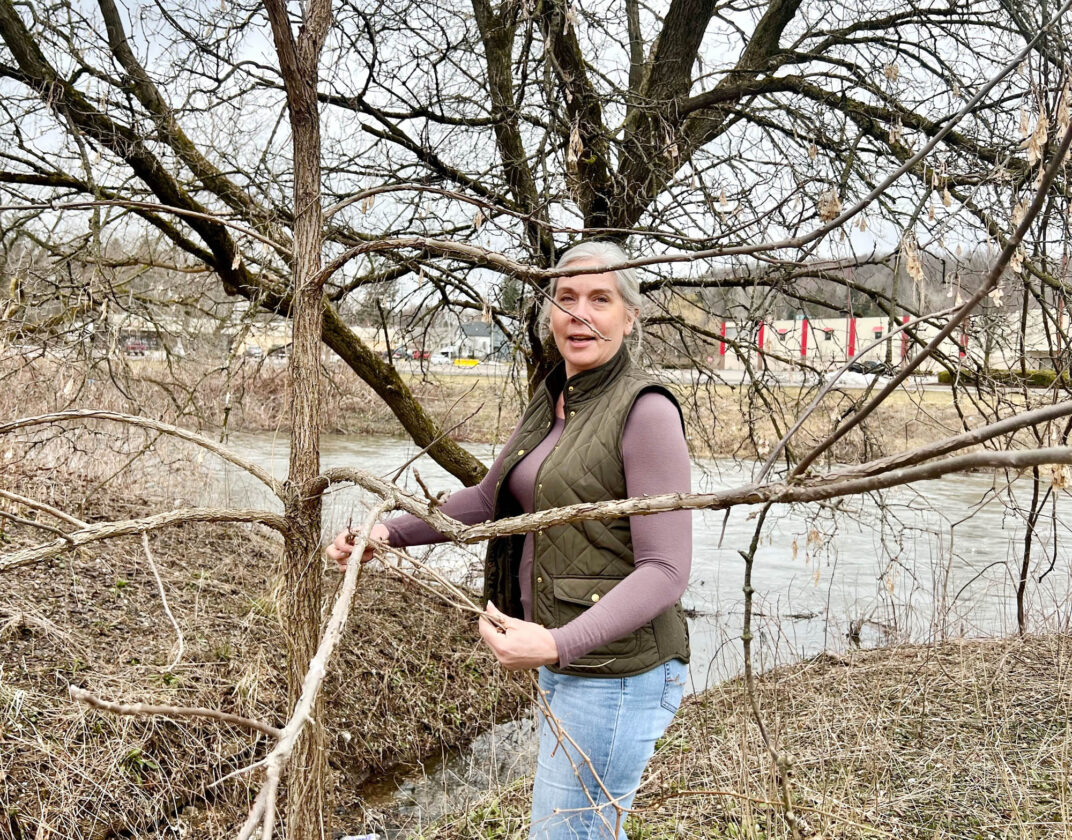
Amanda Barber, manager of the Cortland County Soil and Water Conservation District, suggests people who need to replace or replant trees look at native species, diversify what they plant, and do their research. (Photo provided — Jaime Cone Hughes/Cortland Standard)
It’s no illusion: Trees are under attack.
Emerald ash borer. Spotted lanternfly. Tent caterpillars, woolly adelgid, oak wilt, beech leaf disease — if it’s not killing the trees you have, the state Department of Environmental Conservation reports it’s threatening the trees you may want to plant.
“In terms of pest pressure, there is a lot more,” said Amanda Barber, district manager of the Cortland County Soil and Water Conservation District. “A lot of these things were not an issue 15, 20 years ago.”
If you’re looking to plant a bit of shade, or maybe replace the trees decimated by whatever malady swept over your backyard, you’ll want to avoid a few, experts said.
Maples are at risk for several diseases, including “maple decline,” the loss of maple trees from multiple factors. Usually the decline begins with successive years of defoliation by insects, which weakens the trees as they face drought, road salt and sidewalk construction, reports the Cornell University College of Agriculture and Life Sciences.
Hemlocks face woolly adelgids. Barber said she’s concerned about the Southern pine beetles, which have been expanding their range up the East Coast. And the beetles like more than Southern pine.
“Warming of extreme winter temperatures has most likely contributed to this expansion,” the DEC website states. All hard pine trees are susceptible, including pitch pine, red pine, jack pine and white pine.
Multiple diseases affect crabapples, said Nina Bassuk, professor emeritus of the Urban Horticulture Institute at Cornell, so if you’re considering planting one, do your research, she said. Some of the hundreds of varieties are resistant to apple scab, powdery mildew, cedar apple rust and fire blight.
Dutch elm disease continues to be a threat to elms, though Bassuk said there are several disease-resistant varieties, including “Triumph” and “Accolade.”
–
Best bets
–
So what’s the best bet?
Barber has a few go-to trees. Red maple is a personal favorite with its bright red leaves in the fall. It can withstand a variety of conditions, she said, and it is less susceptible to maple decline than sugar maple. Planting some maples is not necessarily discouraged, Barber said, but she recommends property owners hedge their bets by planting other species, too; white oak is a solid choice.
If you’re seeking a smaller tree, Diane Batzing of the Cortland’s Landscape and Design Commission likes Japanese lilac with its cream-colored blossoms, or maybe the American hornbeam.
Both, she notes, are good near power lines — the city gets $50 a tree from the state for every short tree it plants under a utility line.
“One that we’ve planted for a couple years now is called the highland park maple,” Batzing said. “One tree I wish we could have gotten more of is the ruby red chestnut. They have pinkish red blossoms instead of the usual white chestnut flower. But it’s hard to find the smaller varieties.”
Bassuk is a fan of oaks.
“Swamp white oak can tolerate dry or wet conditions, so it’s a good tree for hedging your bets,” she said.
She also recommends the Kentucky coffee tree — very disease resistant.
–
Diversify
–
Abide by one rule, Bassuk said: “Planting a diversity.”
“When we get into the most trouble is when we have a lot of one species and a lot of loss of that one type of species because a pest comes through,” Barber said. “You want to minimize the impact of those losses you’re going to see over time.”
Plant native species, she added. They are generally more hearty and fit in well with the ecosystem.
And do your research.
“We recommend doing some simple tests to understand the drainage and soil and the diseases,” Bassuk said.
Cornell Cooperative Extension of Cortland County offers soil nutrient tests for $13 per sample, dropped off at Dairy One Co-op Inc in Ithaca.
Make sure the tree is healthy, too, Barber said. “Learn about that before you buy it. Identify wounds and pests before bringing it home. Go online and do a little bit of research, or do a little scouting at your local nursery.”
Bassuk recommends consulting a Cornell database she has been working on for 35 years. Users can enter the name of a specific species to see photographs and find detailed information about it, or cross-reference property conditions to see which trees thrive under them.
–
Shop smart
–
Climate change may be a concern because of increased spread of disease and pests, but the weather it causes isn’t yet a worry, Barber said. “When it comes to trying to anticipate climate change, it is still a very long-term impact.”
Will upstate New York see more wet weather? Longer droughts? Will extreme weather events carry in new pests? Insects can ride storms from one area to another, Barber said. But it is hard to predict.
To help stop the spread of disease, Barber recommends purchasing plants from nurseries where they are grown locally.
Bassuk, on the other hand, is less concerned about disease spread. In fact, she encourages people to go further afield.
“They would be very keen to keep their stock clean,” she said of retailers, and they’ll acquire certain species if asked.
“Work with a local nursery,” she advised. “Talk to them. There are many species from all across the Northeast that are suited to this climate.”
–
Consider old species
–
If tree longevity is a goal, bear this in mind, said Barber: Apples from a heritage tree may not look as pretty, but they will probably taste just as good. Heirloom varieties, which are plants that originated under cultivation and that have survived for several generations, usually due to the efforts of private individuals, are frequently good options, Barber said.
“Heirlooms aren’t as perfect or round or smooth in their shape as some of the hybrids,” Barber said. “But they are often much more resilient to the impacts of pests and climate change.”
Old species seem to have fewer problems, she said. While human-altered plants have their place, especially when it comes to growing food, heirloom is best for a backyard tree.
Even pollinators’ mouths have adapted to feed from flowers of a specific shape. Change the size or depth of a blossom for aesthetics, and that butterfly or moth no longer has the perfect feeding vessel.
“They really are the ones that are in balance with the natural world, so they provide the best habitat for fish, butterflies,” Barber said. “Just because of all the ways that those things have evolved together.”