December is Holiday Time!
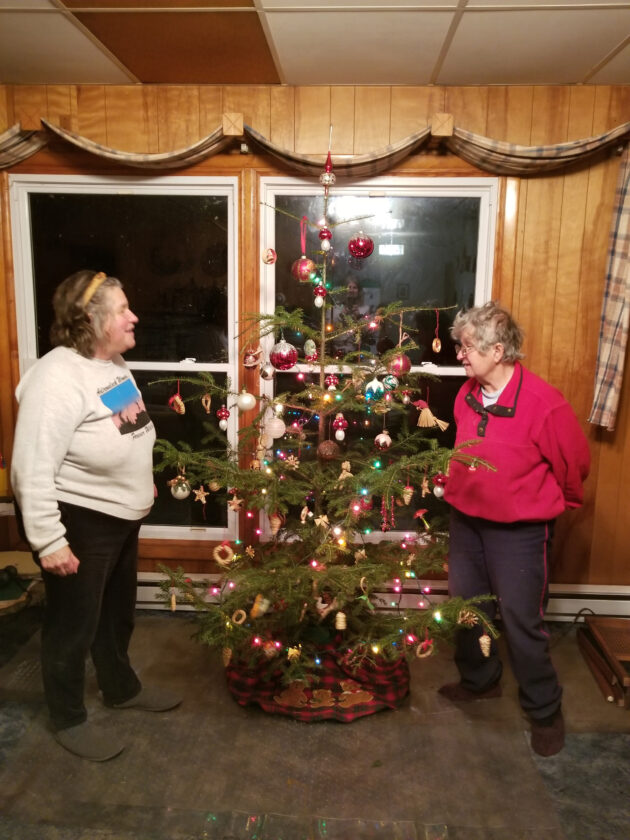
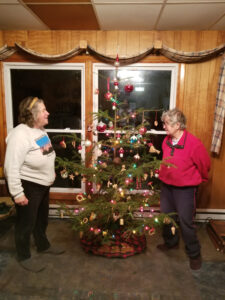
The Christmas tree (Provided photo — Yvona Fast)
However, whenever, whatever you do — December is the time to celebrate!
Thanksgiving is an American holiday. Most Americans eat the same basic menu of turkey, mashed potatoes, stuffing, salad and pie.
In December, we gravitate to our own traditions. Some celebrate Christmas. Some, Hanukkah (which begins this year on Dec. 14). Others, Kwanzaa. Some focus on New Year’s festivities. Others have already celebrated Diwali, the festival of lights that marks the Hindu New Year.
December is the darkest, dreariest time of year. We need some cheer! We celebrate with holiday music, lights and decorations to bring merriment into the grayness.
For some, crowds, noise and social dynamics can become overwhelming. Even with all that love and friendship, it can be a lot.
Advent began on December 1st. This time of reflection and anticipation is full of traditions and symbols, like the Advent calendar, Advent wreath and Advent candles.
Hanukkah celebrates a military victory with lights, special Hanukkah songs and fried foods like latkes, kefte and donuts. Jewish traditions vary between Sephardic and Ashkenazi, and depend on the country of origin.
Christmas is celebrated by Christians all around the world, so traditions vary. In Italy and Poland, fish is common. Northern Europeans eat herring. In Latin America, rice and beans are a must, along with special treats steeped in Spanish heritage. In many countries, the feasting and merry-making continue until January 6, Dia de Reyes (Day of the Three Kings), which officially marks the end of the holiday season.
Kwanzaa foods focus on African or southern foods like rice, cornbread, yams and collard greens. Stews and soups like southern gumbo or African peanut and chicken stew are popular.
In America, December is the time to party. Whether it’s a Caroling Party, a Holiday Cookie Exchange or a Solstice gathering, we gather with friends. There’s music, laughter, pinecone-scented candles, tinsel, drinks and lots of food.
Lavish holiday spreads with cocktails, bowls of eggnog, platters full of cheese, fried goodies, hot meatballs, nuts, chips, cookies and other sweets are the time to over-indulge. Balance hot appetizers with cold, meat dishes with vegetarian fare. Serve savory food as well as sweet. Include lighter fare, like fruit and veggies, for dieters or health-conscious guests. Liquid refreshments include eggnog, wine, mixed drinks and cider.
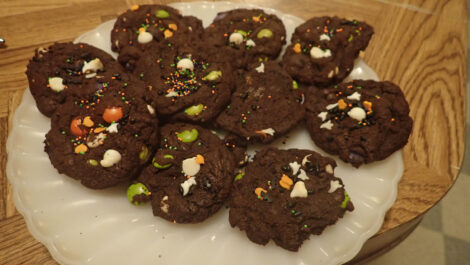
Baked goods are popular, and every country has its traditional cookie. For Hanukkah, rugelach and hamantaschen are traditional. For most Americans, Christmas cookies are sugar cookies cut into holiday shapes, like trees, snowmen, reindeer or angels, then decorated with white icing and red and green sprinkles. Most folks have a favorite sugar cookie recipe that is rolled, cut into bells, stars, snowmen, Christmas trees and Santas and decorated with red and green sparkles or icing.
Each European country has its own unique Christmas cookie treat. Traditional Italian cucciddati are stuffed with ground dates and figs. German families bake pans of Lebkuchen, buttery Spritz cookies, spekulatius spiced wafers and decorated gingerbread that is made into houses and men. In Austria and Bavaria, Springerle are anise-flavored sugar cookies made from plain egg-flour-sugar dough that is rolled and imprinted with designs using special molds. Swedes are fond of papparkakor, spicy ginger and black-pepper delights and the Norwegians make krumkake, thin lemon and cardamom-scented wafers.
Holiday sweet yeast breads date back to Medieval times, pre-dating modern chemical leavening agents. Cakes with dried fruits and honey were a way to use preserved dried ingredients during the long winter when fresh fruits were not available. Symbolic shapes of breads and spices used vary by country of origin, but are all based on a rich, sweet yeast dough and each is an integral part of holiday traditions. Some examples are German Stollen and Dreikonigsbrot, Polish Babka, English fruitcake, Three Kings Cake and Italian panettone. Nut, poppy seed, apricot and lekvar (prune) filled breads are a popular Christmas tradition from Ukraine south to Yugoslavia and are known by various local names (potica in Slovenia, orehnica in Croatia, makoviec in Poland).
How will you chase away the darkness, keep your spirits up and celebrate this December? Stollen, Babka, Three Kings Cake — what Christmas treasures will you bake?
–
Traditional Eggnog
–
Ingredients:
–
6 eggs
1/2 cup sugar
3 cups milk
1 cup heavy cream
1 cup rum (optional) or 1 teaspoon rum flavoring
1/4 cup confectioners’ sugar
1 teaspoon nutmeg
–
Directions:
–
Separate the eggs into 2 bowls. Cover egg whites and refrigerate until ready to use.
In a large bowl, beat egg yolks with sugar until thick and lemon colored. Stir in milk and rum, if using.
Allow to cool in the fridge. 30 minutes before serving, whip the cream. Beat the egg whites with confectioners’ sugar until stiff peaks form. Fold beaten eggs, whipped cream and nutmeg into the egg yolk mixture. Garnish with additional nutmeg and additional whipped cream, if desired.
–
Cranberry Orange Nut Bread
–
Ingredients:
–
1/2 cup butter
2 eggs
1/2 cup sugar
1 1/3 cup orange juice
1 1/3 cup all-purpose flour
2/3 cup whole wheat flour
1 teaspoon baking powder
1 teaspoon baking soda
1/2 teaspoon salt
1/4 cup oats
2/3 cup dried cranberries
1/2 cup chopped nuts
–
Directions:
–
Preheat oven to 350 degrees F. Butter loaf pans or spray with cooking spray.
Melt the butter. In a bowl, beat eggs with sugar. Beat in melted butter and orange juice.
Combine flours with baking powder, baking soda and salt. Stir into the batter. Stir in oats, cranberries and nuts. Place in loaf pans about 2/3 full, place in oven and bake 35 to 50 minutes or until golden brown and a toothpick inserted comes out clean.
–
Basic Fruit Cobbler
–
Peach cobbler is traditional for Kwanzaa. But a fruit cobbler is a wonderful dessert anytime!
–
Ingredients:
–
5 cups canned or frozen peach slices, drained (or 5 cups frozen berries, thawed)
1 tablespoon maple syrup
1 teaspoon cornstarch
4 tablespoons bitter
1/2 cup milk
1 cup flour
1 tablespoon sugar
2 teaspoons baking powder
1/2 teaspoon salt
–
Directions:
–
Preheat oven to 375 degrees F.
Butter or oil a 9″ x 9″ baking dish.
Place peaches (or other fruit) in the bottom of the baking dish. Sprinkle with cornstarch and drizzle with maple syrup.
In a small saucepan, heat milk and butter until butter is melted.
In a mixing bowl, combine flour, sugar, baking powder and salt.
Stir in the milk and butter mixture.
Spoon topping over fruit; bake 30 minutes or until golden brown.
— — —
Author of the award-winning cookbook Garden Gourmet: Fresh & Fabulous Meals from your Garden, CSA or Farmers’ Market, Yvona Fast lives in Lake Clear and has two passions: writing and cooking. She can be found at www.yvonafast.com and reached at writeyvona@gmail.com.