
Choose your rose
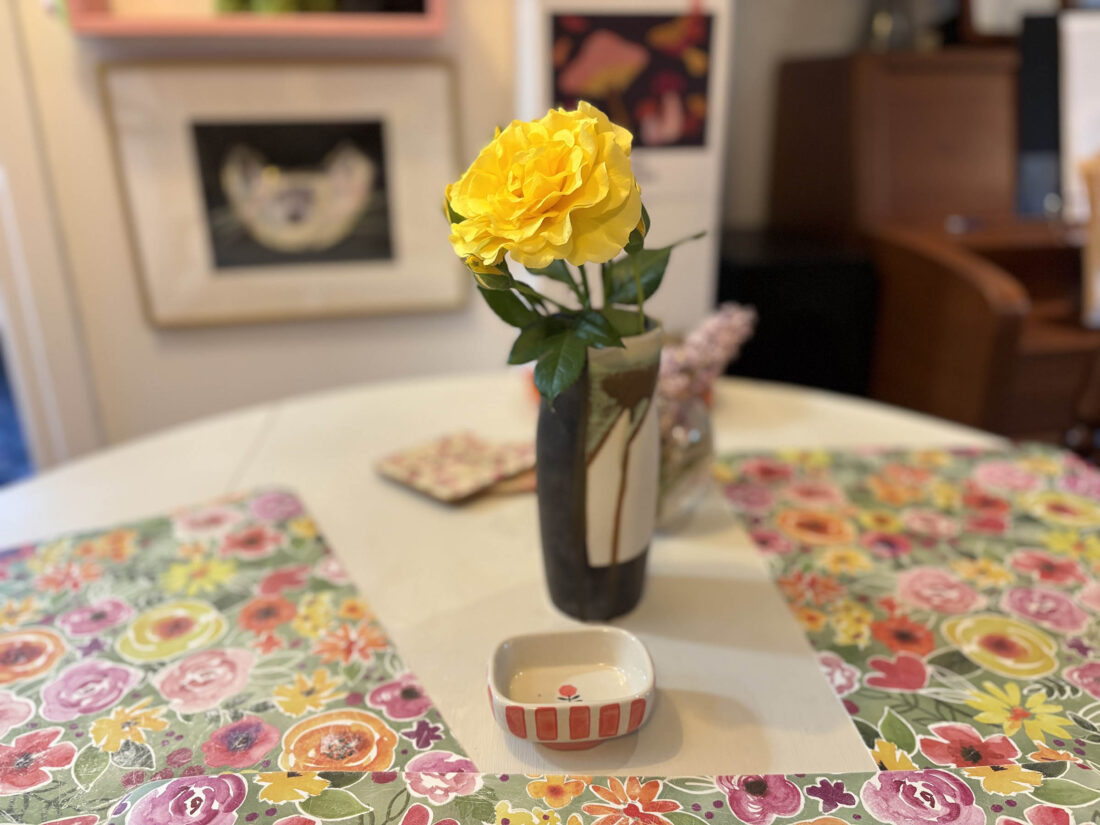
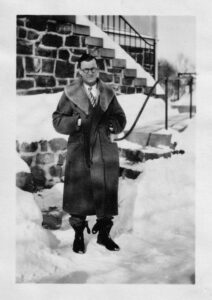
(Provided photo)
I’m on my way to Singapore to visit my father with my daughter C, 40,000 feet above ground, hurtling through thin air at 500 miles an hour, feeling a bit lost and restless. There is an atemporality and aspatiality to air travel that at once saddens me and wakes me up.
–
The freedom of flight
–
Antoine de Saint-Exupery, the pilot and author of “The Little Prince,” wrote about the meaning of flying from the perspective of a pilot. In his memoir “Wind, Sand and Stars,” Saint-Exupery describes the unique vantage point of flight — to look up at the stars and down at the earth, to be suspended between the heavens and home. The grandness of existence and the smallness of ourselves appear in tandem. We are all here and then not here, a moment of beauty and ecstasy and pain, and then it’s gone.
The fleeting nature of life and the urgency to do something meaningful with our time are a large part of Saint-Exupery’s memoir. In one telling passage, the author is aboard a bus and describes the passengers who will never awaken their sleeping musician, inner poet, hidden astronomer. They are here and gone without ever connecting to the parts of themselves that they long to discover. Flight for Saint-Exupery is shorthand for freedom, a way to literally and metaphorically leave the life of the everyday (or as he puts it, the bookkeeping of life) to soar to heights where truth can be contemplated.
In the transient state of air travel, the question surfaces, “What really matters, and am I making time for what really matters?”
–
The eternal recurrence
–
Friedrich Nietzsche put the question to us in the form of a philosophical thought experiment known as the eternal recurrence. The 19th-century philosopher asked, “What if you had to relive your life exactly as it is, where every detail, every speck of dust is the same — would you say yes, or no?” Unlike the film “Groundhog Day” starring Bill Murray, you wouldn’t be aware that you are reliving your life in the eternal recurrence. I like to tell my philosophy students that you might be living your 700th round right now!
To make the subject even more challenging, Nietzsche states that the question comes to you in your “loneliest loneliness.” What is that, you ask? I don’t know. That’s the point. Only you know what it is. The question starts there, in the depths of your loneliest loneliness, and from that grave you are asked to make the choice.
The point is piercing. We must weigh the balance between the pain and the joy, the bookkeeping and the astronomy of our life. Then we must face our answer to the question of the eternal recurrence: yes or no. Nietzsche wants us to say yes, just as Saint-Exupery wants us to choose freedom. If your answer is no, Nietzsche’s life-affirming philosophy encourages you to change your life so that you can eventually say yes.
But how? We don’t all get to be musicians or poets or astronomers. Many of us don’t have the talent or the desire. More to the point, many of us must make practical choices. Does that mean the rest of us can’t say yes to Nietzsche’s question?
–
The singular rose
–
We can look to Saint-Exupery’s famous work, “The Little Prince,” for existential guidance. In the novella, the little prince falls in love with a rose that he believes is one of a kind and loves the rose for its uniqueness. During his journey, however, the little prince happens upon a rose bush. To his disappointment, he realizes that his rose is, in fact, unremarkable and just like every other rose. The little prince must face the question: can he love the rose even if it is ordinary? With help from a philosophical fox, the little prince chooses yes. His choice to love the rose makes it singular to the little prince and in turn, his love shifts to a deeper, more meaningful register.
I might not be a musician or poet or astronomer, but I can say yes to Nietzsche because my life is singular to me, and the specks of dust are mine. I choose my life with the people in it. I chose this rose. This is my freedom, and it is yours too.
When I fly, I know what thoughts and feelings to expect. I don’t mind the existential check-up; it feels like a visit to the doctor, like I’m checking in with myself in a meaningful way. Now my plane is on its descent, and I am told to close all electronic devices. It’s time to make time for some people that matter to me, the roses I’ve chosen, and who I’m lucky enough to say chose me back.
Prompt for next time: Tell me about the last meaningful trip you took, who you were going to visit, and why the trip matters to you.
Columns
Choose your rose
Lake Placid’s first Invitational Ski Jump
Image of the Week
Riding the waves
While I’ve never thought of myself anything special. but I think one thing distinguishes me from most people. It ...
5W Wednesdays
Stretch the truth
“Santa’s Watching” was a dead-stop phrase thrown down year-round with the power to stop nefarious ...