
Tupper Laker rescued from Ampersand Mountain
Slipped and fell on ice, had no winter traction gear
-
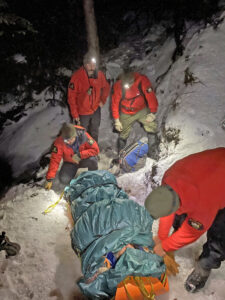
- Forest rangers sled an injured hiker from Tupper Lake down the Ampersand Mountain trail in the town of Harrietstown on Friday, Nov. 21. The hiker did not have any winter traction footwear and suffered an unstable ankle injury after falling on an icy section of the trail. (Provided photo — New York state Department of Environmental Conservation)
-
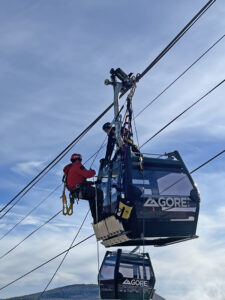
- Forest rangers belay down into a gondola cabin at the Gore Mountain ski area near North Creek on Thursday, Nov. 20. The rangers, along with Gore Mountain Ski Patrol and state Olympic Regional Development Authority staff, teamed up for gondola evacuation training. (Provided photo — New York state Department of Environmental Conservation)
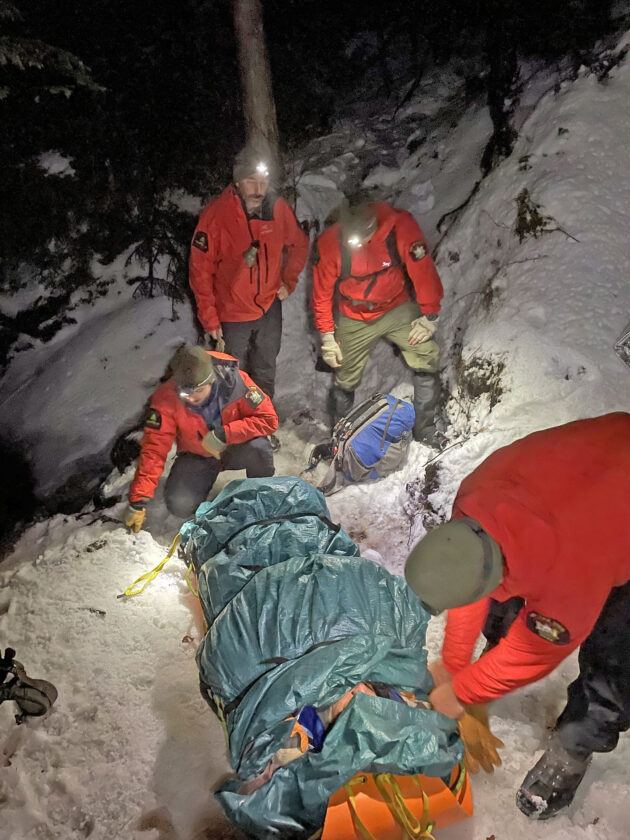
Forest rangers sled an injured hiker from Tupper Lake down the Ampersand Mountain trail in the town of Harrietstown on Friday, Nov. 21. The hiker did not have any winter traction footwear and suffered an unstable ankle injury after falling on an icy section of the trail. (Provided photo — New York state Department of Environmental Conservation)
Forest rangers with the state Department of Environmental Conservation responded to several rescue calls throughout the Adirondacks in late November, as well as participating in gondola evacuation training and assisting with a supplies fly in to the remote West Canada Lakes Wilderness.
Two of the rescue calls involved a lack of preparation — with hikers either not having proper winter gear or a source of light — and one was a call for hypothermia that did not appear to be severe, as the hiker was spending the night in the backcountry with a group, and had recovered and was in good condition when rangers made contact the next day.
–
Forgotten flashnight leads to late night
–
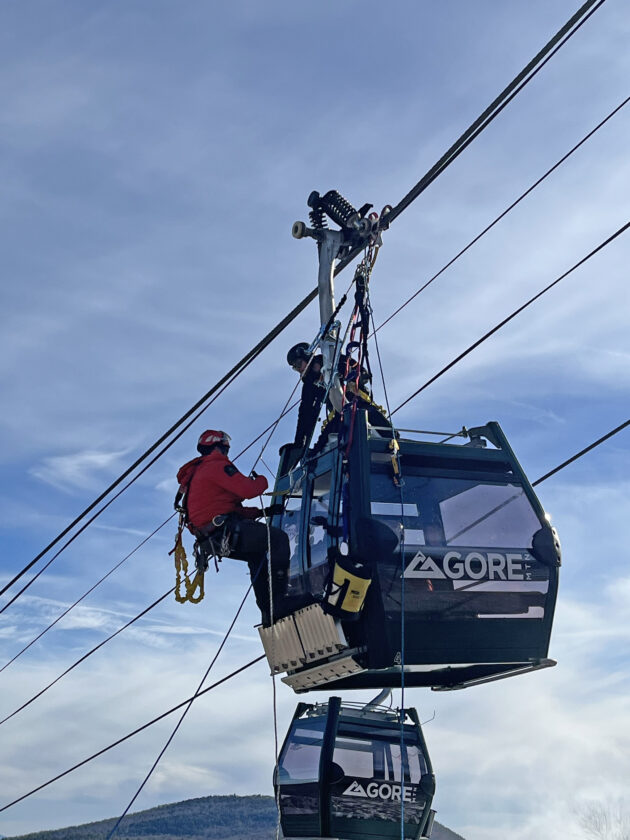
Forest rangers belay down into a gondola cabin at the Gore Mountain ski area near North Creek on Thursday, Nov. 20. The rangers, along with Gore Mountain Ski Patrol and state Olympic Regional Development Authority staff, teamed up for gondola evacuation training. (Provided photo — New York state Department of Environmental Conservation)
TICONDEROGA — Ray Brook Dispatch received a call for an overdue hiker on Potter Mountain at 7:10 p.m. on Saturday, Nov. 22. The reporting party indicated the hiker’s car was still at the trailhead and they had not had any contact since 1 p.m. that day. Forest Rangers located the subject in good health off the Short Swing trail at 9:50 p.m. The 78-year-old from Ticonderoga forgot to pack a flashlight and had a tough time finding the trail in the dark.
–
Hiker recovers from hypothermia scare in High Peaks
–
NEWCOMB — Essex County 911 requested forest ranger assistance with a hiker suffering from hypothermia while hiking Couchsachraga Peak in the Santanoni Range at 6:30 p.m. on Saturday, Nov. 22. Rangers contacted the hiking party via cellphone and advised them to rehydrate with warm liquids, rewarm the subject and attempt to keep moving. The hikers were making their way to the Bradley Pond lean-to for an overnight stay. Rangers made positive contact with the hikers at noon on Sunday, Nov. 23, who said they were all in good health and required no further assistance.
Couchsachraga is one of the most isolated High Peaks. Not only is it far into the backcountry — its summit is 7.2 miles from the nearest trailhead — but much of its route follows an unmarked trail, and in order to get to it, hikers must first climb to the approximately 4,300-foot pass between Panther and Santanoni peaks, then descend to a 3,500-foot col between that and Couchsachraga, before reascending another 300 plus feet to Couchsachraga’s summit. These factors serve to hinder and potentially delay rescue efforts if needed on Couchsachraga, emphasizing the importance of hikers being prepared before venturing into the backcountry.
–
Unpreparedness leads to injury on Ampersand
–
HARRIETSTOWN — Ray Brook Dispatch received a call from a hiker with an unstable ankle injury at the summit of Ampersand Mountain at 5:10 p.m. on Friday, Nov. 21. Forest Ranger Matthew Adams spoke to the subject over the phone. The hiker was not wearing any traction devices and fell on an icy section of the trail. At 6:50 p.m., forest rangers reached the 54-year-old from Tupper Lake, splinted the injured ankle, provided pain medication and warm liquids and used a hypothermic wrap.
Nine rangers used a sled to transport the patient to the trailhead. A family member drove the hiker to the hospital. Resources were clear at midnight. Video of part of the rescue is available to download at tinyurl.com/yc85x36a.
Rangers remind hikers to be aware of the weather conditions. Even if it’s relatively warm at the trailhead, there is snow and ice at higher elevations. Winter hiking safety tips are available at tinyurl.com/93n73478.
–
Gondola evacuation training at Gore
–
NORTH CREEK — Nine forest rangers participated in gondola evacuation training at the Gore Mountain ski area on Thursday, Nov. 20. They trained with Gore Mountain ski patrol and staff from the state Olympic Regional Development Authority. Teams practiced ascending the lift towers and traversing along the cable to reach the gondola. Rescuers belayed from the cable into the cab from the top of the gondola. Once inside, the rescuer then belayed the cab occupants safely to the ground. This training is important not only to prepare for a possible gondola evacuation but also for forest rangers to practice rope rescue skills and multiagency coordination.
–
Lean-to in, debris out in West Canada Lakes wilderness
–
PISECO — Forest Rangers joined DEC staff from the Divisions of Lands and Forests and Operations and State Police Aviation to complete utility flights on Tuesday, Nov. 18 and Wednesday, Nov. 19 in the West Canada Lake Wilderness Area. They delivered a new lean-to to Cedar Lake and removed debris from a cabin fire on the summit of Pillsbury Mountain.
Local News
Tupper Laker rescued from Ampersand Mountain
Gaming commission: Don’t gift lottery tickets to those under 18 this holiday season
ALBANY — As the holiday season gets underway, the state Gaming Commission, state office of addiction services ...
Winter storm expected to graze Tri-Lakes on Tuesday
SARANAC LAKE — A fast-moving winter storm is forecast to bring significant snowfall to eastern New York and ...
Sunset from the slopes

Alaska-Fairbanks wins Adirondack Invitational title
How much to borrow for 33 Petrova?
SARANAC LAKE — The village board dug down on Monday into the details of how the loans the village could take out ...