
Restoring the hunter’s home
Cashman visits Stevenson Cottage as board prepares to fundraise for repairs
-
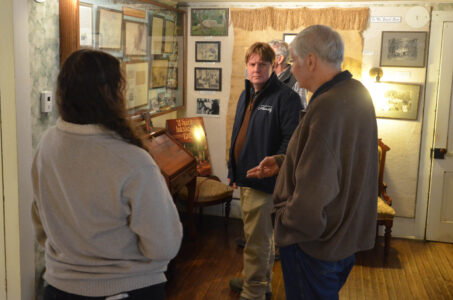
- Assemblyman Michael Cashman speaks with Robert Louis Stevenson Cottage Museum resident curator Mike Delahant inside the house where the author lived in Saranac Lake during the winter of 1887-88. The Society is working to make repairs to the home. (Enterprise photo — Aaron Marbone)
-
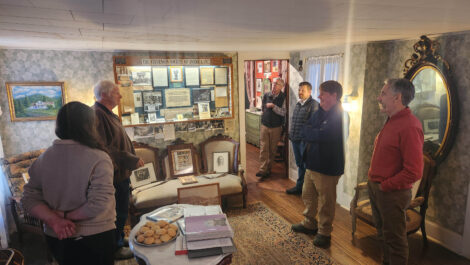
- Assemblyman Michael Cashman speaks with members of the Stevenson Society of America inside the house where Robert Louis Stevenson lived in Saranac Lake during the winter of 1887-88. The Society are working to make repairs to the home. (Enterprise photo — Aaron Marbone)
-
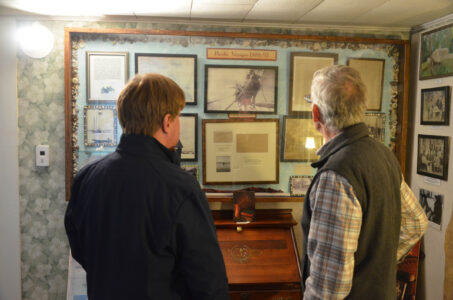
- Assemblyman Michael Cashman speaks with Tim Holmes, the secretary and treasurer of the Stevenson Society of America, inside the house where Robert Louis Stevenson lived in Saranac Lake during the winter of 1887-88. The Society are working to make repairs to the home. (Enterprise photo — Aaron Marbone)
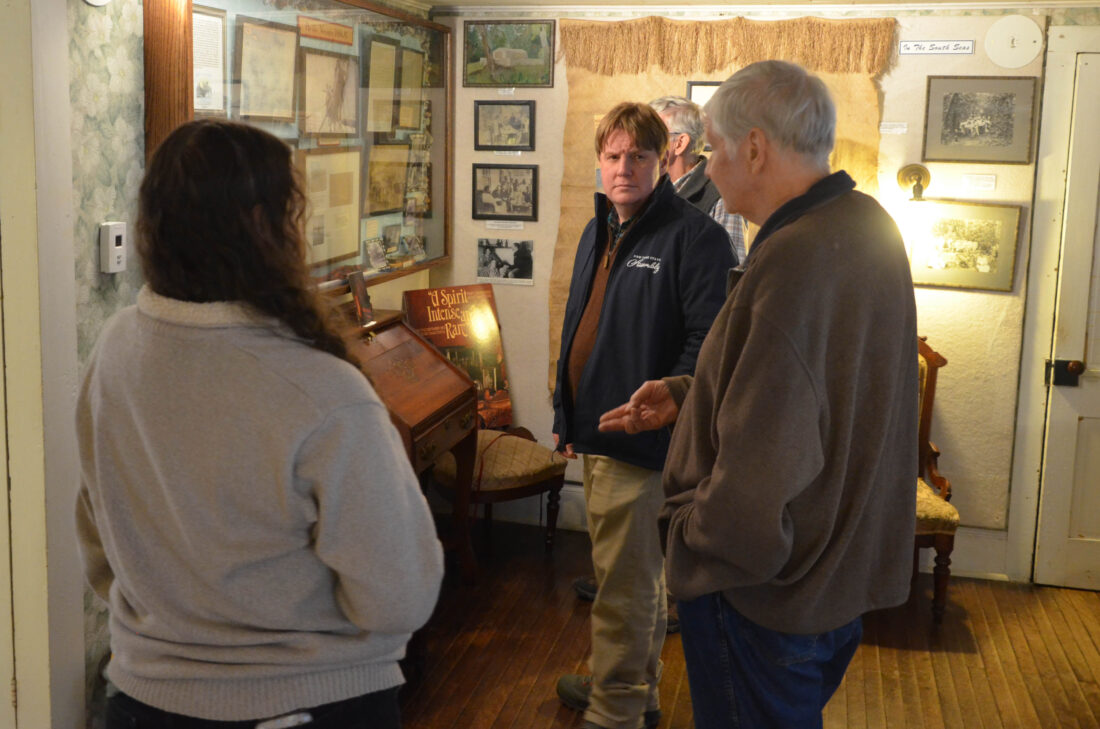
Assemblyman Michael Cashman speaks with Robert Louis Stevenson Cottage Museum resident curator Mike Delahant inside the house where the author lived in Saranac Lake during the winter of 1887-88. The Society is working to make repairs to the home. (Enterprise photo — Aaron Marbone)
SARANAC LAKE — “You could spend days in here,” Mike Delahant said as he showed state Assemblyman Michael S. Cashman around the Robert Louis Stevenson Cottage Museum on Thursday.
Members of the Stevenson Society of America board had heard the newly elected Assemblyman would be in the area and invited him on a tour of the one-time home of the author of “Treasure Island” and “Strange Case of Dr. Jekyll and Mr. Hyde.”
As they walked through the house on the bank of the Saranac River, which the famous author called home for six months in the winter of 1887-88, they noted several areas in need of repairs — walls, ceilings, the foundation and the chimney.
The Stevenson Society board is fundraising to make long-needed repairs to the house, and appealed to Cashman to advocate for them to be candidates for state grants.
“New York state’s budget next year, in 2026, is going to be one of the toughest budgets that we’ve seen in a generation,” Cashman said.
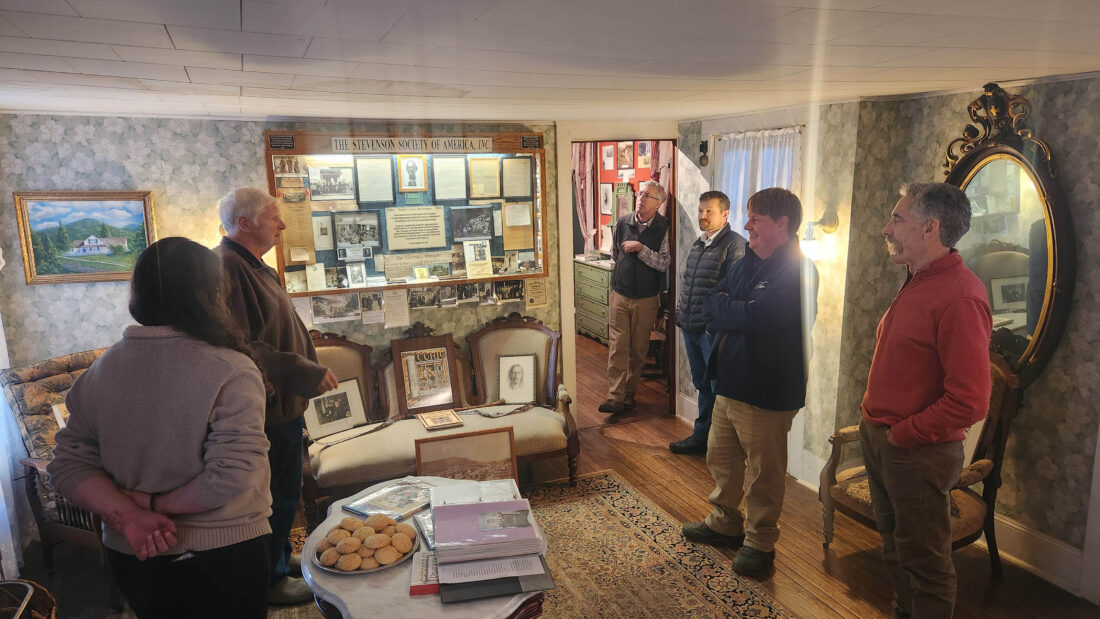
Assemblyman Michael Cashman speaks with members of the Stevenson Society of America inside the house where Robert Louis Stevenson lived in Saranac Lake during the winter of 1887-88. The Society are working to make repairs to the home. (Enterprise photo — Aaron Marbone)
He added that the state won’t have a ton of resources, but that he can be a connector for the museum. As he travels around the state and the district, he said he meets different people who can help and can get them hooked up with the cottage.
–
Stories
–
Delahant, the resident curator of the all-volunteer museum, is the third generation of the Delahant family to care for the cottage over the past 70 years. He’s been at it for 45 years.
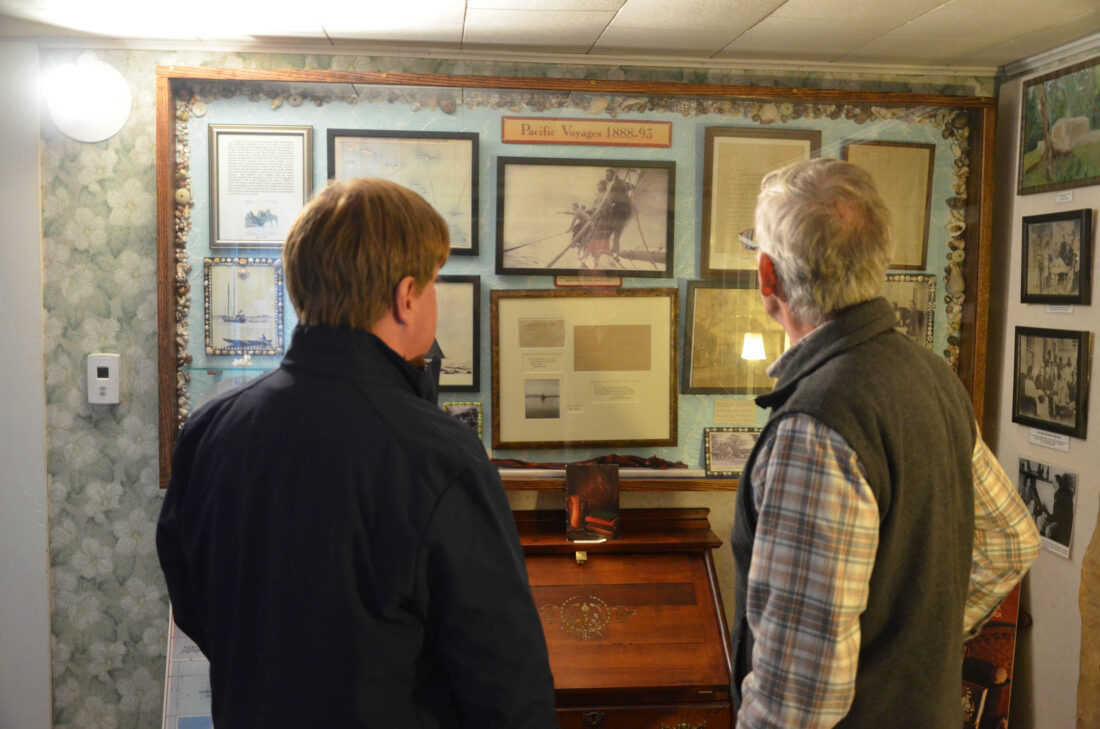
Assemblyman Michael Cashman speaks with Tim Holmes, the secretary and treasurer of the Stevenson Society of America, inside the house where Robert Louis Stevenson lived in Saranac Lake during the winter of 1887-88. The Society are working to make repairs to the home. (Enterprise photo — Aaron Marbone)
As Delahant easily recited stories of Stevenson’s life and memories of decades of visitors to the cottage, Cashman asked the board members, “Are you recording him?” He said Delahant’s encyclopedic knowledge of the man, the house and the visitors is a treasure in and of itself. Robert Louis Stevenson Cottage secretary Day Jordan said they have 18 hours of Delahant speaking about the history of the museum and its subject.
He also wrote a weekly column in the Enterprise titled “The Hunter’s Home” for more than five years. These numerous columns are being assembled into a book.
Stories seem to just branch out from Stevenson. His life story is fascinating in its own right, Delahant said, but so are the stories of the people Stevenson hung out with, and those that visitors to the cottage bring when they come to pay tribute to the author.
Stevenson tends to be an inspiration to people who are seeking to overcome struggles in their lives, Delahant said.
Stevenson came to Saranac Lake with his mother shortly after his father’s death. He was poor, sick and deeply depressed. But he maintained a desire for adventure and excitement — an insistence on living the most of his shortened life as possible.
They were on their way to Colorado, but he fell ill and traveled to Saranac Lake after hearing about Edward Livingston Trudeau’s tuberculosis sanitarium.
He skated on Moody Pond, sailed and wrote numerous essays.
Delahant said Stevenson came here “sick as a dog” and without much money. His father had supported him financially, but had just died.
His books were not doing well in his homeland of Scotland or in England. They sold a lot in America, but he had no copyright protection and publishers were ripping him off. When he arrived in New York City, though, the reception he got in the U.S. was huge. Publishers started seeking him out with big offers.
Delahant said Stevenson had a quote: “Wealth is only useful for two things: a yacht and a string quartet.”
As he gained more health and wealth than he ever anticipated in Saranac Lake, he decided on his next adventure — to sail the South Seas of the Pacific Ocean. This was a trip he would not return from, though, as his illness overtook him in the islands of Samoa.
–
A ‘time capsule’
–
Delahant proudly says the museum has no parking lot, no restrooms and no gift shop. What it does have is authenticity and true history. He said visitors have
praised the cottage for not having the “sterile” feeling museums sometimes can have. The layout of the home is much the same as it was when Stevenson lived there. The desk where he wrote “The Master of Ballantrae” still sits in his study, the
chair where he smoked and chatted with locals still sits
in the living room. All the furniture is original and
mostly untouched from 135 years ago.
“Some people say these are the most famous cigarette burns in the world,” Delahant said as he ran his fingers over marks on the fireplace mantle.
Stevenson was an avid smoker, despite having a lung disease, which was likely tuberculosis.
Delahant said the cottage is really two museums. It’s all the information, photos and artifacts of Stevenson that are on display, but it’s also a “time capsule” of a different time.
Cashman told the board members that it helps if they assemble a list of countries people have visited the cottage from. Everyone’s looking for money, he said, and to get selected for funding, they need to stand out. The best way to do that is to tell a story, he said.
Delahant said people have come from Japan, India and England specifically to visit the cottage. Stevenson’s writings on facing life and facing death have inspired many people across the world for generations, Delahant said. He describes the fans of the author as “converts,” and their pilgrimages to the cottage as lifelong desires.
Stevenson’s attractive personality made people fall in love with hanging out with him. His personality still has that effect to this day through his writing, Delahant said.
People who stop in on their Adirondack visits tell him it’s a highlight of their trips.
Despite its international fame, Delahant joked that many locals still think the cottage is a bed and breakfast. It’s unassuming.
Cashman asked if the cottage participates in museum days — an annual regional day where the state provides museums with grants to offer free admission. They said they’d look into it.
Cashman said he and his wife enjoy “backyard adventures” — visiting interesting places right near their home that they’ve heard about but have never been to yet. Everyone has places like that, he said.
–
This old house
–
Two years ago, a new board of trustees set out to save the house. Doing so will save the countless artifacts donated by Stevenson’s family and friends.
The house is old, built when Stevenson was 5. The Society just celebrated the 175th anniversary of his birthday on Nov. 13. An assessment report done on the museum said the architecture is in “extremely poor condition.”
The wall next to the fireplace is peeling off; the chimney needs repair; the foundation, masonry and drainage all need upgrades and there’s water damage on the ceiling from a leak in the roof. The Society came up with $30,000 to fix the roof over the summer.
They estimate it will take around $70,000 for the initial repairs and $300,000 to do all the repairs, expand exhibits for the future and expand the educational programming.
Cashman said he was inspired by their commitment to maintaining the legacy.
They have long-term plans to add a parking lot.
Jordan also said she wants to expand their educational programs — both for school tours of the cottage and classroom visits.
They’ve partnered with the Robert Louis Stevenson School, a private, therapeutic school in New York City.
Jordan said they have plans to get a Stevenson mural painted in town, and told Mayor Jimmy Williams they would love to have a statue of Stevenson installed at the park.
She said they plan to march in the Winter Carnival parade again this year. They haven’t had a float in the parade since 2008.
Board President Trenton Olsen is planning a 2028 writers’ conference for people from around the world at the cottage. Olsen teaches Stevenson’s literature in a college in Idaho and is also planning a program for his students to become residents at the cottage.
The home opened as a museum in 1915.
Local News
Four green groups seek to join howitzer hearing
RAY BROOK — Four environmental conservation advocacy groups are vying for party status to the upcoming ...
Tupper Lake gets $2M state grant for sewer upgrades
ALBANY — The town of Tupper Lake is the recipient of a $2 million state grant for sewer infrastructure upgrades, ...
Restoring the hunter’s home

US slides to four World Cup luge medals

Whiteface Mountain cuts the ribbon on its newest lift
Tri-Lakes slated for a white Christmas
SARANAC LAKE — Following a wild roller coaster week of weather, sub-freezing temperatures look to lock in ...