
Saranac Lake vet helps dogs, cats in Ukraine
-
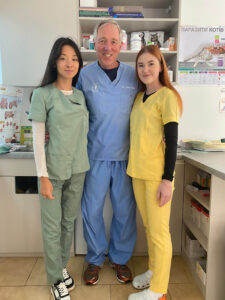
- Dr. John Cogar, a veterinarian from Saranac Lake, poses with technicians at a veterinary clinic in Irpin, Ukraine, in October 2022. (Provided photo)
-
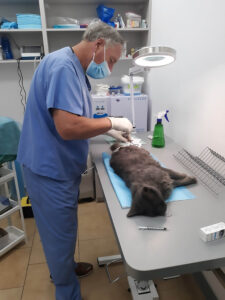
- Dr. John Cogar, a veterinarian from Saranac Lake, performs surgery at a veterinary clinic in Irpin, Ukraine, in October. (Provided photo)
-
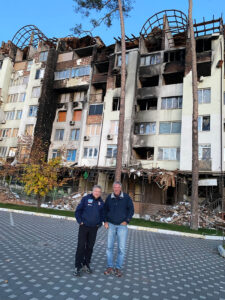
- Dr. John Cogar, a veterinarian from Saranac Lake, and Dmitry Feld, marketing manager at USA Luge in Lake Placid, pose in front of a bombed-out building during a trip to help dogs and cats in Irpin, Ukraine, in October. (Provided photo)

Dr. John Cogar, a veterinarian from Saranac Lake, poses with technicians at a veterinary clinic in Irpin, Ukraine, in October 2022. (Provided photo)
LAKE PLACID — After giving a heart-felt goodbye to their wives, Dr. John Cogar and Dmitry Feld turned around — in front of a Cape Air Cessna 402C at the Adirondack Regional Airport in Lake Clear — and waved goodbye before boarding the plane. Shortly after 4:15 p.m. on Oct. 18, they were in the air — headed to Ukraine.
“When I saw the horrible, unjust invasion, I saw the people suffering with their animals on TV like everybody else,” Cogar said at the airport. “I called Dmitry. … The first thing I did was write out a check to help. And then I said, ‘If there’s anything else I can do, let me know.’ And he picked me up on it. The next thing I know I have an airplane ticket to Ukraine.”
Cogar, of Saranac Lake, is a veterinarian. Semi-retired, he used to own and operate High Peaks Animal Hospital in Ray Brook and a satellite office in Malone. Now he works part time at both places. In Ukraine, he helped take care of dogs and cats for more than a week at a veterinary clinic in the city of Irpin, northwest of the capital, Kyiv. He arrived home on Oct. 31.
Feld, of Lake Placid, is the marketing manager for USA Luge. Born in Russia, he grew up in Kyiv and moved to the United States in the late 1970s. A luge athlete, he eventually moved to Lake Placid, home of the U.S. Olympic luge team. In Ukraine, he was Cogar’s interpreter. He arrived home on Oct. 28.
Since Russia invaded Ukraine on Feb. 24, Feld has organized a number of relief efforts for his war-torn home country, even facilitating the purchase and hanging of Ukrainian flags along Main Street in Lake Placid.
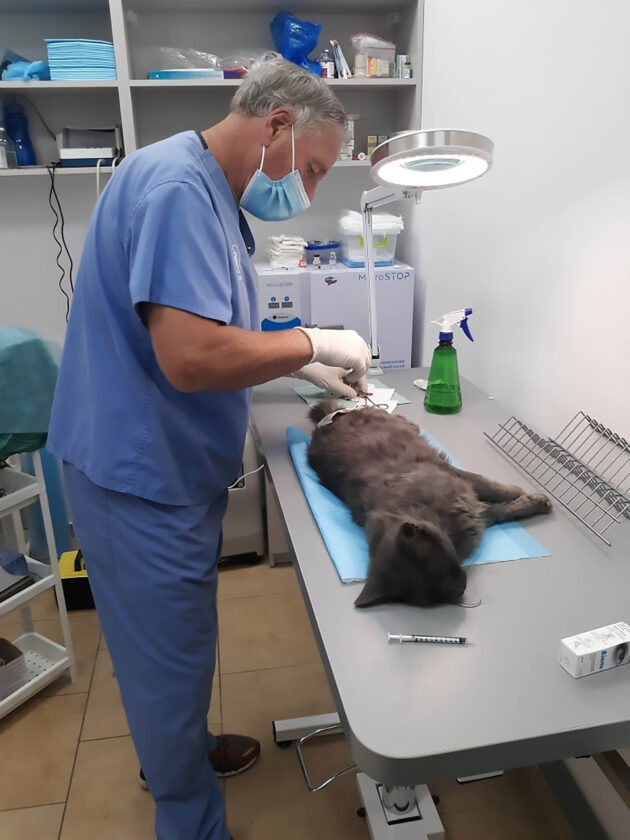
Dr. John Cogar, a veterinarian from Saranac Lake, performs surgery at a veterinary clinic in Irpin, Ukraine, in October. (Provided photo)
Ukraine currently has a drastic shortage of veterinarians, coupled with an abundance of abandoned dogs and cats. So Feld set up the trip with the Ukrainian Red Cross for Animals, which planned Cogar’s schedule.
“They allocated each day to different groups,” Feld said Monday during an interview with Cogar at the USA Luge office. “So one day was a kennel with eight dogs from Kyiv, all abandoned dogs and military dogs that came from the front lines. Another day was all abandoned cats and dogs that a guy from Irpin collected, and he keeps them in his kennel.”
Cogar’s work schedule was consistent.
“We had a full schedule every day,” he said. “We went from 9 to 5 and I did anywhere from nine to 11 pets.”
Cogar was told that he could be most helpful by spaying and neutering as many dogs and cats as possible.

Dr. John Cogar, a veterinarian from Saranac Lake, and Dmitry Feld, marketing manager at USA Luge in Lake Placid, pose in front of a bombed-out building during a trip to help dogs and cats in Irpin, Ukraine, in October. (Provided photo)
“When they brought the military dogs, that was a touching moment because they said one of these dogs is to sniff out bombs,” Cogar said. “But then they said the other dog was to sniff out human remains. So the reality of war hit home.”
While Cogar brought with him a large suitcase “filled to the brim” with medical supplies and surgical instruments, he and Feld also transported some items for the Ukrainian military, including two surveillance drones. The soldiers were so thrilled about the donation, they invited Cogar to visit the military drone school in Kyiv on his day off.
Irpin was in the news during the earliest days of the war. It was the scene of heavy fighting from Feb. 27 to March 28. Vestiges of that battle are still visible — including burned-out buildings, vehicles and Russian tanks, and fresh graves of Ukrainian soldiers.
“That, to me, was the most emotional thing of that whole trip,” Feld said. “Here I was, paying respects to the local men and women who died defending Irpin.”
Throughout the trip, Ukrainians kept asking Cogar the same question: “Why did you come here?”
Before he left, he explained his reasons for taking such a dangerous trip: his empathy for animals, empathy for the people of Ukraine and to be an ambassador for the country, to know that America was behind the Ukrainians.
“All three things exceeded my expectations,” Cogar said. “Meaning, I feel like I did help an awful lot of animals. No. 2, I feel that the people of Ukraine were extremely appreciative of what I did for them. And No. 3, I do think — we heard from them over and over — that they appreciate America, and they appreciate the fact that I, from the United States of America, was part of that American effort to back the people in Ukraine.”
As Cogar’s wife, Marie, watched him board the plane on Oct. 18 at the Lake Clear airport, she noted that her husband was going to come back to America a different person. How could he not, coming from a war zone?
Mostly, he said, this trip made him appreciate the Adirondacks more than ever.
“It made me more aware of how beautiful and peaceful this area is,” Cogar said. “We all take it for granted. I must have said five times to my wife, this sleepy little, pretty village of Saranac Lake, I look at it a little different now. It’s so peaceful. Because when you see a war-torn area, the contrast is something.”
Dmitry, who visited the building in Kyiv where he grew up, didn’t come back a different person.
“I think my bond with that country is so deep, and with those people so deep, that I don’t have to be there necessarily all the time to have a bond,” Feld said. “By me going there, it just gave me another opportunity to see it — not on TV but be part of it. Deliver what we promise. Help them where we can. Come home and give the message to American government and American people: Please don’t stop supporting us until we win this war.”
As for the future, Cogar said he’d love to go back to Ukraine, but only after the war is over. And Feld isn’t making any plans to return right now. Instead, he’s still raising money to help out the Ukrainians.
There were many businesses, organizations and residents who helped fund the veterinary trip to Ukraine — including the Joshua Fund and High Peaks Animal Hospital.
But now Feld needs more help — raising money to help pay for generators. Anyone interested in donating can contact Feld at 518-637-1593 or by email at dmitry@usaluge.org.
Local News
Roller coaster day of weather for Tri-Lakes
SARANAC LAKE — Winter is showing no signs of slowing down. Another mixed precipitation storm, accompanied by ...

World Cup aerials final moves to Lake Placid
Structure fire causes heavy damage to Lake Clear rental cabin
LAKE CLEAR — One of the Rockledge Cabins, a short-term rental property, was heavily damaged after a Saturday ...
Amid a battery boom, graphite mining gets a fresh look
Christmas grants
Several local organizations and villages received Christmas presents in the form of state grants this week as the ...
Free webinar about wake boat impacts co-hosted by Adirondack organizations
SARANAC LAKE — Six Adirondack Park-based environmental organizations welcome all to attend a webinar titled ...