
Rail trail association nets $99K grant
Funding will be used to connect trails to communities, improvements planning and maintence
-
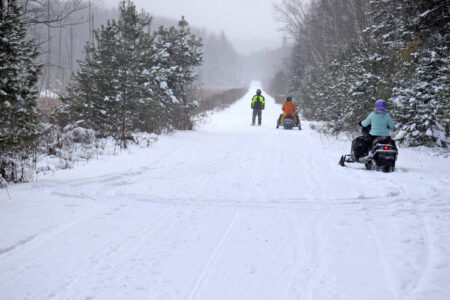
- The Adirondack Rail Trail is seen near Fowler’s Crossing between Saranac Lake and Ray Brook in January. (Enterprise photo — Chris Gaige)
-
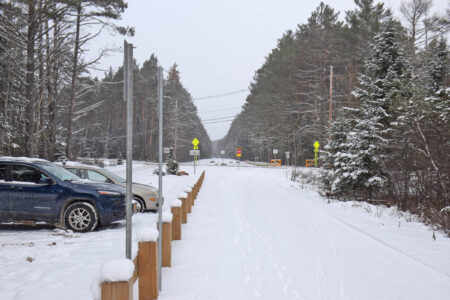
- The Adirondack Rail Trail is seen near Fowlers Crossing between Saranac Lake and Ray Brook in January. (Enterprise photo — Chris Gaige)
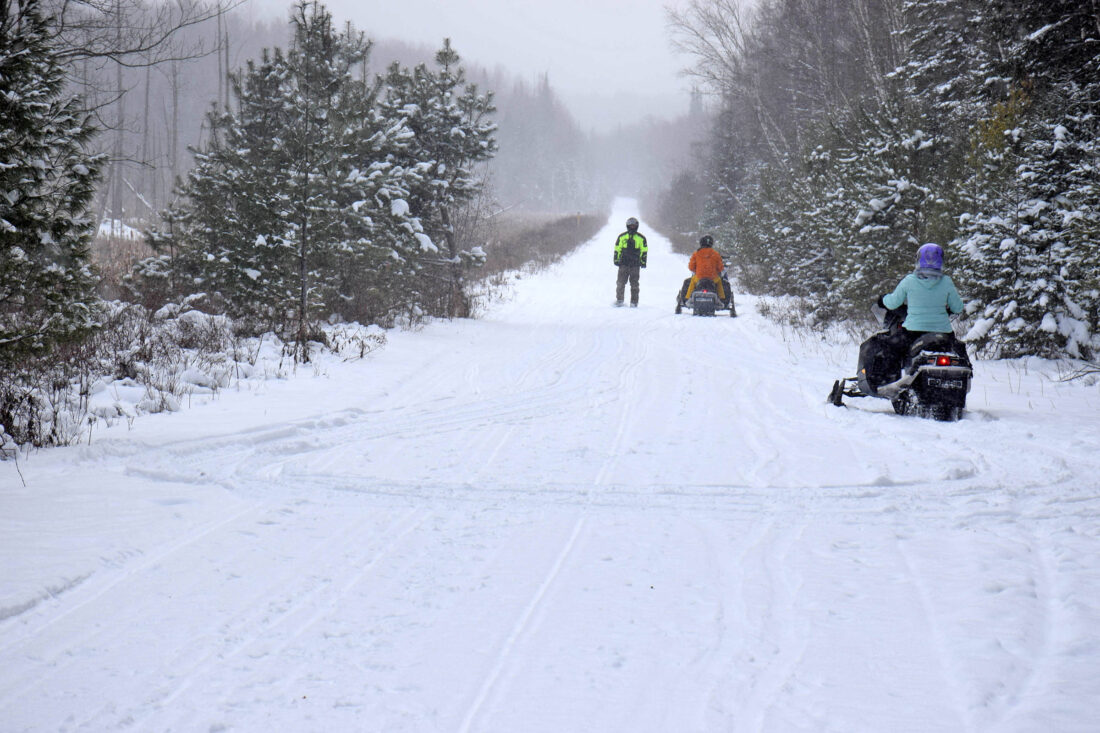
The Adirondack Rail Trail is seen near Fowler’s Crossing between Saranac Lake and Ray Brook in January. (Enterprise photo — Chris Gaige)
SARANAC LAKE — The Adirondack Rail Trail Association announced on Monday that it received just over $99,000 in a federal grant from the Northern Border Regional Commission’s Catalyst Program Grant.
With the Adirondack Rail Trail officially opening in full in October, this $99,001.92 award is slated to help pay for various measures aimed at better integrating the rail trail with the communities it runs through, according to ARTA Executive Director Julia Goren.
“I really see this grant and this process as an opportunity to pull together the pieces from the unit management plan, the pieces from the comprehensive planning work that so many of these municipalities have already done,” Goren said. “These communities have been thinking about this connectivity for quite a number of years. It’s just a question of putting it all into one package and knitting together all of these different pieces.”
These would include both literal connecting paths, as well as different types of trail amenities, such as restrooms, water stations, bicycle racks, repair areas, trail signs and other informational resources, such as wayfinding signs between the rail trail and downtown areas.
The grant will also help with assessing and planning for the long-term maintenance of these upgrades, as well as trash removal, snow clearing and other measures to keep the trail operational, Goren noted.
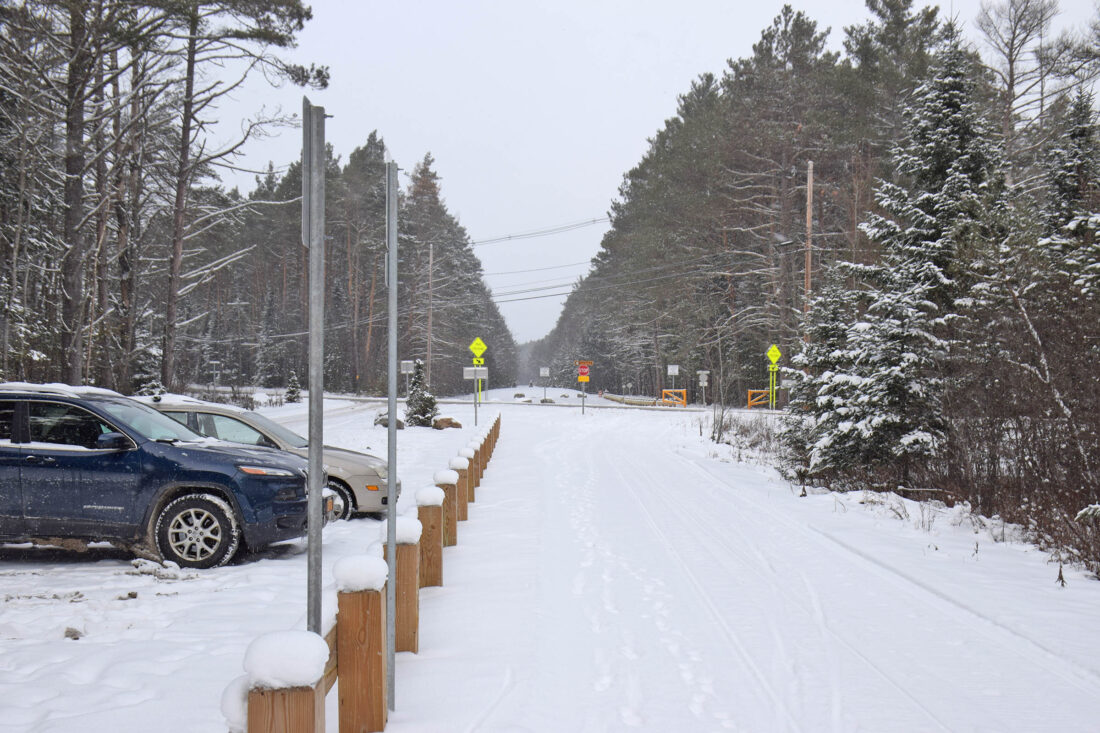
The Adirondack Rail Trail is seen near Fowlers Crossing between Saranac Lake and Ray Brook in January. (Enterprise photo — Chris Gaige)
When it comes to figuring out where exactly to place a sign, install restroom facilities or build a potable water source, Goren said it was important to have robust data to ensure that these resources are installed in the best possible spots to serve the most people.
“We’re going to be looking at the data that we have and gathering some additional data to figure out visitor needs,” she said. “Thinking about them in terms of, ‘What’s the low-hanging fruit? What’s a little bit harder? And where does it make sense to place all of these different things?'”
In addition to looking at trail counter data, Goren said ARTA would use some of the grant money to look at comparable rail trail networks to see what has, and hasn’t worked for other regions and communities.
“We’re also looking at some of the comparable rail trails because part of this is economic impact,” she said. “Data is going to be really important. The trail counter data is going to be really important, particularly as we try to look at where people are getting on and off. We have hopes for some supplemental survey work, possibly as soon as this summer.”
Goren was proud to learn of the award. She noted that the maximum amount was $100,000, meaning that the application was persuasive enough to net almost all of the available award.
“Part of the reason that I think it was a really natural fit is that it’s economic impact, it’s economic development, but it’s using the unique characteristics of the Northern Forest region to support that economic development,” she said. “In our case, recreation was a really important driver.”
Goren said the grants are also geared toward rural areas, giving the Adirondacks a leg up. She added that having the trail itself already complete and operational was a big plus for the grant reviewers, who tend to prioritize projects that are ready to roll.
Goren said the next immediate step is to complete the litany of paperwork to formally accept the grant. After that’s all set, she said ARTA should then receive a notice to proceed from NBRC.
“Once we get the notice to proceed, we’ll get bids out,” she said. “We’ll get a contractor to do the planning process to facilitate some of those meetings and the hope is that we’ll have at least some preliminary pieces as early as this summer, particularly so that there’s data for the municipalities and information for them if they’re going to apply for construction grants.”
It’s a reimbursable grant, meaning ARTA has to put the money up first for each component of the overall project, before receiving eventual payment. Given the limbo and sudden revocation of some federal grant funding, Goren said she was confident and had been given confirmation that the money is in place for this.
“We’ve asked multiple times along the way whether the NBRC is confident that they have the funds and that they will be able to pay these grants, especially because they are reimbursement grants,” she said. “They have reassured us at every step of the way that they have the funding to do this round, that they have the funds in hand.”
Still, though, Goren said she’ll keep on checking in on that.
“I will almost certainly ask them at least once more before we start spending money,” she said. “But everything that they have said suggests that they do, in fact, have the money and they do, in fact, intend to get through with this round of grants.”
Goren, in a statement, thanked those who helped secure the grant, including the North Country Regional Economic Development Council, the village of Saranac Lake, the town of Tupper Lake, the town of Harrietstown, the town of Santa Clara, the Development Authority of the North Country and local business leaders.
ARTA is a 501(c)(3) non-profit, and serves as the rail trail’s friends group through a stewardship agreement with the state Department of Environmental Conservation, which manages the trail and the land it runs through.
The 34-mile rail trail stretches from Lake Placid in the east to Tupper Lake in the west, passing through, east to west, the village of Lake Placid, town of North Elba, village of Saranac Lake, town of Harrietstown, town of Santa Clara, town of Tupper Lake and village of Tupper Lake.
Local News
SLPD officer sues department for harassment, retaliation
SARANAC LAKE — A female Saranac Lake Police officer is suing the department, the village and the former police ...
As winter has set in, DEC encourages rock salt reduction
WARRENSBURG — The state Department of Environmental Conservation is encouraging New Yorkers not to oversalt ...

Ride along with a plow driver during a winter storm

Crafty kids
Tour boat Adirondac destroyed in Monday morning fire in Lake George